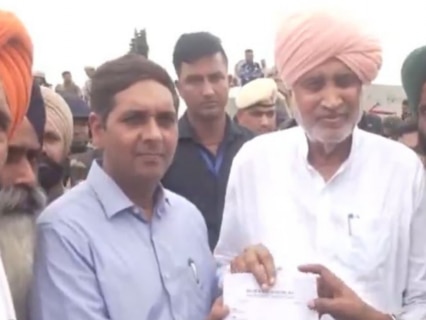
Farmers Stopped at Haryana Border Protesting India-U.S. Trade Deal
Thousands of farmers, under the 'Desh Bachao Morcha,' were stopped at the Punjab-Haryana border on July 21, 2026, while attempting to march to Delhi. They are protesting a proposed India-U.S. trade deal, fearing it will harm domestic agriculture through cheaper imports. Haryana Police deployed heavy barricades, and a prominent farmer leader was reportedly detained.
Key Highlights
- Farmers blocked at Punjab-Haryana border on July 21, 2026.
- Protest against proposed India-U.S. trade deal at Shambhu.
- Concerns over cheaper American agricultural imports harming livelihoods.
- Haryana Police used multi-layered barricades to prevent march to Delhi.
- Farmer leader Gurnam Singh Charuni allegedly detained before rally.
- Protest organized by 'Desh Bachao Morcha' for Kisan Mahapanchayat.
On Tuesday, July 21, 2026, thousands of farmers from Punjab and several other states, organized under the banner of the 'Desh Bachao Morcha' (DBM), were prevented by Haryana Police from proceeding to Delhi. Their aim was to participate in a 'Kisan Mahapanchayat' (mass rally) at Kisan Ghat in New Delhi to protest against a proposed bilateral trade agreement between India and the United States. The farmers were stopped at the Shambhu-Ambala and Khanauri-Jind inter-state boundaries between Haryana and Punjab, where multi-layered barricades, including cemented blocks, had been installed by the Haryana police to thwart their advance.
The primary concern of the protesting farmers is the potential adverse impact of the India-U.S. trade deal on the Indian agricultural sector. They fear that the agreement, even though not yet formally signed, could lead to a flood of cheaper, highly subsidized American agricultural products entering the Indian market. This influx, they argue, would severely depress domestic crop prices, making it difficult for Indian farmers, agricultural laborers, livestock rearers, and small traders to compete and ultimately hurting their incomes and livelihoods.
Farmer unions, including the Kisan Mazdoor Morcha, Kisan Mazdoor Sangharsh Committee (KMSC), and various factions of the Bharatiya Kisan Union (BKU), believe that the proposed agreement is not limited to a few products but could encompass crucial sectors such as agriculture, dairy, industry, digital trade, services, intellectual property rights, energy, investment, and market access. They are demanding greater transparency in the ongoing trade negotiations and assurances from the Union government that the agricultural and allied sectors will remain adequately protected.
The 'Desh Bachao Morcha' had announced the Delhi rally as a culmination of a weeks-long campaign, which included motorcycle rallies across Punjab, Haryana, and Himachal Pradesh on July 15, where memorandums were submitted to local authorities. Farmers from states like Rajasthan, Himachal Pradesh, Uttar Pradesh, Uttarakhand, Madhya Pradesh, Maharashtra, and Odisha were also expected to join the protest in Delhi.
Ahead of the Mahapanchayat, farmer leader Gurnam Singh Charuni, president of Bharatiya Kisan Union (Charuni) and a member of the DBM, was allegedly detained by police in Kurukshetra, Haryana, on July 20, as he attempted to travel to Delhi. His vehicle was reportedly intercepted near Pehowa. Other farmers from Haryana, whose vehicles were stopped, began moving on foot towards Delhi.
Haryana Police sealed the Shambhu border, a critical entry point from Punjab, and issued traffic advisories, urging commuters to take alternate routes due to the road closures. Farmer leaders like Sarwan Singh Pandher, a coordinator of the DBM, criticized the Haryana government for stopping them, asserting their intention for a peaceful march and willingness to engage in dialogue with local administration.
While farmer unions expressed strong opposition, the Union government has consistently tried to reassure farmers that sensitive agricultural products are being safeguarded during the negotiations and that India would not compromise its core agricultural interests. However, farmer functionaries highlight that Indian farmers, predominantly small and marginal landholders, receive significantly less government support compared to their heavily subsidized U.S. counterparts, making them vulnerable to unequal competition.
The ongoing negotiations for the India-U.S. bilateral trade agreement have been described by Commerce Secretary Rajesh Agarwal as having a "ready" framework deal, with the U.S. Ambassador indicating talks are in the "last 1 percent." This timing, coinciding with the expiry of a temporary U.S. tariff arrangement on Indian goods on July 24, has heightened the urgency of the farmers' protest to influence the final stages of the agreement.
The current protest brings to mind the large-scale farmers' movements of 2020-2021 against the now-repealed farm laws and the 2024 "Dilli Chalo" march for a legal guarantee on Minimum Support Price (MSP), both of which saw similar police actions and border barricading. Farmers have warned that if their concerns continue to be ignored and the agreement is pushed forward without addressing their demands, the nationwide movement will be intensified.
Frequently Asked Questions
Why are farmers protesting against the India-U.S. trade deal?
Farmers are protesting the proposed India-U.S. trade deal due to fears that it will allow cheaper, highly subsidized American agricultural products to enter India, severely impacting domestic crop prices and the livelihoods of Indian farmers, agricultural laborers, and small traders. They argue that Indian farmers receive less government support and would struggle to compete.
Where were the farmers stopped on their way to Delhi?
Farmers heading to Delhi for the 'Kisan Mahapanchayat' were stopped by Haryana Police at the Shambhu-Ambala and Khanauri-Jind inter-state boundaries between Haryana and Punjab. These borders were heavily barricaded to prevent their entry into Haryana en route to the capital.
What is the 'Desh Bachao Morcha'?
The 'Desh Bachao Morcha' (Save the Country Front) is an umbrella body of farmer unions from different states that organized the protest against the proposed India-U.S. trade deal. It represents various farmer organizations advocating for the protection of India's agricultural and economic sovereignty.
Has the India-U.S. trade deal been signed yet?
No, the India-U.S. trade deal is still a proposed or 'framework' agreement and has not yet been formally signed. Farmers are protesting at this stage to voice their concerns and influence the ongoing negotiations before the agreement is finalized.
What was the government's response to the farmers' concerns?
The Union government has repeatedly stated that sensitive agricultural products are being protected during the trade negotiations and that India will not compromise its core agricultural interests. However, farmers remain apprehensive and demand more transparency and concrete assurances.