China Floods: 900 Snakes Escape, One Death, Many Bitten in Guangxi
Severe flooding triggered by Typhoon Maysak in China's Guangxi region has led to the escape of nearly 900 snakes, including venomous cobras, from breeding farms. One woman has died due to a snakebite with delayed medical treatment, and multiple villagers have been bitten, prompting widespread rescue efforts and public safety warnings.
Key Highlights
- Nearly 900 snakes, including cobras, escaped from breeding farms.
- A woman died and several others were bitten by escaped snakes.
- Typhoon Maysak-induced floods caused reservoirs to breach in Guangxi.
- Authorities deployed rescue teams, increased anti-venom supplies.
- Over 100 zoo animals also escaped; floods killed at least 39 people.
- Villagers formed volunteer teams to capture snakes amidst receding waters.
Southern China's Guangxi Zhuang Autonomous Region is grappling with a severe natural disaster as heavy flooding, exacerbated by Typhoon Maysak, has led to widespread devastation, including the alarming escape of nearly 900 snakes from breeding farms. The incident, primarily occurring on July 6, 2026, has resulted in at least one confirmed death and multiple snakebite injuries, prompting urgent rescue operations and public safety warnings across the affected areas.
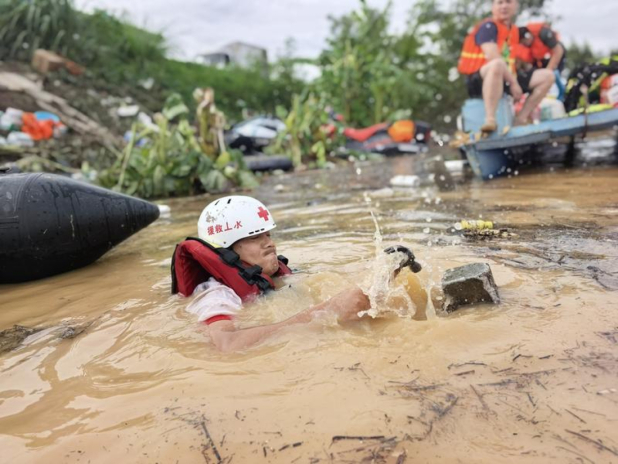
The catastrophic floods caused by Typhoon Maysak led to the breaching of key reservoirs, specifically Liulan and Yunbiao, inundating low-lying communities in Hengzhou city, particularly Dengwei village and Yunbiao Township. This deluge submerged and washed away several snake breeding facilities, unleashing an estimated 800 to 900 snakes into the floodwaters and surrounding areas. Reports indicate that the escaped reptiles include venomous species such as cobras, alongside non-venomous king rat snakes and water snakes, significantly escalating the danger to residents already contending with flood-related challenges.
The human cost of this disaster is profound. Tragic reports confirm the death of a woman in Hengzhou who succumbed to a snakebite. Her ability to receive timely medical treatment was severely hampered by blocked roads caused by the extensive flooding. Beyond this fatality, numerous other villagers have suffered snakebites, with at least one more individual confirmed to be receiving emergency hospital treatment. The situation has created widespread panic, particularly as viral videos depicting snakes swimming through murky floodwaters and seeking refuge in homes have circulated online.
In response to the escalating crisis, local authorities in Guangxi have mobilised extensive emergency measures. Rescue teams equipped with fishing nets and stun guns have been deployed to capture the escaped snakes and mitigate risks to communities. Efforts are also underway to bolster medical preparedness, with hospitals increasing their anti-venom supplies and establishing fast-track treatment channels for snakebite victims. Residents have been strongly advised against attempting to capture snakes themselves, with authorities urging them to report sightings to professional teams. Additionally, volunteer snake-catching teams, comprising over a dozen local residents, have been formed to assist in the search and capture of the reptiles.
The broader impact of Typhoon Maysak and the ensuing floods extends far beyond the snake escape. The disaster has taken a significant toll across southern and central China, with the overall death count from storms rising to at least 39 people, and over 130,000 residents forced to evacuate their homes. President Xi Jinping has called for "all-out" rescue and relief efforts, emphasizing the importance of disaster prevention, relief work, and ensuring the safety of lives and property.
In a related incident, the floods also caused damage to the Guigang Zoo, another facility in Guangxi, resulting in the escape of more than 100 animals, including zebras, alpacas, raccoons, porcupines, and peacocks. Tragically, three lions at the zoo were killed in the flooding. This highlights the multifaceted nature of the disaster, which has not only endangered human lives and property but also disrupted local ecosystems and animal welfare. The extensive flooding has also caused significant damage to agriculture, impacting pig farms, jasmine plantations, and timber production, further exacerbating the economic and social challenges faced by the region.
The incident serves as a stark reminder of the devastating consequences of extreme weather events and their cascading effects, especially in regions prone to such disasters. The challenges of managing large-scale animal escapes, particularly of venomous species, coupled with the ongoing flood crisis, present a complex humanitarian and environmental emergency for Chinese authorities. For an Indian audience, this story underscores the global relevance of natural disaster preparedness and the secondary hazards that can emerge, given that India also faces annual monsoon floods and human-wildlife conflicts involving snakes.
Frequently Asked Questions
How many snakes escaped during the China floods and where did it happen?
An estimated 800 to 900 snakes, including venomous cobras, escaped from breeding farms in Hengzhou city, Guangxi Zhuang Autonomous Region, southern China, after severe flooding caused by Typhoon Maysak.
Were there any human casualties or injuries due to the escaped snakes?
Yes, one woman died after being bitten by a snake, with her death attributed to delayed medical treatment due to flood-blocked roads. Multiple other villagers have also been bitten by the escaped snakes.
What measures are authorities taking to address the snake escape and flood crisis?
Authorities have deployed rescue teams to capture the snakes, increased anti-venom supplies in hospitals, and established temporary clinics for bite victims. They have also warned residents not to attempt catching snakes themselves and mobilized volunteer snake-catching teams.
What caused the floods and other animal escapes in China?
The severe floods were triggered by Typhoon Maysak, which caused reservoirs to breach and inundated large areas of Guangxi. In addition to snakes, over 100 animals, including zebras and alpacas, escaped from a zoo in Guigang, and three lions were killed.
What is the overall human toll of the floods in China?
Beyond the snake incident, the extensive flooding across southern and central China from Typhoon Maysak has resulted in at least 39 deaths and forced the evacuation of over 130,000 residents.