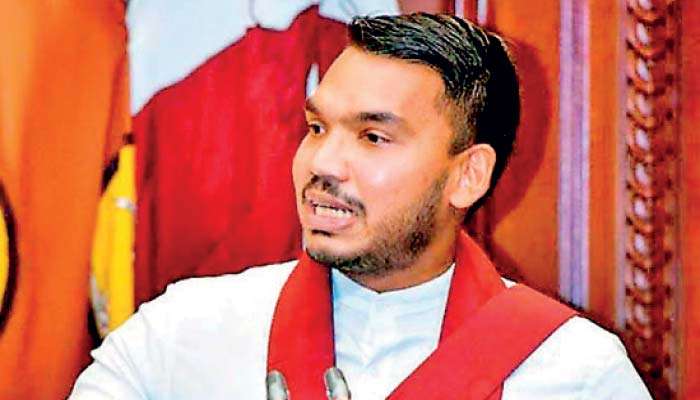
Namal Rajapaksa Arrested Over SriLankan Airlines Airbus Bribery Probe
Namal Rajapaksa, son of former Sri Lankan President Mahinda Rajapaksa, has been arrested by the CIABOC in connection with a 2013 Airbus aircraft deal corruption probe. The high-profile arrest signals renewed efforts to hold powerful political figures accountable for alleged financial misconduct.
Key Highlights
- Namal Rajapaksa arrested by CIABOC on September 4, 2026.
- Arrest linked to alleged bribery in 2013 Airbus aircraft purchase.
- International investigations previously exposed Airbus's bribery in Sri Lanka.
- Rajapaksa family denies corruption, calls allegations politically motivated.
- Arrest highlights ongoing anti-corruption efforts in Sri Lanka.
Namal Rajapaksa, a prominent Member of Parliament and the son of former Sri Lankan President Mahinda Rajapaksa, was arrested on Friday, September 4, 2026, by the country's Commission to Investigate Allegations of Bribery or Corruption (CIABOC). The arrest is a significant development in an ongoing corruption probe related to a controversial 2013 aircraft purchase deal involving SriLankan Airlines and the European manufacturer Airbus.
Rajapaksa, who has previously held a cabinet portfolio and is considered a potential future leader within the powerful Rajapaksa political dynasty, was summoned for questioning by the CIABOC on Friday morning. After several hours of interrogation, he was taken into custody. While the specific charges against him were not immediately detailed in open court proceedings, the arrest centers on allegations of bribery and corrupt dealings linked to the Airbus transaction.
The roots of this scandal trace back to a US$2.3-billion agreement signed in 2013 for the procurement of 10 Airbus aircraft for SriLankan Airlines. This deal was later cancelled by a new government in 2016 following widespread allegations of financial irregularities. The case gained significant international attention after joint investigations by authorities in the United States, Britain, and France revealed that Airbus had agreed to pay approximately US$16 million in bribes in Sri Lanka. These investigations found that US$1.7 million of these funds were routed to Kapila Chandrasena, the former Chief Executive Officer of SriLankan Airlines.
In connection with the current investigation, CIABOC alleges that Namal Rajapaksa received a bribe amounting to Rs. 100 million (approximately US$461,000 at the time) from a Sri Lankan businessman on several occasions between 2014 and 2015. These funds were reportedly transferred through an OCBC Bank account in Singapore held by Sabre Vision Holdings LTD, a company allegedly owned by a Sri Lankan businessman. Former SriLankan Airlines CEO Kapila Chandrasena had initially told investigators that he had handed over a significant sum in kickbacks to Rajapaksa, including an alleged Rs. 60 million payment to former President Mahinda Rajapaksa in three installments in 2013. However, Chandrasena later retracted his statement, claiming it was made under pressure. Chandrasena himself was found dead at a relative's home in May, shortly before he was due to be rearrested, with the cause of death yet to be established.
The arrest of Namal Rajapaksa sends significant shockwaves through Sri Lankan political circles, particularly among the considerable support base of the Rajapaksa family. The family has been a dominant force in Sri Lankan politics for decades, with Mahinda Rajapaksa serving as President from 2005 to 2015 and his brother Gotabaya Rajapaksa holding the presidency until his ousting in 2022 amidst a severe economic crisis. Namal Rajapaksa has consistently been viewed as a future standard-bearer for the family's political legacy.
The Rajapaksa family has consistently denied all allegations of corruption, dismissing them as politically motivated. This arrest, however, underscores the continued push by Sri Lankan authorities and civil society groups to pursue credible investigations into alleged corruption at the highest levels of government. Sri Lanka has faced mounting pressure, both domestically and internationally, to ensure accountability for financial misconduct.
The timing of the arrest is also notable, as public comments from both Namal Rajapaksa and government politicians in the preceding days had hinted at the possibility of his detention. Namal had suggested the government might arrest him before a scheduled rally, while a minister publicly stated that arrests would occur based on evidence and court proceedings. Following his arrest, Namal Rajapaksa was produced before the Colombo Chief Magistrate's Court and subsequently remanded until September 18.
For an Indian audience, this news holds considerable relevance. Sri Lanka is a close neighbor, and political developments, especially those involving high-profile figures and corruption, are closely watched. The ongoing efforts to combat corruption in a regional ally, coupled with the international dimensions of the Airbus bribery scandal, make this a significant story with implications for regional governance and stability. The Hindu, a reputable Indian newspaper, is a credible source for such regional news.
Frequently Asked Questions
Who is Namal Rajapaksa and why was he arrested?
Namal Rajapaksa is a Member of Parliament in Sri Lanka and the eldest son of former President Mahinda Rajapaksa. He was arrested by the Commission to Investigate Allegations of Bribery or Corruption (CIABOC) on September 4, 2026, in connection with an alleged bribery case related to a 2013 aircraft purchase deal between SriLankan Airlines and Airbus.
What is the Airbus deal corruption scandal?
The Airbus deal corruption scandal refers to a 2013 agreement for SriLankan Airlines to purchase 10 Airbus aircraft for US$2.3 billion. International investigations by US, UK, and French authorities later revealed that Airbus had agreed to pay approximately US$16 million in bribes in Sri Lanka, with portions allegedly routed to various officials.
What are the specific allegations against Namal Rajapaksa?
Namal Rajapaksa is alleged to have received Rs. 100 million (roughly US$461,000 at the time) in kickbacks from a Sri Lankan businessman, linked to the Airbus deal. These funds were reportedly channeled through a company in Singapore.
What is the political significance of this arrest in Sri Lanka?
The arrest is highly significant as Namal Rajapaksa comes from a powerful political family that has dominated Sri Lankan politics for decades. His arrest signals a continued push by authorities to address high-level corruption and could have considerable implications for the Rajapaksa family's political standing and future in the country.
When was Namal Rajapaksa arrested and what is his current status?
Namal Rajapaksa was arrested on Friday, September 4, 2026. He was produced before the Colombo Chief Magistrate's Court and subsequently remanded until September 18, 2026, as the investigation continues.