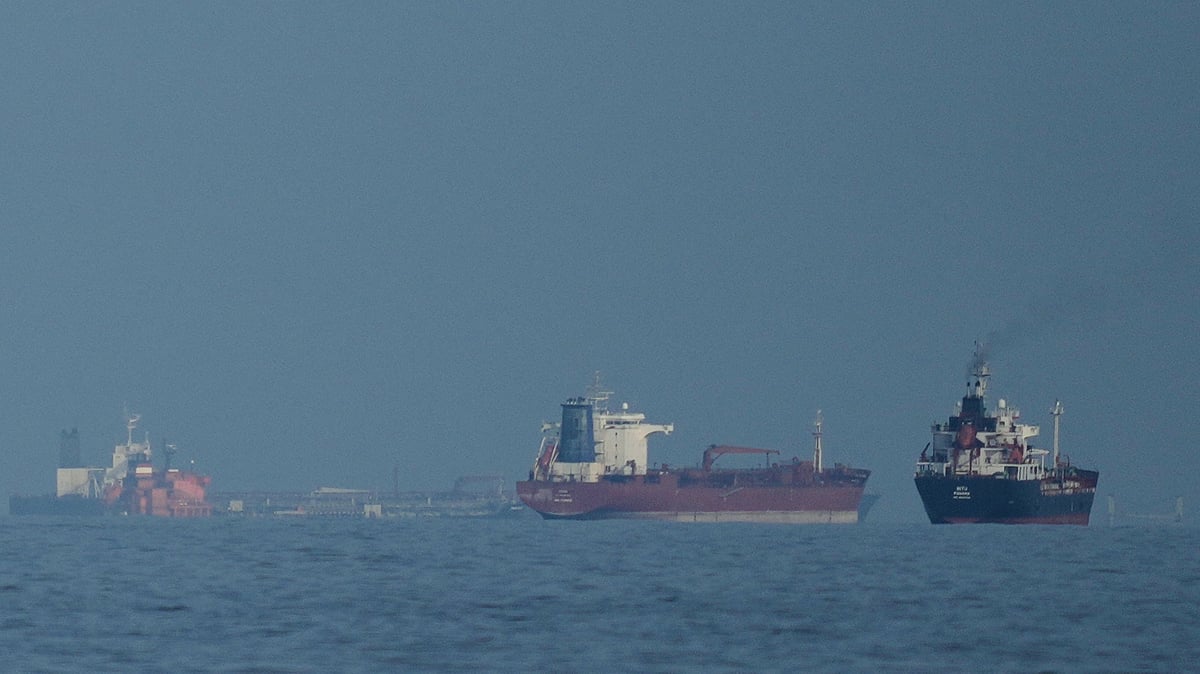
Indian LNG carrier Disha safely transits Strait of Hormuz post US-Iran deal
The Indian LNG carrier Disha has safely transited the Strait of Hormuz, marking a significant de-escalation of regional tensions following a US-Iran peace agreement. This passage offers hope for the safe transit of 34 other India-bound ships, potentially easing concerns over India's energy security.
Key Highlights
- Indian LNG carrier Disha successfully navigated the Strait of Hormuz.
- The transit follows a new peace deal between the US and Iran.
- Hope rises for 34 other India-bound ships stranded in the region.
- The event is crucial for India's energy security and import stability.
- The vessel is expected to reach Dahej port on June 18.
- Over 3,587 Indian seafarers have been repatriated safely.
The safe passage of the Indian LNG carrier Disha through the strategically vital Strait of Hormuz on June 15, 2026, has been a development of significant consequence for India's energy security and maritime trade. This event, occurring shortly after the announcement of a peace deal between the United States and Iran, has instilled renewed hope for the safe transit of approximately 34 other Indian- and foreign-flagged ships that were stranded in the Persian Gulf due to heightened regional tensions. The Disha, carrying 62,370 metric tonnes of Liquefied Natural Gas (LNG) from Qatar, is expected to dock at India's Dahej port in Gujarat on June 18, 2026.
The Strait of Hormuz is a critical chokepoint for global energy flows, with a substantial portion of the world's oil and LNG passing through it. For India, this route is particularly crucial, as it imports a significant percentage of its crude oil, LNG, and Liquefied Petroleum Gas (LPG) from West Asian nations, with over 60% of its imported LNG and about 90% of its LPG supplies transiting through this narrow waterway. The recent geopolitical instability in the region had led to disruptions in these vital supplies, causing increased shipping insurance premiums and freight rates, and directly impacting India's energy security and economy. The crisis had also led to the unfortunate loss of Indian seafarers in late 2023 and early 2024 due to drone attacks on vessels.
The safe transit of the Disha is being viewed as a positive sign, suggesting a de-escalation of tensions and a potential reopening of the strategic waterway for normal commercial traffic. This development is especially significant as it follows a preliminary US-Iran agreement that aims to end the conflict. The Ministry of Ports, Shipping and Waterways, through the Directorate General of Shipping, has been actively involved in coordinating efforts to ensure the safety of Indian seafarers and vessels operating in the region. This includes maintaining continuous communication with the Ministry of External Affairs, Indian missions abroad, and shipping companies. The ministry's control room has handled thousands of calls and emails, and has facilitated the safe repatriation of over 3,587 Indian seafarers, including 50 in the 96 hours preceding the news.
The passage of the Disha is expected to pave the way for the other 34 stranded vessels, including 16 carrying fertilizers (urea, diammonium phosphate, sulphur, and ammonia), to resume their journeys to Indian ports. The arrival of these fertilizer shipments is crucial for augmenting the supply of essential soil nutrients for India's agricultural sector. Policymakers, however, remain cautiously optimistic, noting that the full normalization of energy supplies may take time due to the extensive damage caused to facilities like Ras Laffan in Qatar, which are vital for energy production and export.
Analysts suggest that the reopening of the Strait of Hormuz could lead to a reduction in oil and gas prices, benefiting India's energy security and economy. A $10 decline in crude oil prices could reduce India's annual import bill by $13-15 billion. Lower LNG prices, potentially stabilizing in the $12-15/MMBtu range, would alleviate pressure on city gas distributors, fertilizer producers, power generators, and industrial consumers, while also reducing the burden on government subsidies.
In the broader context, India's vulnerability to disruptions in the Strait of Hormuz has been a persistent concern. The country's high import dependence, coupled with thin strategic reserves, has made its energy system susceptible to geopolitical instability in the region. The recent crisis has highlighted the need for India to build strategic reserves, diversify its supply chains, and explore alternative energy sources. While the current development brings much-needed relief, it underscores the ongoing challenge for India to ensure long-term energy security in a volatile geopolitical environment. The government has implemented various measures, including enhancing refinery production and rationalizing demand, to mitigate the impact of supply disruptions. The successful transit of the Disha, therefore, represents not just a singular event but a crucial step towards stabilizing India's energy imports and economic outlook.
Frequently Asked Questions
What is the significance of the Strait of Hormuz?
The Strait of Hormuz is a strategically vital maritime chokepoint, through which a significant portion of the world's oil and LNG is transported. Its control and safety are crucial for global energy security and international trade.
Why was the transit of the Indian LNG carrier Disha important?
The safe transit of the Disha, an Indian LNG carrier, through the Strait of Hormuz signifies a de-escalation of regional tensions following a US-Iran peace agreement. It brings hope for the safe passage of other stranded vessels and reassures India's energy supply lines.
How does the situation in the Strait of Hormuz affect India?
India is heavily dependent on imports of crude oil, LNG, and LPG from West Asia, with a significant portion transiting through the Strait of Hormuz. Disruptions in this waterway directly impact India's energy security, increase import costs, and can affect inflation and economic stability.
What is the current status of other India-bound ships in the region?
Following the safe passage of the Disha and the US-Iran peace deal, there is renewed hope for the safe transit of approximately 34 other Indian and foreign-flagged ships that were previously stranded in the Persian Gulf.