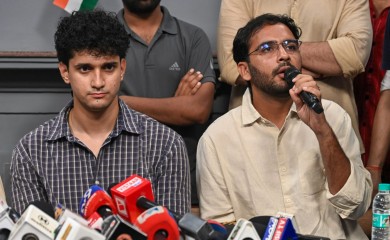
Supreme Court orders release of minors, halts action against NEET protesters
India's Supreme Court has ordered the immediate release of all protesters under 18 arrested during recent demonstrations, and has halted any coercive action against students involved in the NEET exam irregularities protests, provided they have no criminal record. The court also emphasized the preservation of digital evidence and indicated a potential independent probe into allegations of police brutality.
Key Highlights
- Supreme Court orders release of all detained minors.
- No coercive action against student protesters without criminal history.
- Preservation of digital evidence mandated by the court.
- Allegations of police brutality to be investigated.
- Court emphasizes right to peaceful protest.
- Focus on NEET exam irregularities protests.
In a significant ruling, India's Supreme Court has directed the immediate release of all individuals under the age of 18 who were detained in connection with the recent youth protests concerning the National Eligibility cum Entrance Test (NEET) exam irregularities. The apex court also issued a stay on any coercive action against student protesters who do not have a prior criminal record, effectively providing them with interim protection. This landmark decision came after a series of petitions were filed alleging police brutality and excessive force against demonstrators who were protesting alleged paper leaks and other irregularities in the NEET examination.
The bench, headed by Chief Justice of India Surya Kant, acknowledged the importance of peaceful protests as an integral part of democracy. The court's directives also included an order for all states to preserve surveillance footage and digital data collected from protesters, ensuring it is not made public. This move is seen as a crucial step towards safeguarding the privacy of individuals involved in the demonstrations.
The Supreme Court's intervention stems from allegations of excessive force used by law enforcement during protests, including claims of injuries from lathis, tear gas, and pellet guns. Petitioners highlighted incidents of alleged police excesses during the 'Sansad Chalo' demonstration on July 20 in Delhi and subsequent protests across various states. The court indicated that these allegations warrant a thorough, fair, and impartial investigation, and suggested the possibility of forming a high-powered investigation team or a Special Investigation Team (SIT) to examine the claims.
The Solicitor General of India, Tushar Mehta, acknowledged the gravity of potential police excesses but also highlighted that approximately 250 police officers were injured during the protests, attributing some of the disruption to "miscreants." He stated that the government supports a fair probe into the matter. The court clarified that the interim protection would not extend to "anti-social elements" or individuals with criminal antecedents.
In response to the Supreme Court's order, several states have begun implementing the directives. For instance, in Kolkata, all 16 individuals arrested in connection with violent clashes during a NEET protest march were granted bail by the City Sessions Court, following the apex court's interim directions. Similarly, the governments of Bihar and Assam had previously announced the withdrawal of cases and release of those arrested in connection with the NEET protests.
The protests, which gained significant traction, were largely sparked by the leak of question papers for the national medical college entrance exam, NEET. The issue has highlighted broader concerns about the integrity of competitive examinations in India and the intense pressure faced by millions of students vying for limited medical seats. The activism has led to the resignation of Union Education Minister Dharmendra Pradhan and governmental assurances of exam reforms.
The Supreme Court's emphasis on preserving evidence and potentially launching an independent probe underscores the seriousness with which it is treating the allegations of police misconduct. The court has set a date for further hearing on August 3, indicating that it will continue to monitor the situation closely and ensure accountability. The ruling reinforces the constitutional right to peaceful protest while also seeking to balance it with maintaining law and order. The court's clear directive to release minors and halt coercive action against eligible students provides immediate relief to those impacted by the protests and the subsequent police actions.
Frequently Asked Questions
What did the Supreme Court order regarding minors arrested during the NEET protests?
The Supreme Court ordered the immediate release of all protesters under the age of 18 who were detained in connection with the NEET irregularities protests, provided they do not have a criminal record.
What is the Supreme Court's stance on coercive action against student protesters?
The Supreme Court has restrained authorities from taking any coercive action against student protesters who do not have a criminal past. This protection is an interim measure pending further investigation.
What evidence preservation measures did the Supreme Court mandate?
The Supreme Court directed all states to ensure that surveillance footage and digital data collected from protesters are preserved and not made public, to safeguard individuals' privacy.
Will there be an investigation into allegations of police brutality?
Yes, the Supreme Court indicated that the allegations of police brutality warrant a thorough and independent investigation, and suggested the formation of a high-powered committee or Special Investigation Team to examine the claims.
What was the context of these protests?
The protests were primarily triggered by alleged paper leaks and irregularities in the National Eligibility cum Entrance Test (NEET) for medical college admissions, leading to widespread student demonstrations across India.