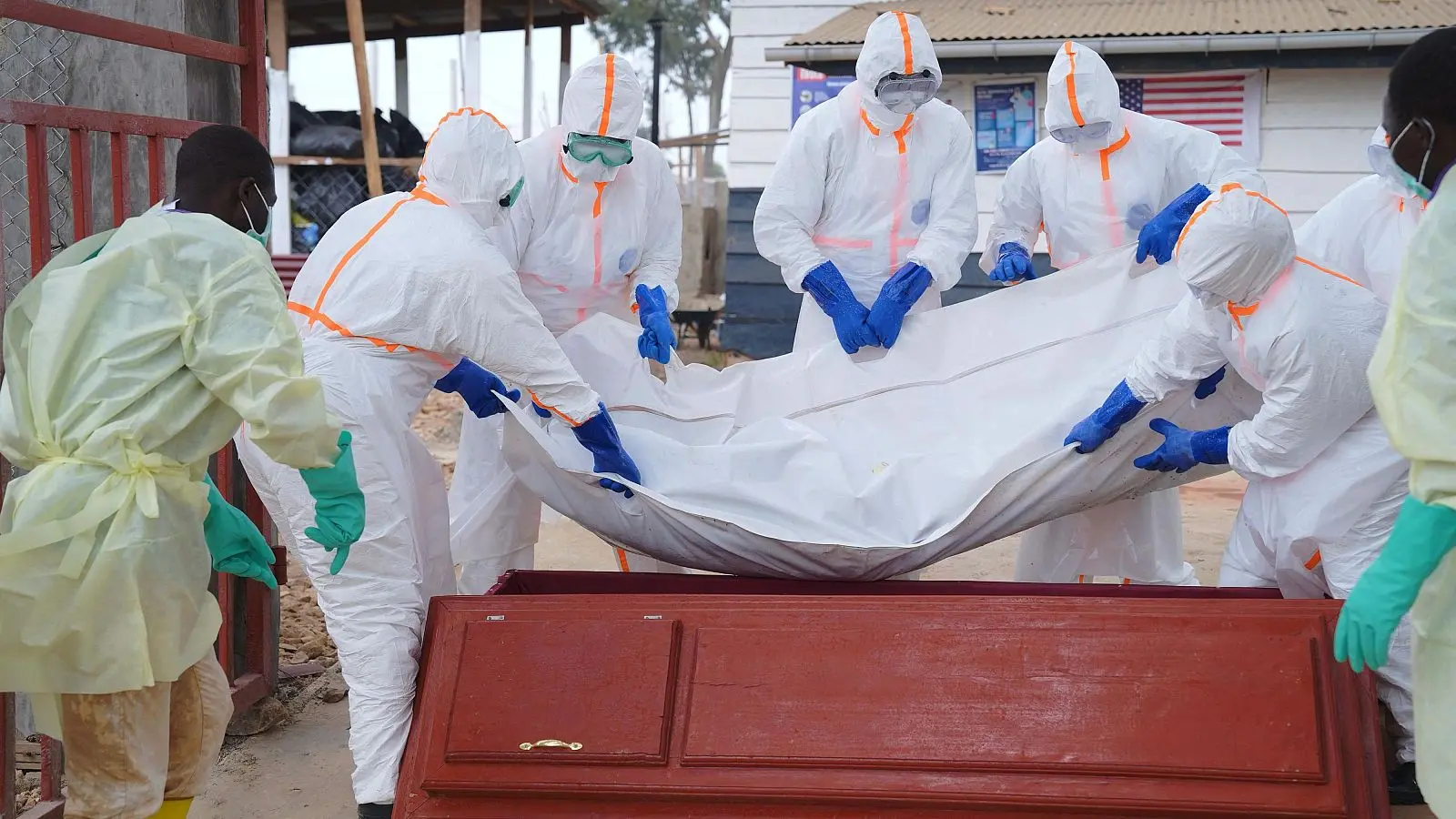
WHO Chief: Ebola Epidemic in DRC and Uganda Outpacing Response Efforts
The World Health Organization (WHO) Director-General, Dr. Tedros Adhanom Ghebreyesus, announced in May 2026 that an Ebola outbreak in the Democratic Republic of Congo (DRC) and Uganda had led to 220 suspected deaths, warning that the epidemic was currently outpacing response efforts. The outbreak, caused by the rare Bundibugyo strain with no approved vaccines, was declared a Public Health Emergency of International Concern (PHEIC), underscoring its rapid spread and severe challenges to containment.
Key Highlights
- WHO chief reported 220 suspected Ebola deaths in current outbreak.
- Epidemic, featuring Bundibugyo strain, is outpacing response efforts.
- Outbreak declared Public Health Emergency of International Concern.
- DRC and Uganda are epicenters, with cross-border transmission risks.
- Challenges include violence, mistrust, and lack of approved vaccines.
- Urgent international action is crucial to contain the deadly virus.
On May 25, 2026, Dr. Tedros Adhanom Ghebreyesus, the Director-General of the World Health Organization (WHO), issued a grave warning regarding a burgeoning Ebola outbreak, stating that 220 suspected deaths had been recorded and that the epidemic was currently 'outpacing' response efforts. This critical announcement came as the outbreak, primarily centered in the Democratic Republic of Congo (DRC) and spreading to neighboring Uganda, escalated into a Public Health Emergency of International Concern (PHEIC).
The outbreak is particularly alarming because it involves the Bundibugyo strain of the Ebola virus, for which no approved vaccines or specific treatments currently exist. This absence of established medical countermeasures significantly complicates containment strategies and raises the stakes for affected communities and public health responders. The WHO chief underscored the urgency, stating, 'We are urgently scaling up operations, but at the moment the epidemic is outpacing us,' and urged countries bordering the DRC, identified as the epicenter, to take immediate preventative actions.
The epicenter of this rapidly evolving health crisis is located in the Democratic Republic of Congo's northeastern Ituri province, with cases also extending into North Kivu province. The challenges faced by response teams on the ground are multifaceted and severe. These include persistent violence, deep-seated mistrust among local populations, and overwhelmed surveillance systems, all of which significantly hinder efforts to trace contacts, identify new cases, and provide timely care. Dr. Tedros highlighted that the ongoing violence forces people, including vital health and humanitarian workers, to flee, thereby severely impeding critical activities like contact tracing and early infection identification. Health ministry data revealed that responders were able to follow up with only about 20% of identified contacts on a given day, illustrating the immense operational difficulties.
The declaration of a PHEIC by the WHO signifies a serious public health event that poses a risk to other countries through international spread and potentially requires a coordinated international response. This classification elevates the outbreak to a global priority, mobilizing international resources and attention to support the affected regions. Uganda, which borders the DRC's Ituri province, confirmed additional Ebola cases, bringing its total to seven at the time of the WHO chief's statement, further emphasizing the cross-border transmission risks and the regional nature of the crisis. Regional health ministers had previously warned in March 2026 about the increased risk of cross-border transmission due to porous borders, active mining corridors, and large population movements. Ten African countries were identified as being at risk due to regional mobility and gaps in surveillance and diagnostic capacities.
This current outbreak follows a history of significant Ebola epidemics in the DRC. The 2018-2020 Ebola outbreak in the DRC, for instance, was the second-largest in recorded history globally, reporting 3,470 cases and 2,287 deaths, highlighting the persistent public health challenges in the region. The experiences from past outbreaks underscore the critical importance of community engagement and trust-building, as hostility and reluctance from communities can severely hamper response efforts. Without robust community involvement, efforts to halt the virus are often insufficient.
Dr. Tedros's planned travel to the DRC on May 26, 2026, further demonstrated the WHO's commitment to addressing the fast-moving outbreak. He acknowledged the complexities posed by the highly insecure Ituri and North Kivu provinces, which make an effective response exceedingly difficult. The international community, including UN partner agencies, NGOs, and research networks, provides essential support, but the scale of the challenge necessitates a continuous, coordinated, and well-resourced response to bring the epidemic under control and prevent wider global implications. The situation remains critical, demanding sustained attention and collaborative efforts to protect public health both regionally and globally.
Frequently Asked Questions
What is the current status of the Ebola outbreak mentioned by the WHO chief?
As of May 25, 2026, the WHO Director-General reported 220 suspected deaths from the Ebola outbreak in the Democratic Republic of Congo and Uganda, warning that the epidemic was 'outpacing' response efforts. The outbreak was declared a Public Health Emergency of International Concern (PHEIC).
Which specific strain of Ebola is causing this outbreak?
The current outbreak is caused by the rare Bundibugyo strain of the Ebola virus. A significant concern is that there are currently no approved vaccines or specific treatments available for this particular strain.
Why is the Ebola response proving so challenging?
Response efforts are complicated by several factors, including ongoing violence in the affected regions (Ituri and North Kivu provinces of DRC), deep-seated mistrust within communities, overwhelmed surveillance systems, and attacks on health facilities. These issues hinder effective contact tracing, case identification, and delivery of care.
What does 'Public Health Emergency of International Concern' (PHEIC) mean?
A PHEIC is a formal declaration by the WHO signaling an extraordinary event that constitutes a public health risk to other states through the international spread of disease and potentially requires a coordinated international response. This elevates the outbreak to a global priority, mobilizing international resources and attention.
Which countries are most affected by this Ebola outbreak?
The Democratic Republic of Congo (DRC) is considered the epicenter of the outbreak, particularly its northeastern Ituri and North Kivu provinces. Neighboring Uganda has also reported confirmed cases, indicating a significant regional spread and risk to other bordering nations.