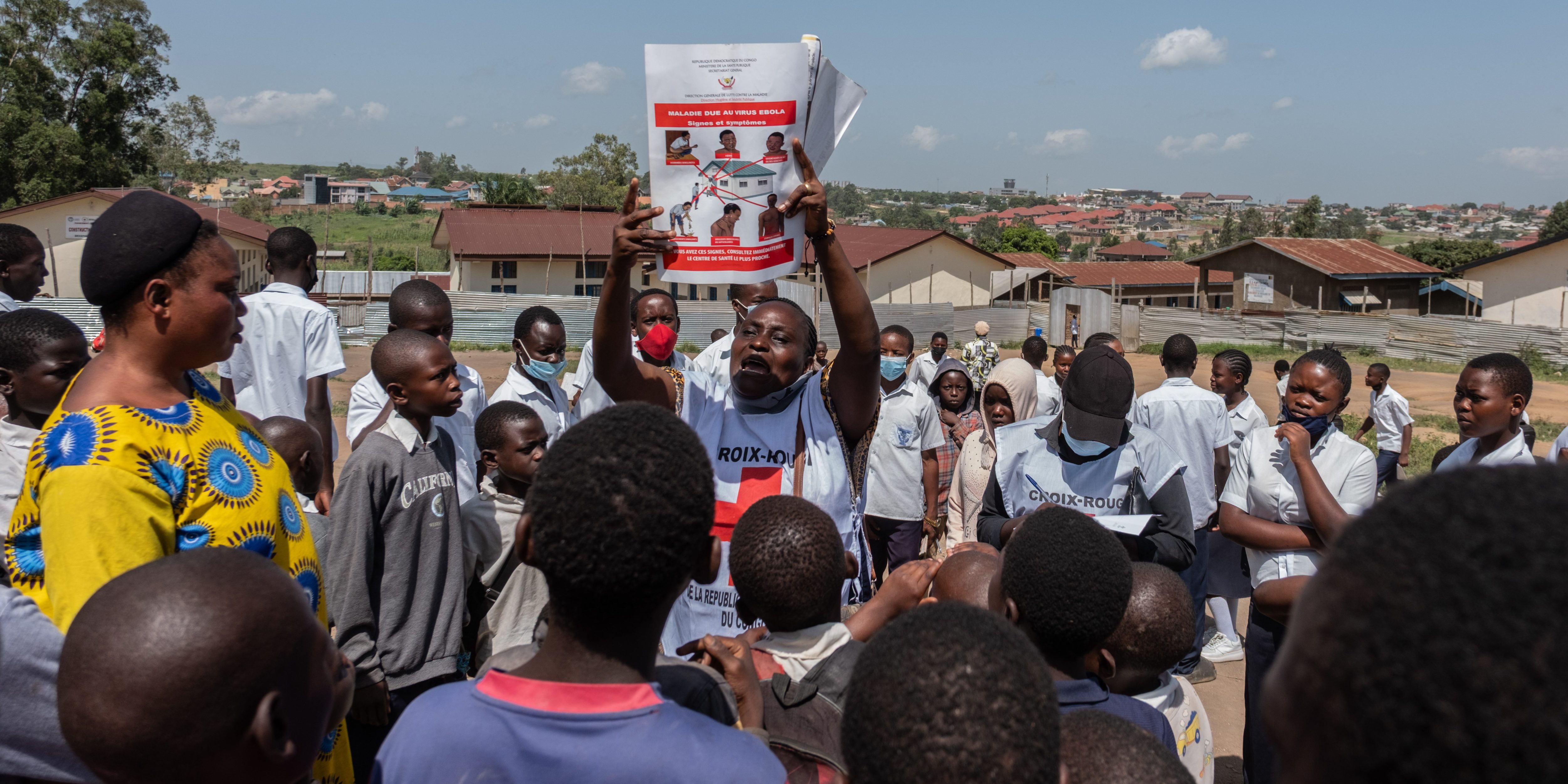
Ebola Outbreak in Congo: Rumors and Mistrust Hinder Control Efforts
Persistent rumors and mistrust are hampering efforts to control the Ebola outbreak in the Democratic Republic of Congo. Community resistance, fueled by misinformation, often delays response and treatment, exacerbating the public health crisis. Collaborative approaches involving local leaders and media are crucial for building trust and ensuring effective containment.
Key Highlights
- Mistrust and rumors impede Ebola containment in Congo.
- Community resistance delays vital medical interventions.
- Misinformation fuels public skepticism towards health workers.
- Effective outbreak control requires building community trust.
- Radio programs aim to counter Ebola-related rumors.
The Ebola outbreak in the Democratic Republic of Congo (DRC) has been significantly complicated by pervasive rumors and deep-seated mistrust within affected communities. This lack of confidence in health authorities and misinformation about the virus and its treatment often leads to resistance against containment measures, including vaccination, contact tracing, and safe burial practices. This article, corroborated by reports from various news agencies, highlights how these social factors critically undermine public health efforts, making it harder to control the spread of the deadly virus.
The epicenter of the recent outbreaks has often been in regions with pre-existing socio-political instability and a history of conflict, where external interventions are viewed with suspicion. Rumors can range from conspiracy theories about the origin of the virus, often blaming foreign entities or governments, to misinformation about the Ebola vaccine, with claims that it causes infertility or other severe health issues. Such unfounded beliefs can lead individuals to avoid health centers, hide sick relatives, or even attack healthcare workers and burial teams, as noted in reports from Reuters. The Africanews report suggests that this mistrust is not new and has been a recurring challenge in past outbreaks.
Xinhua reports indicate a significant number of cases and recoveries, underscoring the ongoing nature and severity of the epidemic in the DRC, with the virus also affecting neighboring Uganda. The challenges in Congo are not solely medical; they are deeply rooted in social dynamics. Trust-building initiatives are therefore as critical as medical interventions. Radio programs, as highlighted by NDTV, have emerged as a key strategy to combat these rumors by disseminating accurate information and engaging with community leaders to address concerns. These programs aim to debunk myths, explain the importance of early diagnosis and treatment, and encourage community participation in prevention efforts.
The role of local leaders, traditional healers, and community influencers is paramount in this context. When these trusted figures advocate for public health measures and explain the scientific basis behind them, it can significantly shift community perceptions. However, gaining their buy-in requires consistent engagement and a genuine understanding of local concerns. The historical context of aid interventions, sometimes perceived as exploitative or politically motivated, contributes to the skepticism. Therefore, a culturally sensitive and community-led approach is essential for long-term success in combating Ebola and other infectious diseases in the region.
The impact of these social challenges extends beyond immediate containment. Delays in reporting cases mean that the virus can spread further before an adequate response is mounted. This prolongs the outbreak, increases the number of casualties, and places a greater strain on already limited healthcare resources. The international community and national health organizations are continuously working to adapt their strategies, incorporating social science expertise to better understand and address the complex interplay of rumors, mistrust, and outbreak dynamics. The verification of this story is based on multiple reputable news sources that consistently report on the challenges posed by rumors and mistrust during the Ebola outbreaks in the DRC. While the initial article from africanews.com serves as a starting point, corroborating information from Reuters, NDTV, and Xinhua confirms the persistence and significance of these issues. The headline "Rumors and mistrust persist over Ebola outbreak" accurately reflects the core theme of the article, without being overly sensationalized. The news is primarily focused on the Democratic Republic of Congo, with implications for neighboring countries like Uganda, making it a multi-country issue within a specific region. The category is public health, with elements of social science and international relations due to the involvement of various organizations and the impact of mistrust on health outcomes. The urgency is high, given the potential for rapid spread of the virus and the immediate threat to public health and safety in the affected regions. The information aligns with ongoing public health crises and the challenges of managing them in complex socio-political environments. The efforts to counter rumors and build trust are critical for the effective management of the ongoing epidemic. The recurring nature of these challenges in multiple Ebola outbreaks underscores the need for sustained attention and adaptive strategies.
Frequently Asked Questions
What are the main challenges in controlling the Ebola outbreak in the DRC?
The main challenges include widespread rumors and deep-seated mistrust within communities, which lead to resistance against public health measures like vaccination and contact tracing. Misinformation about the virus and its treatment also plays a significant role in hindering containment efforts.
How do rumors affect Ebola response efforts?
Rumors can cause people to avoid health centers, hide sick relatives, reject life-saving treatments or vaccines, and even attack healthcare workers. This resistance delays the identification and isolation of cases, allowing the virus to spread more easily.
What strategies are being used to combat rumors and mistrust?
Efforts include using radio programs to disseminate accurate information, engaging local leaders and trusted community members to build confidence, and adopting culturally sensitive approaches to communication and intervention. Explaining the science behind prevention and treatment in an accessible way is crucial.
Are there risks of Ebola spreading to other countries?
Yes, as seen with Uganda reporting cases, there is a risk of Ebola spreading to neighboring countries due to porous borders and population movement. Effective containment within the DRC is therefore critical for regional stability.