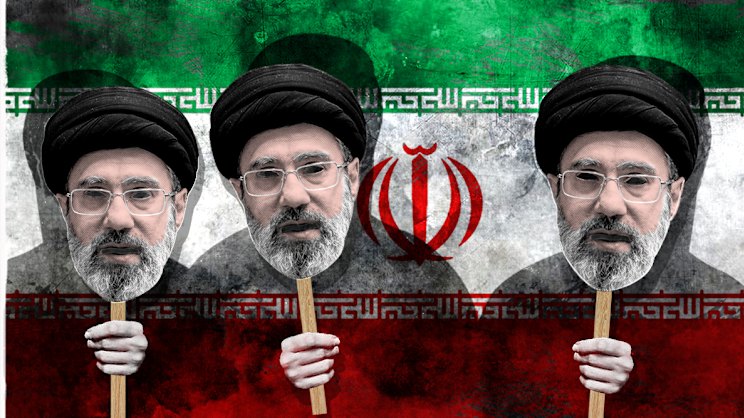
Iran President: US Blockade 'Doomed to Fail', Escalates Gulf Tensions
Iranian President Masoud Pezeshkian stated that any US naval blockade on Iranian ports is illegal, contrary to international law, and "doomed to fail." He warned that such actions would not enhance regional security but would instead increase tensions and disrupt stability in the Persian Gulf. The blockade, imposed after a ceasefire paused the US-Iran war, has led to soaring oil prices and strained global energy supplies.
Key Highlights
- Iran's President declared US naval blockade illegal and doomed to fail.
- Pezeshkian warned of increased regional tension and instability due to the blockade.
- The blockade has significantly impacted global oil prices and energy supplies.
- The conflict escalates concerns over maritime security in the Persian Gulf.
- International law is cited as a basis for Iran's opposition to the blockade.
Iranian President Masoud Pezeshkian has issued a strong condemnation of the United States' naval blockade on Iranian ports, asserting that such measures are not only contrary to international law but are also "doomed to fail." His remarks, made on April 30, 2026, signal a significant escalation in rhetoric amidst the ongoing conflict between Iran and the US, which was reportedly paused by a ceasefire on April 13, 2026. Pezeshkian emphasized that the imposition of maritime blockades or restrictions violates established international norms and would not contribute to regional security. Instead, he warned, these actions are a direct source of heightened tension and a disruption to the long-standing stability of the Persian Gulf. The President's statement comes at a time of heightened global economic concern, with oil prices soaring to a four-year high following the imposition of the blockade. This financial turbulence underscores the strategic importance of the Persian Gulf and the Strait of Hormuz, a critical artery for global oil and gas shipments. The conflict has seen Iran maintain control over the Strait of Hormuz since the war began, further exacerbating supply chain issues and driving up energy costs. Reports indicate that US President Donald Trump has instructed his administration to prepare for a potentially lengthy blockade, aiming to compel Iran to abandon its nuclear program. This stance suggests a prolonged period of economic pressure on Iran, with the US apparently skeptical of Tehran's negotiation tactics. The United States' naval blockade was reportedly imposed on April 13, 2026, just days after a ceasefire was declared in the war with Iran. This move has drawn international attention, with various global leaders and organizations monitoring the situation closely. Russian President Vladimir Putin, for instance, has warned the US against resuming attacks on Iran, advising against actions that could have damaging consequences. The economic ramifications of the conflict are far-reaching. Amazon Web Services (AWS) has reported damage to its cloud regions in Bahrain and the United Arab Emirates due to the conflict, leading to a suspension of billing operations in those areas. This highlights the physical impact of the hostilities on critical infrastructure. Furthermore, the United Arab Emirates' decision to exit OPEC and OPEC+ has added another layer of complexity to the global energy market, potentially weakening the cartel's influence. The situation in Lebanon also remains volatile, with Israeli forces continuing to clash with Hezbollah, despite a fragile ceasefire. Iran's currency has fallen to a record low amidst the ongoing blockade and sanctions, reflecting the severe economic strain the country is under. The Iranian military has also signaled its readiness for further escalation, with Navy Commander Shahram Irani indicating the imminent deployment of newly developed naval weaponry. This suggests a preparedness for a protracted confrontation, should the blockade continue. Military adviser to Iran's supreme leader, Mohsen Rezaei, has reiterated warnings of retaliation, stating that Iran "will not tolerate the naval blockade" and would respond if it continues, even warning of the potential sinking of US ships and the capture of US personnel. The article also touches upon the political dynamics within the US, with Defense Secretary Pete Hegseth facing scrutiny from Congress for the first time since the war began, particularly concerning the conflict's objectives and budget. India's own maritime strategy is also being re-evaluated in light of the developing situation, with reports indicating accelerated expansion plans amid concerns over the Strait of Hormuz. The geopolitical implications are vast, with the conflict reshaping security calculations across West Asia and raising fears of a wider regional conflagration. The article notes that Iran has used the ceasefire period to regroup and strengthen its missile and drone capabilities, indicating a strategic effort to bolster its defense posture. The underlying issue of Iran's nuclear program remains a significant point of contention, with President Trump demanding guarantees on its future. The conflict has already had a substantial impact on global trade and infrastructure, as evidenced by the damage to AWS cloud regions and the disruption of vital shipping lanes. The ongoing standoff highlights the complex web of political, economic, and military factors at play in the West Asian region, with significant implications for global stability.
Frequently Asked Questions
What is the US naval blockade on Iran?
The US naval blockade refers to measures taken by the United States to restrict maritime access to Iranian ports and coastlines, reportedly imposed after a ceasefire in the US-Iran war on April 13, 2026. It aims to pressure Iran, particularly regarding its nuclear program.
Why does Iran consider the US naval blockade illegal?
Iran views the blockade as contrary to international law and a violation of maritime freedoms. President Masoud Pezeshkian stated that any attempt to impose such restrictions is illegal and ineffective.
What are the potential consequences of the US naval blockade on Iran?
The blockade has led to significant increases in global oil prices, disruptions in energy supplies, and heightened geopolitical tensions in the Persian Gulf. It has also severely impacted Iran's economy, with its currency reaching record lows.
What is the significance of the Strait of Hormuz in this conflict?
The Strait of Hormuz is a vital chokepoint for global oil and gas shipments. Iran has maintained control over it since the conflict began, further impacting global energy markets and becoming a central point of negotiation.