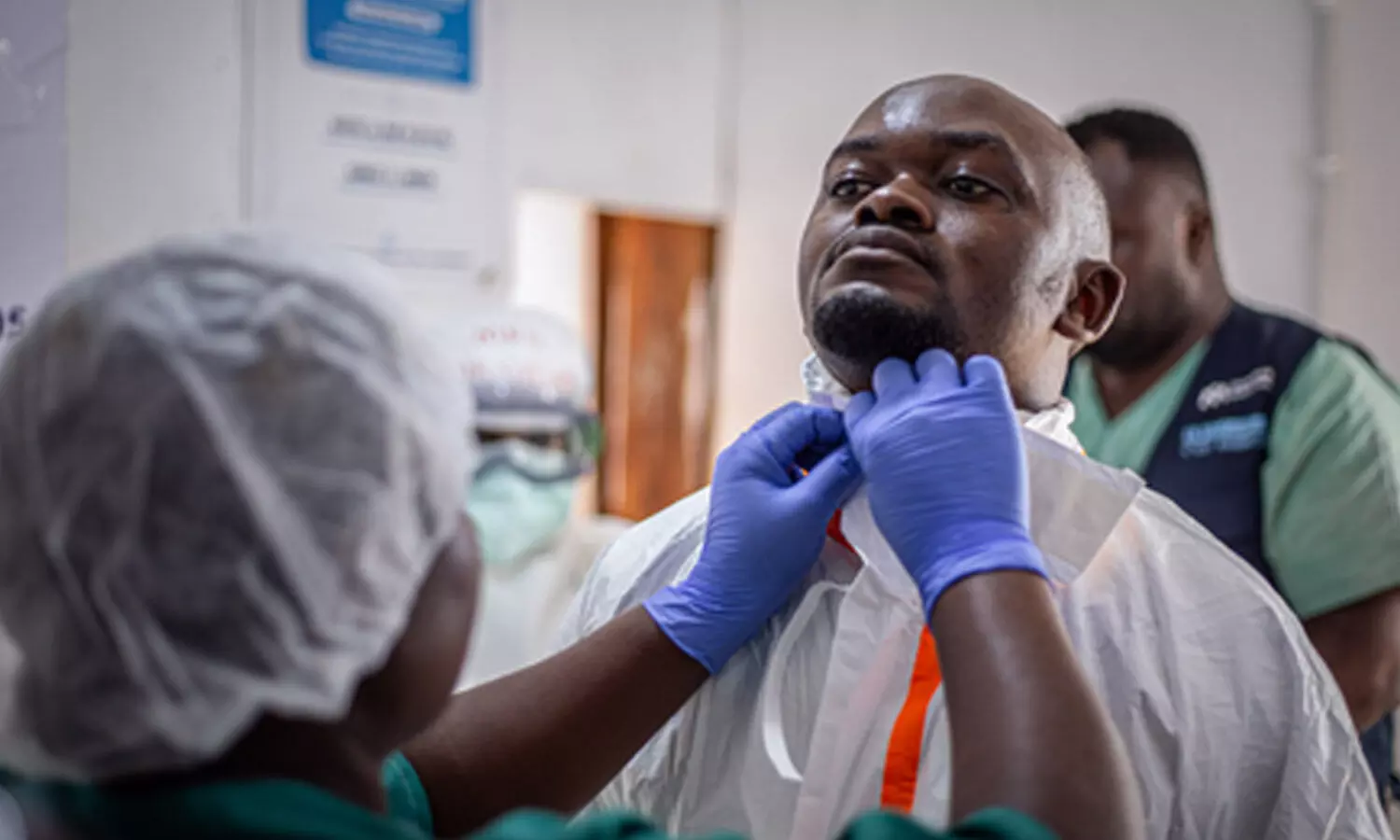
DR Congo Ebola Outbreak Exceeds 5,000 Cases, Outpacing Response Efforts
The Ebola outbreak in the Democratic Republic of Congo has surpassed 5,000 cases, making it the country's deadliest and the second-largest globally. The rapid spread is outpacing containment efforts due to factors like insecurity, mistrust, and limited resources. Children are disproportionately affected, accounting for a third of deaths despite fewer cases.
Key Highlights
- Over 5,000 Ebola cases reported, with 2,378 deaths recorded.
- Outbreak is the deadliest in DRC history and second largest globally.
- Insecurity and mistrust hinder response efforts.
- Children represent a significant portion of reported Ebola deaths.
- WHO declares it a Public Health Emergency of International Concern.
The Ebola outbreak in the Democratic Republic of Congo (DRC) has surpassed 5,000 confirmed cases, with over 2,378 deaths as of August 18, 2026. This grim milestone makes it the deadliest Ebola outbreak in the DRC's history, exceeding the toll of the 2018-2020 outbreak, and the second-largest globally, surpassed only by the 2014-2016 West Africa epidemic. The virus, identified as the Bundibugyo strain, is spreading at an unprecedented speed, outpacing response efforts in one of the country's remotest regions. The World Health Organization (WHO) declared the outbreak a Public Health Emergency of International Concern (PHEIC) on May 17, 2026, highlighting the high risk of further national and international spread.
The outbreak, officially declared on May 15, 2026, has now affected six provinces in the DRC: Ituri, North Kivu, South Kivu, Haut-Uélé, Tshopo, and Bas-Uélé. Ituri province remains the epicenter, accounting for approximately 85% of the country's confirmed cases. The rapid spread is attributed to a complex interplay of factors, including ongoing insecurity and armed conflict in affected areas, high population mobility, cross-border trade, and the presence of large refugee communities. These challenges significantly hamper response efforts, including surveillance, contact tracing, and the delivery of essential healthcare services.
Children are disproportionately affected by this outbreak. As of August 2, 2026, UNICEF reported that children under 18 accounted for approximately 21% of confirmed cases but a concerning 33% of reported deaths. This indicates a higher mortality burden among younger populations, with children under five having a case fatality rate more than double that of adults. The disruption of essential health services, including childhood immunizations and maternal care, further exacerbates the risks for children.
Key challenges in controlling the outbreak include the fact that the Bundibugyo strain of Ebola has no approved vaccine or specific treatment. While clinical trials for potential treatments and vaccines are underway, current response strategies rely heavily on public health measures such as supportive care, early case detection, infection prevention and control, rigorous contact tracing, and safe burial practices. However, these efforts are further complicated by misinformation, community distrust of health workers, and, in some instances, attacks on treatment centers.
The WHO has stated that while it is still possible to bring the outbreak under control, it requires significant resources and a concerted effort. The organization has raised about 60% of the $115 million it is seeking for the Ebola response, highlighting a funding gap. Other challenges include delayed detection of cases, overwhelmed surveillance teams, and a lack of experienced personnel.
The outbreak has also had regional implications, with cases confirmed in Uganda and France. Neighboring countries remain on high alert, with measures in place to prevent further spread.
Relevance to India:
While the Ebola outbreak is geographically distant from India, it serves as a critical reminder of the importance of global health security and pandemic preparedness. Lessons learned from this outbreak, particularly regarding rapid response, international cooperation, and the impact of misinformation, are crucial for India's own public health strategies. The interconnectedness of the world means that significant health crises anywhere can eventually have ripple effects globally, underscoring the need for continued vigilance and investment in global health initiatives.
Frequently Asked Questions
How many cases and deaths have been reported in the Democratic Republic of Congo's Ebola outbreak?
As of August 18, 2026, there have been over 5,021 confirmed cases and 2,378 deaths reported in the Democratic Republic of Congo.
Why is this Ebola outbreak considered particularly severe?
This outbreak is severe because it is spreading at an unprecedented speed, is the deadliest in DRC's history and second largest globally, and is caused by the Bundibugyo strain for which there is no approved vaccine or specific treatment.
What are the main challenges in controlling the outbreak?
Challenges include ongoing insecurity and conflict, high population mobility, community mistrust, misinformation, limited healthcare infrastructure, and a lack of adequate resources and funding for the response.
How are children affected by this Ebola outbreak?
Children account for a significant portion of both cases and deaths, with a higher mortality rate compared to adults. The outbreak also disrupts essential health services, further endangering children.