Iran Claims First Hit on US F-35 Stealth Jet; US Confirms Emergency Landing
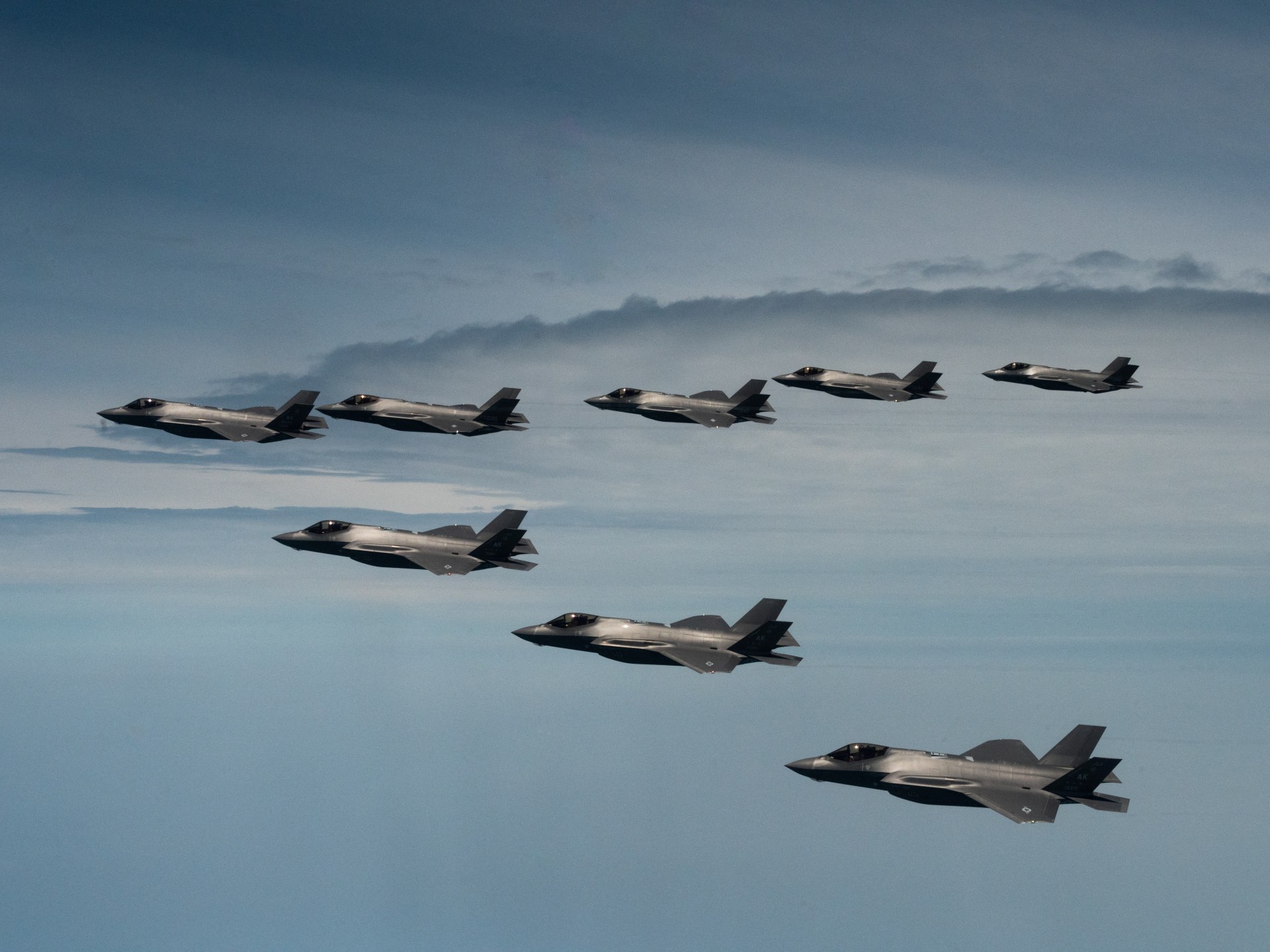
Iran claims to have successfully targeted and hit a US F-35 stealth fighter jet on March 19, 2026, forcing it to make an emergency landing. The US confirms an F-35 landed safely after suspected Iranian fire, initiating an investigation. This incident, if fully verified, marks a significant moment for the world's most advanced stealth aircraft.
Key Highlights
- Iran claims hitting a US F-35 fighter jet on March 19, 2026.
- US confirms F-35 emergency landing after suspected Iranian fire.
- Incident marks potential first combat hit on an F-35 stealth aircraft.
- Iran released purported video, US has not independently verified it.
- Questions raised about F-35's stealth capabilities and Iranian air defense.
- Geopolitical implications significant for global military strategies.
On March 19, 2026, Iran's Islamic Revolutionary Guard Corps (IRGC) claimed to have successfully targeted and hit a United States Air Force F-35 Lightning II stealth fighter jet over central Iran, an event it hailed as the "world's first hit" on such an advanced aircraft. The IRGC asserted that its air defense systems "struck and seriously damaged" the jet in the early hours of Thursday, March 19, and released footage purportedly showing the aircraft taking damage with explosions and smoke, veering off course mid-air. Iran suggested there was a "high possibility" the jet might have crashed.
In response, the United States acknowledged that a US F-35 fighter jet was forced to make an emergency landing at an American airbase in the Middle East after being struck by what is believed to be Iranian fire. Captain Tim Hawkins, a spokesperson for US Central Command (CENTCOM), confirmed that the fifth-generation stealth aircraft was on a combat mission over Iran when the incident occurred. He stated that the aircraft landed safely, and the pilot is in stable condition, with an investigation into the incident currently underway. US officials have not fully confirmed Iran's assertion that it successfully targeted the jet.
The F-35, America's most advanced stealth fighter, is renowned for its low-observable design intended to evade radar detection and is often considered "unkillable" or among the world's most advanced and costly aircraft. If Iran's claims are fully substantiated, this incident would mark the first time an F-35 has been hit in combat by enemy ground fire, raising significant questions about the effectiveness of stealth technology against improving air defenses.
The India Today article highlights that Iran's air defenses, which former US President Donald Trump had claimed were destroyed, managed to detect and hit the F-35. This perceived contradiction underscores the changing dynamics of modern warfare and the continuous evolution of military capabilities. Defense expert Sandeep Unnithan, cited in the India Today report, suggested that while stealth technology aims for invisibility to radar, other detection methods, such as heat signatures, could be exploited. This aligns with other reports suggesting Iran's air defense systems may utilize passive infrared sensors, which home in on heat rather than relying on radar, a tactic previously effective in Yemen against US MQ-9 Reaper drones.
The incident has significant geopolitical implications. It challenges the long-held notion of stealth aircraft invincibility and could influence future defense procurements and strategic planning for nations operating or considering acquiring F-35s. Approximately 15 countries currently operate various versions of the F-35. The jet was also reportedly offered to India by then-President Trump during Prime Minister Narendra Modi's visit to the White House, although India has not yet expressed interest. This makes the story particularly relevant to an Indian audience interested in defense technology and regional power balances.
In the broader context of recent events, the F-35 incident follows other reported US military losses and incidents in the region. These include the accidental downing of three F-15 Eagle jets by Kuwaiti defenses and a KC-135 Stratotanker crash in Iraq that killed six crew members, though the latter was ruled not due to hostile fire. Iran has also claimed to have downed over 125 US-Israeli drones, indicating an upgrading of its integrated air defense network.
While Iran's claims of hitting a second F-35 over Bandar Abbas were mentioned in the India Today article, this specific detail has received less corroboration across other major news sources, which primarily focus on the single F-35 incident and its emergency landing. The discrepancy between Iran's claim of a potential crash and the US confirmation of a safe emergency landing with the pilot stable is a key point of ongoing investigation and differing narratives. The independent verification of the footage released by Iran also remains pending.
Overall, the incident, regardless of the full extent of damage or 'takedown' as claimed by Iran, represents a notable development in military technology and international relations. It underscores the continuous arms race between offensive and defensive capabilities and the evolving nature of air warfare, prompting global attention and analysis.
Frequently Asked Questions
What is the primary claim made by Iran regarding the US F-35 jet?
Iran's Islamic Revolutionary Guard Corps (IRGC) claimed to have successfully targeted and hit a US F-35 stealth fighter jet over central Iran on March 19, 2026, marking it as the "world's first hit" on such an advanced aircraft.
How did the United States respond to Iran's claims?
The United States confirmed that an F-35 fighter jet made an emergency landing at a US airbase in the Middle East after being struck by what is believed to be Iranian fire. US Central Command stated that the aircraft landed safely, and the pilot is in stable condition, with an investigation underway.
Why is an F-35 being hit considered a significant event?
The F-35 is America's most advanced stealth fighter, designed to evade radar detection. If fully verified, this incident would be the first time an F-35 has been hit in combat by enemy ground fire, challenging its 'unkillable' reputation and raising questions about the effectiveness of stealth technology against modern air defenses.
What kind of technology is believed to have been used by Iran to hit the F-35?
While not definitively confirmed, experts suggest Iran's air defense systems may have utilized passive infrared sensors, which target an aircraft's heat signature rather than relying on radar, as stealth aircraft are less vulnerable to radar detection. Iran has also reportedly used advanced loitering munitions.
What are the broader implications of this incident for global military strategy?
This event could significantly impact global perceptions of military power and defense strategies, particularly regarding stealth aircraft capabilities and air defense effectiveness. It may lead to re-evaluations of military technology and influence future defense procurements, affecting countries like India that are interested in advanced fighter jets.