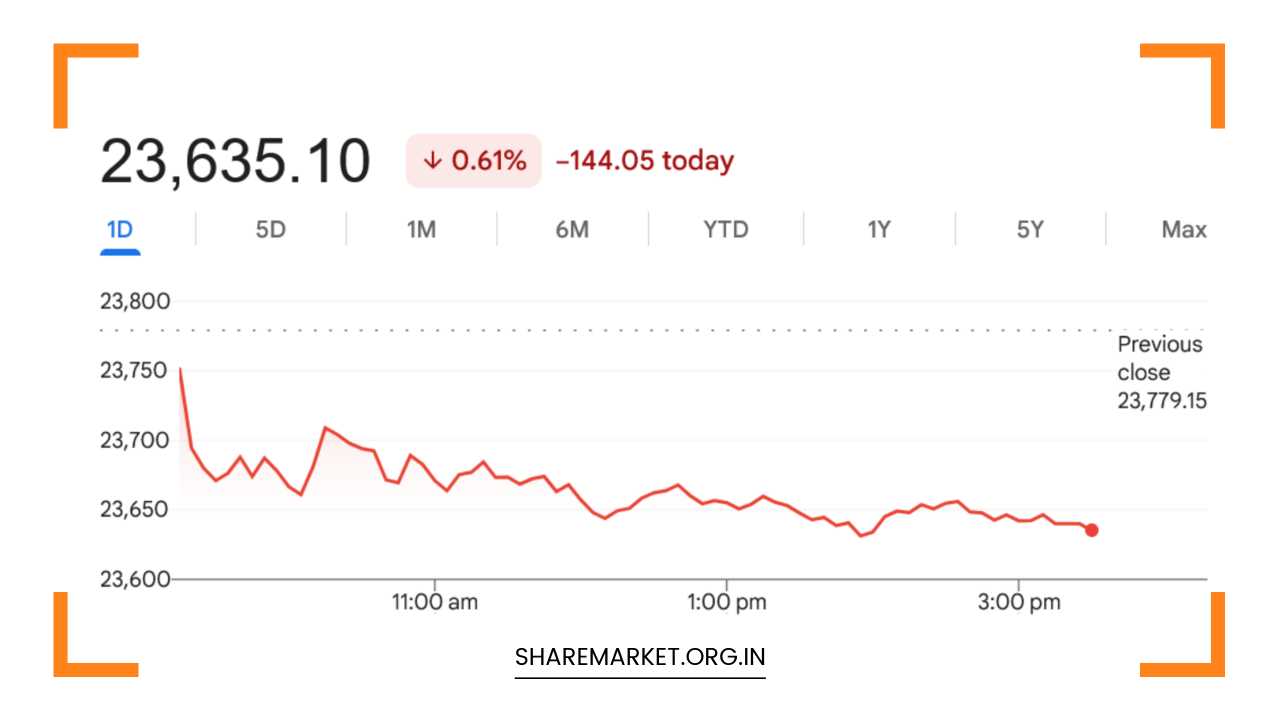
Sensex Plunges 1,092 Points on MSCI Rebalancing, Monsoon Fears
On May 29, 2026, India's Sensex dropped over 1,000 points, with MSCI index rebalancing, weak monsoon forecasts, and US-Iran geopolitical tensions contributing to a sharp market sell-off. The market saw significant foreign fund outflows as a result of these combined factors.
Key Highlights
- Sensex fell over 1,000 points on May 29, 2026.
- MSCI rebalancing was a major factor for the market drop.
- Weak monsoon forecasts also fueled investor anxieties.
- Geopolitical uncertainties added to the selling pressure.
- The market witnessed sharp selling in the final hour of trading.
- India's weight in MSCI Standard Index remained broadly unchanged.
On Friday, May 29, 2026, the Indian equity benchmarks, Sensex and Nifty, experienced a significant downturn, with the Sensex plunging 1,092.06 points, or 1.44 per cent, to close at 74,775.74. The Nifty50 similarly declined by 359.40 points, or 1.50 per cent, settling at 23,547.75. This sharp market correction, which occurred particularly in the closing hours of trading, wiped out nearly ₹6 lakh crore in investor wealth. The Moneycontrol.com article titled "The MSCI rebalancing candle: Here's why Sensex fell 850 points in 10 minutes today" accurately identifies a substantial market fall and attributes it to MSCI rebalancing, although the precise figure of '850 points in 10 minutes' appears to be an internal observation or a slightly sensationalized representation of a rapid decline within a broader, more protracted sell-off in the final trading hour. The actual closing fall of the Sensex was significantly higher than the 850 points mentioned, reaching over 1,000 points, and intraday it even touched a low of 74,589.11, implying a drop of as much as 1,278.69 points from its high on that day.
A primary catalyst for this market volatility was the May 2026 rebalancing of the MSCI (Morgan Stanley Capital International) indices, which became effective at the close of trading on May 29, 2026. MSCI, a leading global provider of research-based tools and services for investors, conducts quarterly index reviews, with May and November typically being the more significant semi-annual reviews. For India, the May 2026 rejig involved the inclusion of four companies—Federal Bank, Multi Commodity Exchange (MCX), National Aluminium (NALCO), and Indian Bank—into the MSCI Standard Index. Simultaneously, four other companies, namely Hyundai Motor India, Jubilant Foodworks, Kalyan Jewellers, and Rail Vikas Nigam (RVNL), were excluded. Despite these changes at the stock level, India's overall representation and weight in the MSCI Standard Index remained broadly unchanged at 165 stocks.
However, the adjustments triggered significant passive fund flows, as global index funds and Exchange Traded Funds (ETFs) that track MSCI benchmarks reallocated their portfolios to align with the revised index composition. This mechanical rebalancing led to an estimated foreign investment outflow of nearly $800 million to $1 billion from Indian equities on that day. Such large outflows can exert considerable downward pressure on the market, especially when compounded by other factors. Indeed, analysts expected significant passive inflows into the newly added stocks and outflows from the deleted ones.
Beyond the MSCI rebalancing, several other macroeconomic and geopolitical factors contributed to the heightened investor anxiety and subsequent market decline. A crucial domestic concern was the forecast of a weak monsoon by the India Meteorological Department (IMD). The IMD projected below-normal rainfall, anticipating only 90 per cent of the Long Period Average (LPA) for the June-September southwest monsoon season. For an agrarian economy like India, a deficient monsoon can trigger fears of lower agricultural output, rising food inflation, and subdued rural demand, significantly impacting overall economic growth and corporate earnings.
Globally, lingering uncertainties surrounding a potential US-Iran deal and broader geopolitical tensions in West Asia also weighed heavily on investor sentiment. Such geopolitical instability often leads to a risk-off sentiment among global investors, prompting them to withdraw from emerging markets like India. Additionally, continued foreign fund outflows, beyond those specifically linked to MSCI rebalancing, contributed to the selling pressure observed in the market.
The market's performance on May 29, 2026, illustrates how multiple intertwined factors—ranging from technical index adjustments and domestic economic indicators to international geopolitical events—can collectively influence investor behavior and market direction. While the MSCI rebalancing was a direct trigger for substantial fund movements, the prevailing concerns about the monsoon and global stability amplified its impact, leading to a broader sell-off across various sectors. The IT sector was one of the few gainers amidst the widespread selling, perhaps due to optimism surrounding AI-linked deals and improving global tech sentiments.
Frequently Asked Questions
What is MSCI rebalancing and why is it important?
MSCI (Morgan Stanley Capital International) rebalancing refers to the periodic adjustments made to the composition and weightings of its global indices. These indices are widely tracked by global institutional investors, and changes in them can lead to significant passive fund inflows or outflows as investment funds adjust their portfolios to mirror the updated index, impacting stock prices and overall market sentiment.
What caused the Indian stock market to fall sharply on May 29, 2026?
The Indian stock market experienced a significant fall on May 29, 2026, primarily due to the effective date of MSCI index rebalancing which triggered foreign fund outflows. This was exacerbated by a weak monsoon forecast from the IMD and ongoing geopolitical uncertainties stemming from US-Iran negotiations, all contributing to a broad-based sell-off.
How did the May 2026 MSCI rebalancing specifically affect India?
The May 2026 MSCI rebalancing saw the inclusion of Federal Bank, MCX, NALCO, and Indian Bank, and the exclusion of Hyundai Motor India, Jubilant Foodworks, Kalyan Jewellers, and RVNL from the MSCI Standard Index. While India's overall weight in the index remained broadly unchanged, these specific stock-level adjustments led to substantial passive fund reallocation and an estimated foreign investment outflow of $800 million to $1 billion.
Was the '850 points in 10 minutes' claim accurate?
The claim of Sensex falling 850 points in 10 minutes is an exaggeration. While the Sensex did experience a sharp and rapid decline, particularly in the final trading hour, the total fall on May 29, 2026, was over 1,000 points at closing. Other sources mention a 'sharp sell-off in the final hour' rather than a precise '10-minute' event for that specific point drop.
What role did monsoon forecasts play in the market decline?
The India Meteorological Department's (IMD) forecast of a below-normal monsoon (90% of LPA) for the June-September season significantly impacted investor sentiment. Concerns about reduced agricultural output, potential food inflation, and a dampening of rural demand contributed to the market's downturn, as India's economy is highly sensitive to monsoon performance.