India Explains Skipping BRICS Naval Drill Amid Geopolitical Shifts | Quick Digest
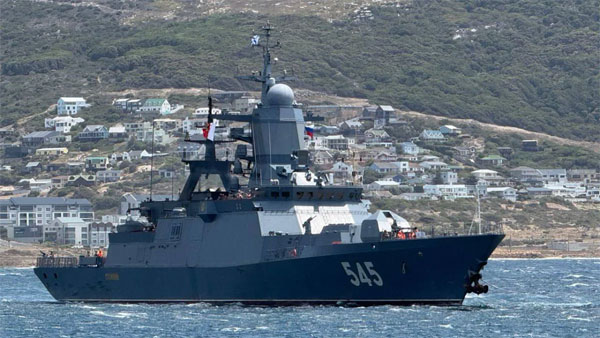
India clarified its non-participation in the 'Will for Peace 2026' BRICS naval exercise, stating it was a South African initiative and not an institutional BRICS activity. This decision underscores India's focus on economic cooperation within BRICS and strategic autonomy in defence engagements.
India skipped the 'Will for Peace 2026' BRICS naval exercise.
MEA cited non-institutional nature and South African initiative as reasons.
China, Russia, Iran, and others participated in the South African drill.
India prioritizes IBSAMAR for naval cooperation with Brazil and South Africa.
Decision reflects India's geopolitical balancing and BRICS' economic focus.
Exercise signals evolving security dynamics within the Global South.
India opted out of the week-long 'Will for Peace 2026' BRICS naval exercise, hosted by South Africa from January 9 to January 16, 2026. The drills, which included navies from China, Russia, Iran, Egypt, Indonesia, Saudi Arabia, and the United Arab Emirates, were led by China. Brazil, another founding BRICS member, also limited its involvement to observer status.
In defence of its decision, India's Ministry of External Affairs (MEA) spokesperson Randhir Jaiswal clarified that the exercise was 'entirely a South African initiative' and not a 'regular or institutionalised BRICS activity.' The MEA further stated that not all BRICS members participated and India has historically not joined such activities. India highlighted its regular maritime cooperation through the IBSAMAR (India-Brazil-South Africa Maritime) exercise, whose last edition was in October 2024.
Beyond the official explanation, analysts suggest India's non-participation was a 'considered political decision.' This move helps India maintain strategic autonomy and avoid being perceived as aligning with an anti-Western military bloc, particularly given the involvement of nations like China, Russia, and Iran with strained relations with the United States. India, which holds the BRICS chair in 2026, aims to keep the grouping focused on its original mandate of economic and development cooperation rather than transforming into a security-focused alliance. The exercise itself has been interpreted as a display of expanding security cooperation within the 'BRICS+' framework and a burgeoning alliance of the 'Global South' seeking to define an alternative to Western-led security paradigms.
Read the full story on Quick Digest