Nepal PM Claims India Encroached Nepal's Territory, Seeks UK Mediation
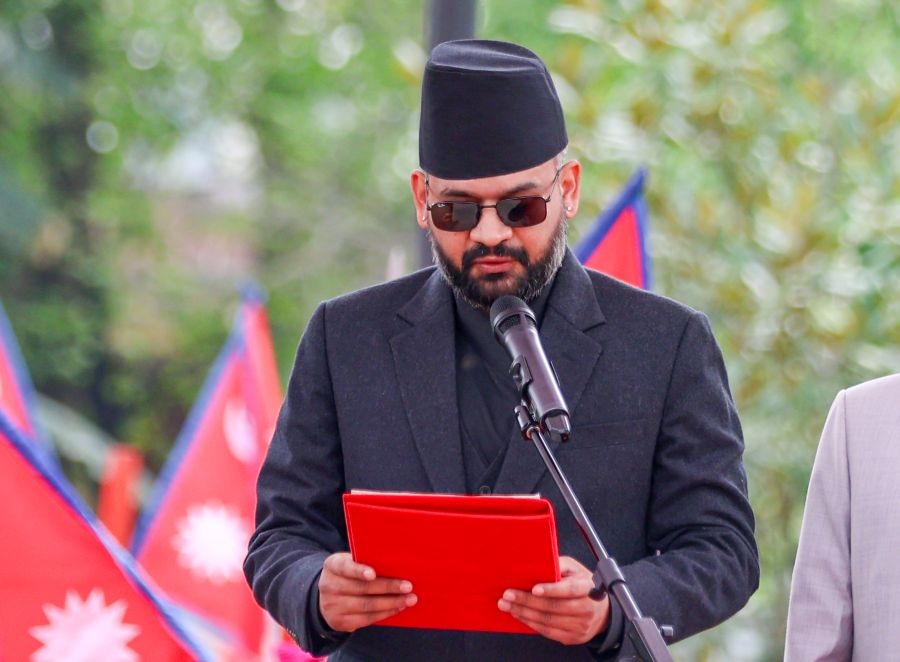
Nepal's Prime Minister Balendra Shah has stated that India has encroached upon Nepalese territory, drawing parallels to Nepal's own alleged actions. He has called for dialogue and suggested the involvement of the UK and China in resolving border disputes. This statement has sparked a diplomatic row between the two neighboring countries.
Key Highlights
- Nepal PM alleges Indian encroachment on Nepalese land.
- Balendra Shah calls for bilateral dialogue to resolve border issues.
- Nepal seeks UK and China's involvement in mediation efforts.
- Statement triggers diplomatic tensions between Nepal and India.
- Border disputes reportedly have historical roots dating back to British India.
Nepal's Prime Minister Balendra Shah has ignited a diplomatic controversy by asserting that India has encroached upon Nepalese territory, while also acknowledging that Nepal may have reciprocated by encroaching on Indian land. This complex statement, reported by major Indian news outlets, highlights long-standing border disputes between the two South Asian neighbors.
Shah's remarks were made in a context where Nepal has been actively seeking to address its territorial claims, particularly concerning areas like the Lipulekh Pass. The Nepalese Prime Minister has publicly called for dialogue with India to find a peaceful resolution to these border issues. Significantly, he has also indicated a willingness to involve third-party mediators, specifically mentioning the United Kingdom and China.
The involvement of external parties in mediating border disputes between India and Nepal is a sensitive matter. Nepal's outreach to the UK, a former colonial power with historical ties to the region, and China, a rising geopolitical force and a neighbor to both nations, underscores the multi-faceted nature of the regional dynamics. The reference to the historical roots of these issues, dating back to the British India era, suggests a complex legacy that continues to shape present-day relations.
The Indian government has historically approached border disputes with its neighbors through bilateral channels. The suggestion of third-party mediation, especially involving countries with significant geopolitical interests, could complicate these discussions. The related articles indicate that Nepal's stance has triggered a row, prompting strong reactions and discussions within India.
This situation is particularly relevant to India, given the deep historical, cultural, and economic ties between the two countries. Border management and territorial integrity are paramount concerns for India. The ongoing discourse also touches upon the broader geopolitical landscape of South Asia, where the influence of major powers like China is a constant factor.
Balendra Shah, as the mayor of Kathmandu, has emerged as a prominent voice in Nepal's political discourse, and his statements carry significant weight. His assertion about mutual encroachment suggests a nuanced, albeit controversial, approach to acknowledging the complexities of the border situation. The call for dialogue and mediation, while potentially constructive, also presents a diplomatic challenge for India, which typically prefers to handle such matters directly with its neighbors.
Further investigation into the specific territories and historical claims is essential to fully understand the depth of the dispute. The claims of encroachment, whether on Nepalese or Indian soil, are rooted in differing interpretations of historical treaties, maps, and administrative boundaries established during and before the British colonial period. The current geopolitical climate, marked by India's assertive foreign policy and China's expanding global influence, adds another layer of complexity to these already sensitive discussions.
The Indian media's coverage reflects a keen interest in this development, emphasizing the potential diplomatic fallout and the implications for India-Nepal relations. The Prime Minister's statements are likely to be closely watched by regional policymakers and international observers alike. The situation warrants a comprehensive understanding of the historical context, the specific border areas in contention, and the potential diplomatic pathways forward. The urgency of the situation stems from the potential for escalated tensions and its impact on regional stability.
Frequently Asked Questions
What is the main claim made by Nepal's Prime Minister Balendra Shah?
Nepal's Prime Minister Balendra Shah has claimed that India has encroached upon Nepalese territory, while also suggesting that Nepal might have encroached on Indian land. He has called for dialogue to resolve these border issues.
Which countries has Nepal suggested involving in border dispute mediation?
Nepal has suggested involving the United Kingdom and China in mediating the border disputes with India.
What is the historical context of the Nepal-India border disputes?
The border disputes between Nepal and India have historical roots, reportedly dating back to the British India era, involving differing interpretations of treaties, maps, and administrative boundaries.
How has India typically approached border disputes with its neighbors?
India has historically preferred to resolve border disputes through bilateral channels, directly engaging with its neighboring countries.