ISRO PSLV-C62 Mission Fails: 15 Satellites Lost, Spanish 'KID' Survives | Quick Digest
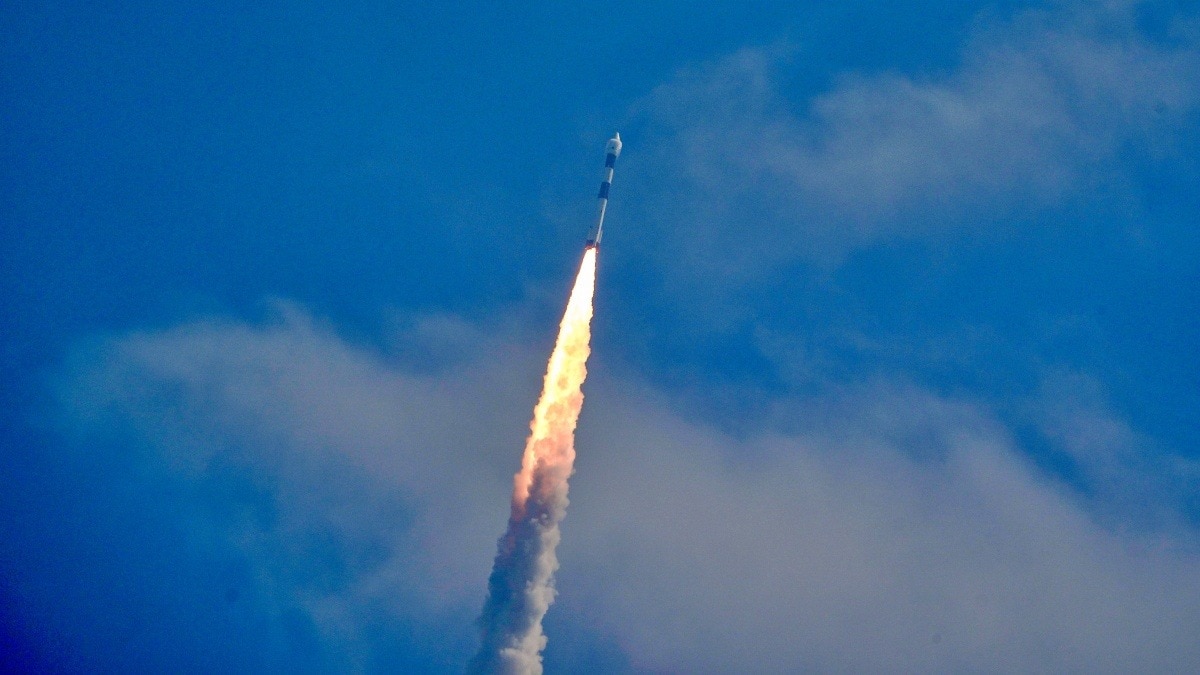
ISRO's PSLV-C62 mission suffered a setback on January 12, 2026, failing to place 16 satellites into orbit due to a third-stage anomaly. While 15 satellites were lost, a Spanish re-entry capsule named KID unexpectedly survived the descent and transmitted data.
ISRO's PSLV-C62 mission launched on January 12, 2026, from Sriharikota.
Mission failed due to an anomaly in the rocket's third stage.
Fifteen out of sixteen satellites onboard were confirmed lost.
Spanish 'KID' capsule defied odds by separating and transmitting data.
This marks the second consecutive PSLV mission setback for ISRO.
Detailed analysis is underway to determine the cause of the anomaly.
The Indian Space Research Organisation (ISRO) encountered a significant setback with its PSLV-C62/EOS-N1 mission, which lifted off on January 12, 2026, at 10:17 AM IST from the Satish Dhawan Space Centre in Sriharikota. The mission, intended to deploy a primary Earth Observation Satellite (EOS-N1/Anvesha) and 15 co-passenger satellites, suffered an anomaly during the critical third stage of its flight. This malfunction, described as a disturbance in flight controls related to roll-rates or a drop in chamber pressure, prevented the rocket from achieving its intended orbit, leading to the loss of most payloads.
Out of the 16 satellites onboard, 15 are reported to have been lost, likely re-entering the atmosphere and burning up or drifting as space debris. This included significant Indian payloads such as DRDO's strategic surveillance satellite Anvesha, India's first in-orbit refuelling experiment AayulSAT, and a student-developed satellite CGUSAT, along with commercial payloads from countries like Thailand, the UK, Brazil, and Nepal.
However, a remarkable outlier emerged: the Kestrel Initial Technology Demonstrator (KID), a 25-kg re-entry capsule from Spanish startup Orbital Paradigm. Against initial expectations, the KID capsule separated from the rocket's fourth stage, powered on, and transmitted critical telemetry data for approximately 190 seconds (about 3 minutes) before splashing down in the remote southern Indian Ocean. Orbital Paradigm confirmed that KID survived extreme re-entry conditions, validating its design for future reusable capsules and offering invaluable data.
This marks the second consecutive failure for ISRO's workhorse PSLV rocket, following a similar third-stage anomaly in the PSLV-C61 mission in May 2025. ISRO Chairman V. Narayanan acknowledged the mission's deviation and stated that a detailed failure analysis has been initiated. The repeated setbacks raise concerns about the reliability of the PSLV program and its impact on India's ambitious space schedule and commercial launch services.
Read the full story on Quick Digest