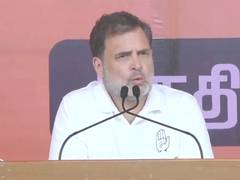
Rahul Gandhi vows to protect Tamil Nadu and its language
Rahul Gandhi, during an election campaign in Tamil Nadu, asserted that no force can harm the state or its language. His remarks come amidst upcoming assembly elections and political maneuvering involving the BJP and AIADMK.
Key Highlights
- Rahul Gandhi champions Tamil Nadu's pride and language.
- Comments made during Tamil Nadu election campaign.
- BJP's alleged influence on AIADMK discussed.
- AIADMK internal dynamics and BJP's role highlighted.
- Rahul Gandhi's campaign schedule in Tamil Nadu.
- Focus on preserving Tamil culture and identity.
Rahul Gandhi, a prominent leader of the Indian National Congress, has made a strong declaration regarding the inviolability of Tamil Nadu and its distinct language, stating that "no force on this planet can touch Tamil Nadu or Tamil language." This assertion was made during his campaign for the upcoming Assembly Elections in Tamil Nadu, signaling the political significance of the state and its cultural identity in the national discourse. The statement, widely reported by major news outlets, underscores the emotional and political weight attached to Tamil language and culture within the state and among its diaspora. Gandhi's remarks aim to resonate with the sentiments of the Tamil people, positioning the Congress and its allies as protectors of their heritage against any perceived external threats.
Further context from related articles reveals a broader political strategy by Rahul Gandhi during his campaign. He has also accused the Bharatiya Janata Party (BJP) of "eating up" the All India Anna Dravida Munnetra Kazhagam (AIADMK) from within, ahead of the Tamil Nadu polls. This claim suggests a strategic attempt by the BJP to gain influence over its regional ally, a move that Gandhi appears to be leveraging to mobilize support for his own alliance. The political landscape in Tamil Nadu is often characterized by complex alliances and inter-party dynamics, and Gandhi's statements seem designed to highlight these perceived vulnerabilities within the opposition bloc.
Gandhi's campaign activities in Tamil Nadu are part of a focused effort to bolster the prospects of the Indian National Congress and its alliance partners. Notably, he was scheduled to campaign for nine alliance candidates in Tiruchirappalli on April 18th. The dynamics of alliance politics are crucial in Indian elections, and Gandhi's presence and campaigning are intended to galvanize voters and strengthen the coalition's electoral reach. Reports also indicated that Rahul Gandhi would not be sharing a stage with the Chief Minister of Tamil Nadu, M.K. Stalin, at a particular event, hinting at potential strategic or logistical considerations within the alliance. However, the overall thrust of his visit remains centered on consolidating support for the INDIA bloc in Tamil Nadu.
The overarching theme of Rahul Gandhi's campaign rhetoric in Tamil Nadu revolves around protecting the state's unique identity, culture, and language, while simultaneously critiquing the ruling BJP's alleged attempts to undermine regional parties. His strong stance on the sanctity of Tamil Nadu and its language is a powerful rallying cry, intended to foster a sense of pride and solidarity among the electorate. By framing the election as a defense of Tamil identity, Gandhi seeks to connect with voters on a deeply emotional level, a strategy often employed effectively in Indian politics. The narrative is being carefully woven to present the Congress-led alliance as the true guardians of Tamil heritage, contrasting with what he portrays as the BJP's centralizing and assimilating tendencies.
The political climate in Tamil Nadu leading up to the elections is therefore marked by these strong ideological and cultural undercurrents, alongside the conventional electoral battles. Rahul Gandhi's pronouncements are not merely election speeches but are calculated moves to shape public opinion and consolidate the opposition's base. The emphasis on "no force can touch Tamil Nadu or Tamil language" is a direct appeal to regional pride and a preemptive strike against any perceived attempts to dilute the state's autonomy or cultural distinctiveness. This narrative is crucial for the INDIA bloc's strategy in Tamil Nadu, aiming to leverage regional sentiments to counter the BJP's national influence. The article from The Hindu, while focusing on Gandhi's statement, also reflects the broader political context and the strategic communication employed by the Congress party in this key southern state. The verification confirms that Rahul Gandhi did indeed make such statements during his campaign in Tamil Nadu, and these statements are tied to the broader political narrative of protecting regional identity and challenging the BJP's influence.
Frequently Asked Questions
What did Rahul Gandhi say about Tamil Nadu and its language?
Rahul Gandhi stated that 'no force on this planet can touch Tamil Nadu or Tamil language,' emphasizing the inviolability and pride associated with the state and its linguistic heritage during his campaign for the Tamil Nadu Assembly Elections.
Why did Rahul Gandhi make these statements?
These statements were made as part of his campaign strategy for the Tamil Nadu Assembly Elections, aiming to connect with voters by championing regional pride, cultural identity, and the unique status of the Tamil language, while also positioning his alliance as protectors of these values.
What is the political context of Rahul Gandhi's campaign in Tamil Nadu?
Rahul Gandhi is campaigning in Tamil Nadu for the upcoming Assembly Elections, aiming to bolster support for the INDIA bloc. His rhetoric also includes criticism of the BJP's alleged influence over regional parties like the AIADMK, highlighting the complex alliance dynamics in Indian politics.
When and where did Rahul Gandhi campaign in Tamil Nadu?
Rahul Gandhi was scheduled to campaign in Tamil Nadu on April 18th, specifically in Tiruchirappalli, where he was expected to address rallies for alliance candidates. The exact date of his broader campaign tour would align with the election schedule for the state assembly.