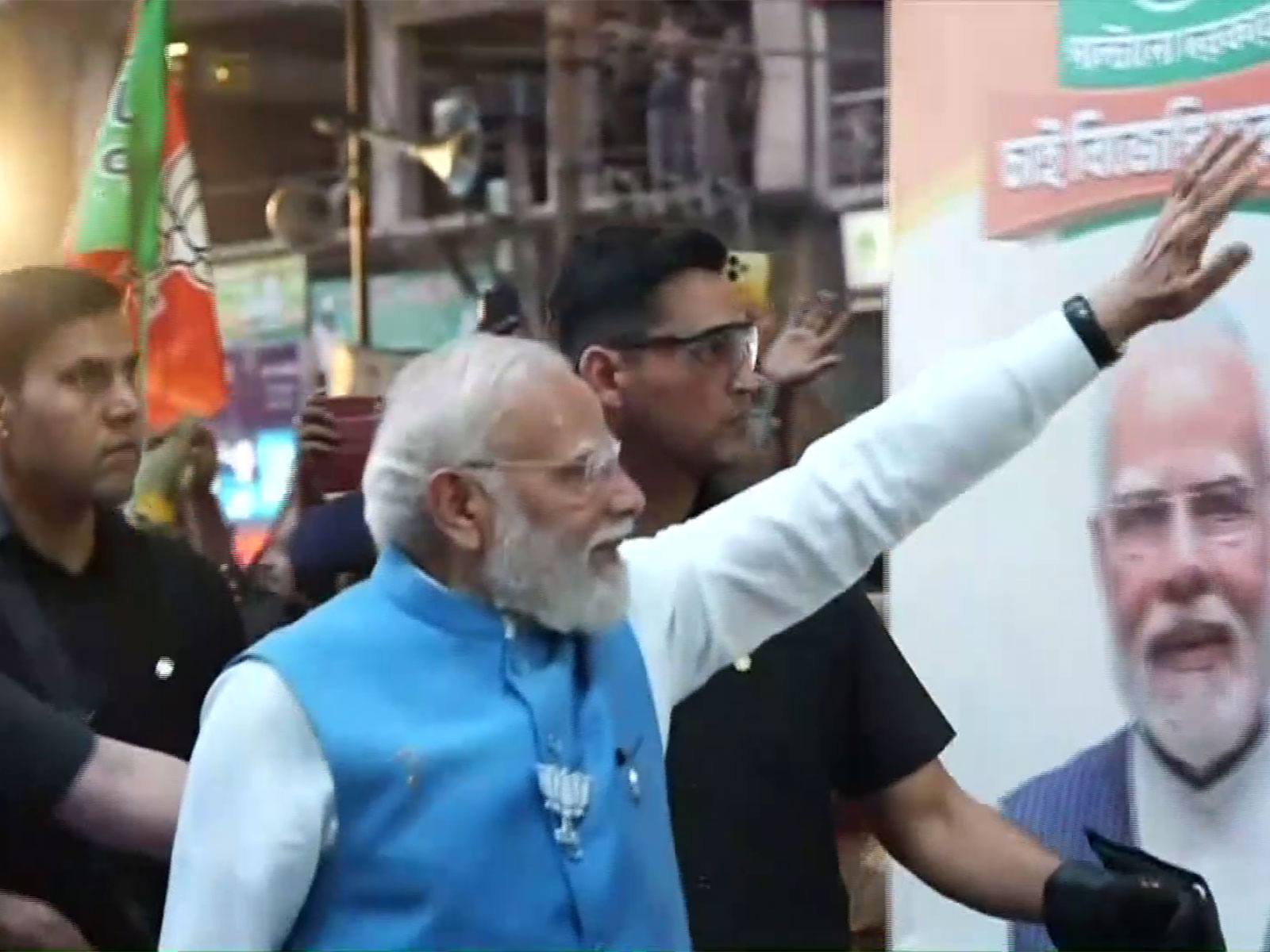
PM Modi Addresses Siliguri Rally Amidst West Bengal Poll Campaigns
Prime Minister Narendra Modi is addressing a significant election rally in Siliguri, West Bengal, on April 12, 2026, as campaigning intensifies for the upcoming two-phase Assembly elections scheduled for April 23 and 29. The rally focuses on key BJP electoral promises and criticisms against the ruling TMC.
Key Highlights
- PM Modi holds major election rally in Siliguri on April 12, 2026.
- West Bengal Assembly Elections scheduled for April 23 and 29, 2026.
- Modi's campaign targets TMC's alleged misrule and corruption.
- BJP promises UCC implementation and CAA citizenship for refugees.
- Rally is part of BJP's intensified outreach in North Bengal.
- Election results for West Bengal to be declared on May 4, 2026.
Prime Minister Narendra Modi is scheduled to address a major election rally, termed a 'Vijay Sankalp Sabha', in Siliguri, West Bengal, on Sunday, April 12, 2026, marking a pivotal moment in the ongoing, high-stakes campaign for the state's Assembly elections. The event, expected to draw a substantial crowd, is part of the Bharatiya Janata Party's (BJP) aggressive outreach to consolidate support, particularly in central and north Bengal where the party aims to deepen its challenge to the incumbent Trinamool Congress (TMC).
The West Bengal Assembly Elections are indeed slated for 2026, with polling set to occur in two phases on April 23 (Thursday) and April 29 (Wednesday) to elect all 294 members of the Legislative Assembly. The crucial counting of votes and declaration of results are scheduled for May 4, 2026. The Election Commission of India announced the full schedule on March 15, 2026, highlighting that over 3.6 crore voters will be eligible to cast their ballots in the first phase alone.
Modi's address in Siliguri comes amidst an intense political atmosphere, following his previous rallies across various districts of West Bengal, including Katwa, Jangipur, and Kushmandi, on April 11, 2026. He also held a mega roadshow in Bagdogra near Siliguri on Saturday evening, which saw thousands lining the streets, chanting slogans and demonstrating strong public support. This robust campaign reflects the BJP's determined effort to unseat the TMC, which has governed the state since 2011.
During his ongoing campaign, Prime Minister Modi has consistently focused on several key issues. He has sharply criticised the Mamata Banerjee-led TMC government, accusing it of 'misrule' and fostering a 'syndicate system' and 'politics of appeasement'. Modi has vowed that a BJP government in West Bengal would usher in an era of 'Bharosa' (trust) over the TMC's alleged 'Bhoy' (fear) and ensure accountability of public servants.
A significant promise reiterated by the Prime Minister is the implementation of the Uniform Civil Code (UCC) in the state. He declared BJP's commitment to bringing UCC within six months of coming to power, aiming to end 'religion-based reservation policy' and 'vote-bank politics'. This stance has led to a direct clash with Chief Minister Mamata Banerjee, who has strongly denounced the UCC.
Furthermore, the issue of citizenship under the Citizenship Amendment Act (CAA) for refugee communities, particularly Matuas and Namasudras, who are Hindus from Bangladesh, remains a central theme in Modi's speeches. He has pledged that those who have endured decades of suffering and sought refuge in India would finally receive justice and citizenship under the CAA. This promise resonates deeply with a significant voter base in West Bengal.
Modi has also addressed concerns about corruption and law and order, promising that a BJP government would release a 'White Paper' on corruption and establish a high-level probe into political violence in the state. He has also raised concerns about infiltration, vowing to hold both illegal entrants and their facilitators accountable. Additionally, the BJP's manifesto includes promises of financial assistance for women, benefits for farmers, and job creation for youth, aiming to expand its voter base across various demographics.
The political landscape in West Bengal is highly charged, with the ruling TMC facing a formidable challenge from the BJP, while the Left Front also endeavors to regain its lost ground. The outcome of these elections will undoubtedly play a crucial role in shaping the political future of eastern India, making every rally, including PM Modi's address in Siliguri, a critical event in the electoral battle. Other national leaders, such as Uttar Pradesh Chief Minister Yogi Adityanath, are also holding rallies, while Chief Minister Mamata Banerjee is conducting multiple counter-rallies across the state. The election is perceived as a 'battle for Bengali identity', with both major parties intensely fighting to woo voters, especially women, youth, and beneficiaries of welfare schemes.
Frequently Asked Questions
When are the West Bengal Assembly Elections scheduled for?
The West Bengal Assembly Elections are scheduled to be held in two phases on April 23 and April 29, 2026, with the results to be declared on May 4, 2026.
What is the purpose of PM Modi's rally in Siliguri?
Prime Minister Narendra Modi's rally in Siliguri on April 12, 2026, is a key part of the BJP's intensified campaign for the upcoming West Bengal Assembly Elections, aimed at consolidating party support and challenging the ruling Trinamool Congress.
What key issues is PM Modi addressing in his West Bengal campaign?
PM Modi is addressing issues such as the alleged misrule and corruption of the TMC government, promising implementation of the Uniform Civil Code (UCC), ensuring citizenship for refugees under the CAA, and outlining various welfare schemes and development promises.
Which other prominent leaders are campaigning in West Bengal?
Besides Prime Minister Narendra Modi, Uttar Pradesh Chief Minister Yogi Adityanath is also holding rallies for the BJP, while West Bengal Chief Minister Mamata Banerjee is conducting multiple rallies for the Trinamool Congress across the state.