Slogans Shape Tone of 2026 Assembly Elections in Key Indian States
Catchy political slogans significantly influenced the tone and narrative of the recently concluded 2026 Assembly elections in West Bengal, Tamil Nadu, Kerala, and Assam. Parties strategically deployed phrases tailored to local sentiments and issues, energizing campaigns and shaping voter perception amidst fierce electoral battles across these states.
Key Highlights
- Slogans are crucial tools for political mobilization and narrative-building in Indian elections.
- West Bengal saw 'Jotoi koro hamla, abar jitbe Bangla' and 'Bhoy out, Bharosa in' as key slogans.
- Tamil Nadu campaigns featured 'Makkalai Kappom, Thamizhagathai Meetpom' and DMK's welfare pitch.
- Kerala's electoral battle had 'Mattarund LDF allathe?' and 'Maarathathu ini marum, Keralam valarum'.
- Assam elections were dominated by 'Bar Bar BJP Sarkar' and identity-driven narratives.
- Elections in these states recorded high voter turnouts, with results expected on May 4, 2026.
Political slogans emerged as powerful instruments in shaping the tone and narrative of the recently concluded 2026 Assembly elections across West Bengal, Tamil Nadu, Kerala, and Assam, as highlighted by a Times of India report published on May 3, 2026. These concise and emotionally resonant phrases are crucial for political parties to energize their campaigns, communicate core messages, and leave a lasting impression on voters, often doing the 'heavy lifting' that speeches and manifestoes elaborate upon.
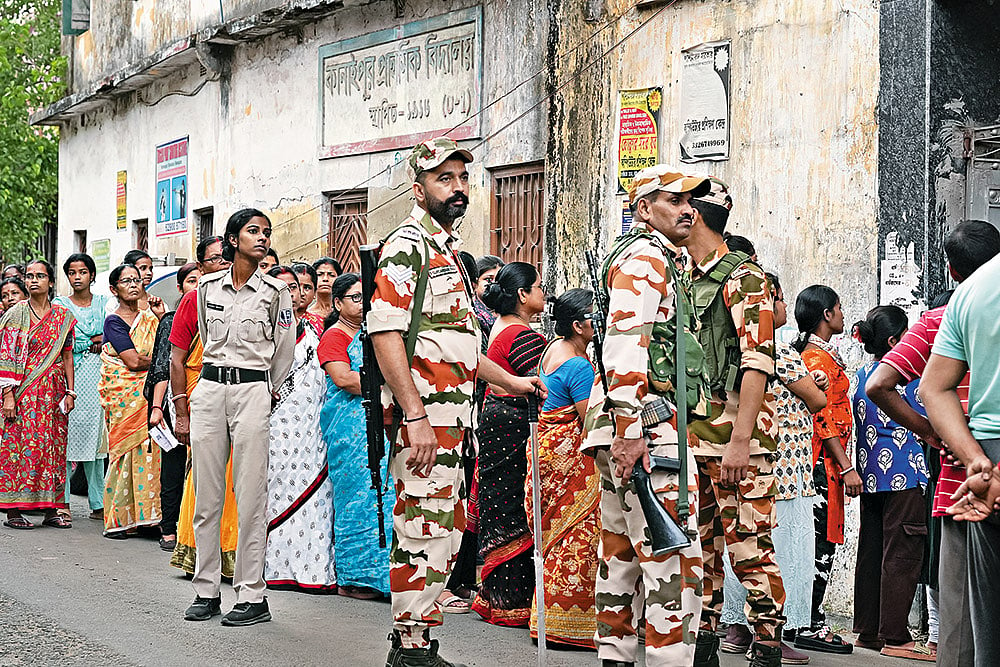
In West Bengal, the electoral landscape was marked by intense rivalry between the Trinamool Congress (TMC) and the Bharatiya Janata Party (BJP). The TMC, building on its successful 2021 'Khela Hobe' (The game is on) war cry, adopted 'Jotoi koro hamla, abar jitbe Bangla' (Attack as much as you want, Bengal will win again) for the 2026 polls. This slogan invoked themes of regional identity and protection against perceived external threats, referencing attacks on religion and the Bengali language and emphasizing 'saving Bengal's plurality' with the historically charged term 'borgi'. The BJP countered with slogans like 'Bhoy out, Bharosa in, BJP ke vote din' (Fear out, trust in, vote BJP), positioning the election as a battle to instill trust and eliminate fear. Prime Minister Narendra Modi's campaign rhetoric reinforced this by promising an end to 'bhoy' and the awakening of 'bharosa' through a grand BJP victory. The BJP also integrated religious and cultural identity into its messaging with chants such as 'Joy Maa Kali,' 'Joy Maa Durga,' and the pan-India 'Jai Shri Ram'. Another direct counter to TMC's 'Khela Hobe' was the BJP's 'Ebar Khela Sesh Hobe' (this time the game will be definitely over) and a focus on development with 'Vikash hobe, chakri hobe, haspatal hobe, school hobe' (development, jobs, hospitals, schools). The West Bengal elections, held in two phases on April 23 and April 29, 2026, saw a historic voter turnout exceeding 92%. Notably, the Election Commission focused on ensuring 'death-free polls,' a significant achievement given the state's history of political violence.
Tamil Nadu's 2026 Assembly elections were a crucial contest where alliances deployed distinct slogans. The AIADMK–BJP alliance centered its campaign around 'Makkalai Kappom, Thamizhagathai Meetpom' (Let us protect the people, let us reclaim Tamil Nadu). This slogan framed the election as a 'course correction' necessary to 'rescue' the state from the incumbent DMK government, tapping into concerns about governance and law and order. The Dravida Munnetra Kazhagam (DMK), seeking a second consecutive term, leveraged its welfare record and a campaign song warning against a 'hawk from the North,' an implicit critique of the BJP and the central government. The party's 2021 slogan, 'Stalin than vararu, vidiyal thara poraru' (Stalin will arrive, will give you the dawn), was particularly effective in its previous victory. Actor Vijay Thalapathy's newly launched party, TVK, also entered the fray with the slogan 'Inga poti rendu perukku naduvila thaan... onnu DMK, innonnu TVK' (The contest here is between two—DMK and TVK), banking on the actor's considerable mass appeal. The polls, conducted in a single phase on April 23, 2026, registered a strong voter turnout of approximately 84%.
In Kerala, the Left Democratic Front (LDF), United Democratic Front (UDF), and the BJP-led NDA each articulated their electoral promises through distinct slogans. The LDF, aiming for a rare third consecutive term, campaigned with 'Mattarund LDF allathe?' (Who else but LDF?), positioning itself as the natural and default choice for governance. The UDF countered with 'Naadu Nannakkan UDF' (UDF for a better Kerala), aiming for a decisive comeback. The BJP-led NDA sought to disrupt Kerala's traditionally bipolar politics with 'Maarathathu ini marum, Keralam valarum' (This time change would come, Kerala would progress), projecting itself as an alternative beyond the LDF–UDF divide. Kerala went to polls on April 9, 2026, recording a voter turnout of 79.63%.
Assam's 2026 Assembly elections also saw slogans playing a pivotal role in shaping voter sentiment. The BJP-led NDA, confident of securing a second term with Himanta Biswa Sarma poised for the Chief Minister's position, anchored its campaign around 'Bar Bar BJP Sarkar' (BJP government again and again) and the manifesto theme 'Surakshita Asom, Viksita Asom' (Protected Assam, Developed Assam). Their messaging heavily emphasized demography and development, framing the election as a critical battle over identity and governance. Regional parties also had their own distinctive slogans; for instance, the Assam Jatiya Parishad (AJP) campaigned with 'Ghore ghore aami' (We are in every home). Assam recorded a strong voter participation of 85.38% on April 9, 2026.
Across these states, the results for all assembly seats are scheduled to be declared on May 4, 2026. This demonstrates the enduring significance of slogans in India's political communication, serving as vital tools for mobilization, emotional connection, and ideological assertion, particularly in a diverse democracy where they simplify complex political narratives for a broad electorate.
Frequently Asked Questions
What role do slogans play in Indian elections?
Slogans are crucial tools in Indian elections, simplifying complex political ideologies into memorable phrases that mobilize voters, establish campaign narratives, and evoke emotional connections. They capture the essence of a party's message and often resonate with people long after rallies conclude.
What were some prominent slogans used in the 2026 West Bengal Assembly elections?
In the 2026 West Bengal Assembly elections, the TMC used 'Jotoi koro hamla, abar jitbe Bangla,' emphasizing regional identity and protection. The BJP countered with 'Bhoy out, Bharosa in, BJP ke vote din,' focusing on trust, and also utilized 'Joy Maa Kali,' 'Joy Maa Durga,' and 'Jai Shri Ram,' along with 'Ebar Khela Sesh Hobe' and development-centric messages.
How did political parties in Tamil Nadu use slogans to engage voters in 2026?
In Tamil Nadu's 2026 elections, the AIADMK–BJP alliance campaigned with 'Makkalai Kappom, Thamizhagathai Meetpom' to 'reclaim' the state. The DMK leveraged its welfare record and a song critical of 'hawks from the North,' while actor Vijay Thalapathy's TVK used 'Inga poti rendu perukku naduvila thaan... onnu DMK, innonnu TVK' to assert its presence.
What were the key slogans in the 2026 Kerala and Assam Assembly elections?
Kerala's 2026 elections saw the LDF using 'Mattarund LDF allathe?' to assert its dominance, while the UDF's slogan was 'Naadu Nannakkan UDF.' The BJP-led NDA in Kerala used 'Maarathathu ini marum, Keralam valarum.' In Assam, the BJP-led NDA focused on 'Bar Bar BJP Sarkar' and 'Surakshita Asom, Viksita Asom,' emphasizing continuity and development.
When were the 2026 Assembly elections in these states held, and when are the results expected?
The 2026 Assembly elections in Assam and Kerala were held on April 9. Tamil Nadu voted on April 23, and West Bengal voted in two phases on April 23 and April 29. The counting of votes and declaration of results for all these states are scheduled for May 4, 2026.