Oman FM: Iran Agrees to 'Zero Nuclear Bomb Material' Amid US Talks
Oman's Foreign Minister stated Iran has agreed to never possess nuclear bomb material, marking a significant development in ongoing indirect talks with the US. While lauded as a breakthrough, the Geneva talks concluded without a final deal, with further technical discussions planned.
Key Highlights
- Oman FM announced Iran's commitment to 'zero nuclear bomb material'.
- This includes 'zero stockpiling' of enriched uranium, he stated.
- Existing stockpiles would be down-blended, converted to irreversible fuel.
- US-Iran indirect nuclear talks in Geneva concluded without a final deal.
- Mediator Oman reported 'significant progress' in the negotiations.
- US continues to demand comprehensive nuclear rollback and missile limits.
In a significant development concerning Iran's nuclear program, Oman's Foreign Minister, Sayyid Badr Albusaidi, announced that Iran has agreed it would "never, ever" possess nuclear material capable of producing a bomb. This statement was made to CBS News on February 27, 2026, following a meeting with US Vice President JD Vance in Washington. Albusaidi, a key mediator in the indirect nuclear talks between the United States and Iran, characterized this commitment as a "breakthrough" and "completely new" compared to the previous nuclear deal negotiated under former US President Barack Obama.
According to Albusaidi, the proposed framework includes a commitment to "zero stockpiling" of enriched uranium. He further explained that Iran's existing stockpiles of enriched uranium would be down-blended to the lowest possible, neutral level and then converted into irreversible fuel. This entire process, he stressed, would be subject to full verification by the International Atomic Energy Agency (IAEA), with the possibility of even US inspectors gaining access at a later stage. The Omani Foreign Minister expressed confidence that a "peace deal is within our reach" if diplomacy is given adequate space.
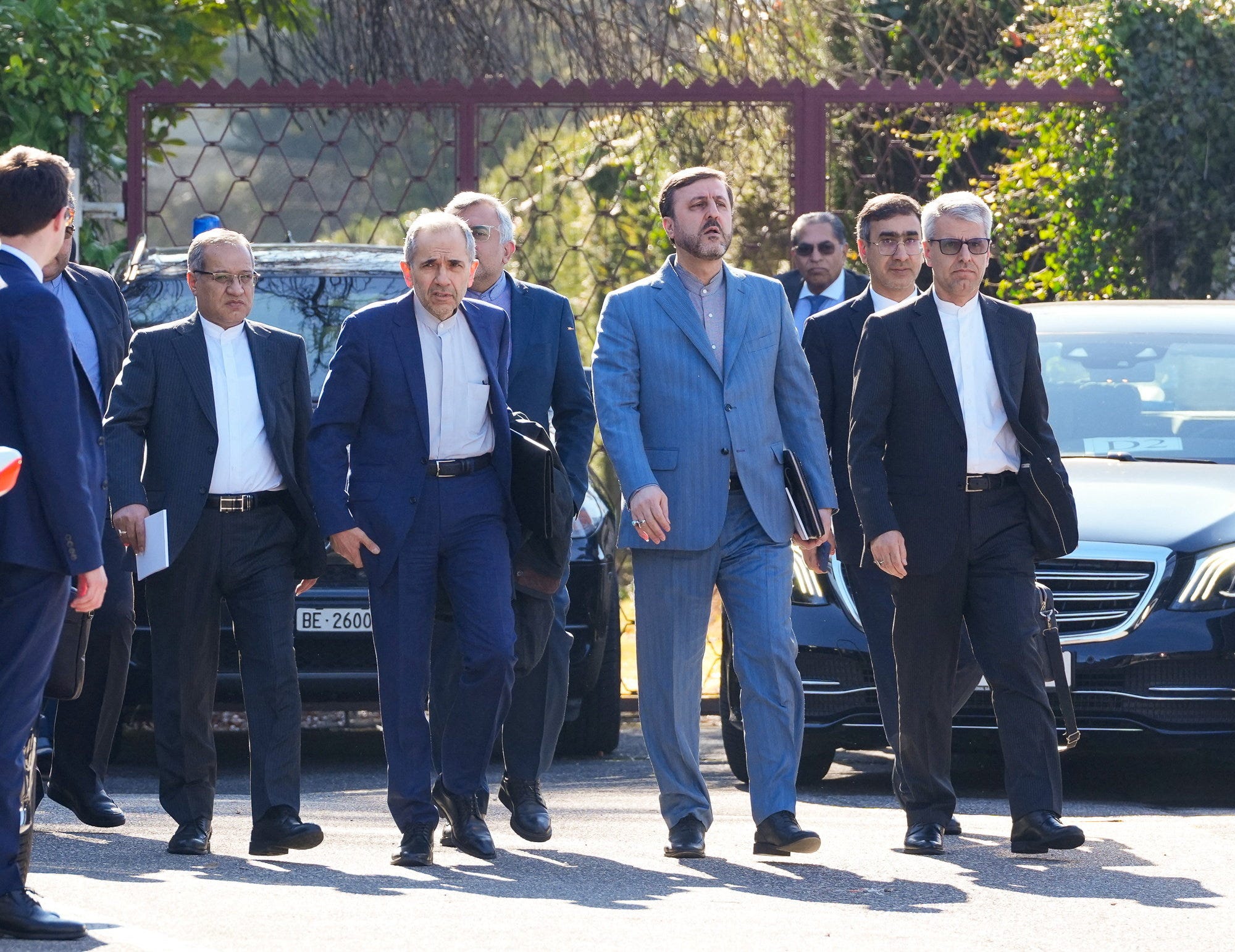
This announcement comes amidst intense indirect negotiations between Iran and the United States, which saw a third round of talks in Geneva on February 26, 2026, with technical-level discussions slated to continue in Vienna the following week, beginning March 2, 2026. While Oman's mediation has been crucial, the Geneva talks concluded without a comprehensive deal being announced. However, Albusaidi reported "significant progress" and an "unprecedented openness from both sides to new and creative ideas and solutions" during these discussions.
The positions of both the US and Iran remain complex. The United States, under President Donald Trump, has reportedly demanded that Iran dismantle key nuclear facilities such as Fordow, Natanz, and Esfahan, deliver all its enriched uranium to the US, and agree to a permanent deal without sunset clauses. US negotiators have also pushed for Iran to roll back its long-range missile program and cease support for regional armed groups. President Trump has publicly stated his dissatisfaction with the pace of negotiations, threatening military action if a far-reaching deal is not achieved.
Conversely, Iran maintains that its nuclear program is solely for peaceful purposes and has rejected demands to destroy its facilities or transfer its enriched uranium abroad. While reportedly showing some flexibility on enrichment limitations for civilian use, Tehran has consistently deemed its ballistic missile program and support for proxies as non-negotiable. Iranian officials have, however, reportedly offered economic incentives, including investments in Iranian oil, gas, and mining, in an attempt to secure concessions from the US. Just before the conclusion of the Geneva talks, Iranian state television indicated Tehran's determination to continue enriching uranium and its rejection of proposals to transfer material abroad, suggesting a divergence from certain US demands. Iran's President Masoud Pezeshkian reiterated that Supreme Leader Ali Khamenei's religious edict (fatwa) forbids the development of weapons of mass destruction.
The broader context for these negotiations includes heightened tensions, a substantial US military buildup in the Middle East, and a history of conflict, including US bombing of Iranian nuclear sites in June of the previous year. The International Atomic Energy Agency (IAEA) reported on February 27, 2026, that it could not verify whether Iran had suspended all enrichment-related activities or the size of its uranium stockpile at affected facilities, further highlighting the challenges in verification and trust-building. The Omani Foreign Minister's statement provides a hopeful, albeit preliminary, indication of a potential shift in Iran's stance regarding nuclear material stockpiling, which could be a crucial step towards de-escalation and a lasting agreement.
For an Indian audience, the stability of the Middle East is of paramount importance due to energy security concerns, the significant Indian diaspora in the region, and the potential for broader geopolitical ramifications from any conflict involving Iran and the US. Therefore, any progress, or indeed lack thereof, in these nuclear negotiations is closely watched.
Frequently Asked Questions
What exactly did Oman's Foreign Minister claim about Iran's nuclear program?
Oman's Foreign Minister Badr Albusaidi stated that Iran has agreed it would 'never, ever' possess nuclear material capable of producing a bomb. He further specified that this includes 'zero stockpiling' of enriched uranium, with existing stockpiles to be down-blended to a neutral level and converted into irreversible fuel under full IAEA verification.
Are the US and Iran close to a nuclear deal?
While the Omani Foreign Minister reported 'significant progress' and an 'unprecedented openness' in the recent indirect talks, the negotiations in Geneva on February 26, 2026, concluded without a final deal. Technical discussions are expected to continue, but a comprehensive agreement has not yet been reached.
What are the main sticking points in the US-Iran nuclear negotiations?
The US demands that Iran dismantle key nuclear facilities, transfer all enriched uranium, and agree to a permanent deal, along with addressing its ballistic missile program and support for regional groups. Iran insists its program is peaceful, rejects dismantling facilities or transferring uranium, and views missiles and proxies as non-negotiable, though it has offered economic incentives.
What role is Oman playing in these negotiations?
Oman is acting as a key mediator in the indirect nuclear talks between the United States and Iran, facilitating discussions and relaying messages between the two sides to bridge their differing viewpoints.
What are the implications for global security?
The negotiations are critical for global security as they aim to prevent nuclear proliferation and de-escalate tensions in the volatile Middle East. Failure to reach a deal could lead to increased regional instability and a potential conflict, impacting global energy markets and international relations.