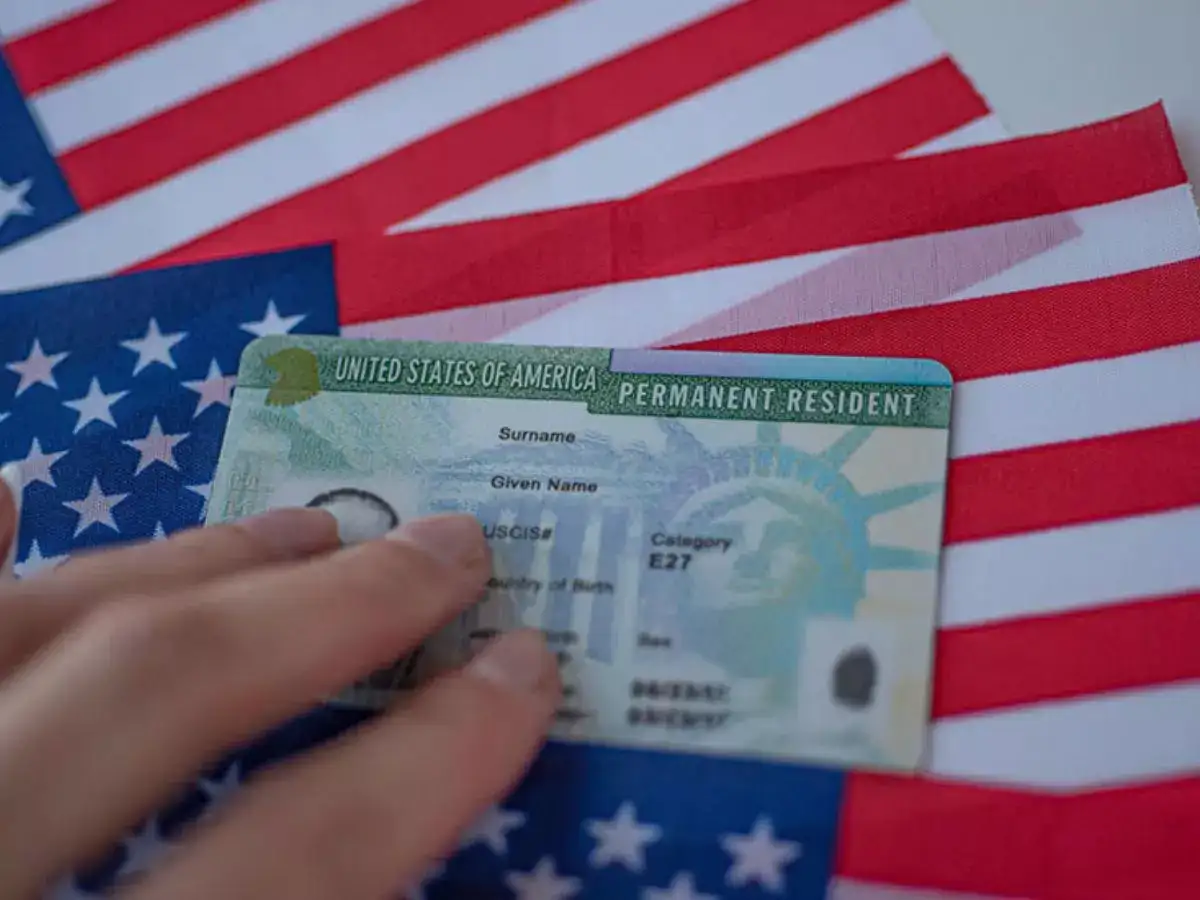
US Green Card Rule Change Impacts 1.2M Indian-American Families
A new US Citizenship and Immigration Services (USCIS) policy requires most individuals seeking Green Cards to apply from their home countries, impacting an estimated 1.2 million Indian-American families. This change, aimed at deterring illegal immigration and enforcing "original intent" of the law, has raised concerns about increased wait times, family separations, and broader implications for legal immigration, though exemptions for national interest and economic benefits may apply.
Key Highlights
- New USCIS policy mandates Green Card applicants to apply from abroad.
- Over 1.2 million Indian-American families potentially affected by the change.
- Concerns raised about extended wait times and family separations.
- Exemptions may exist for those deemed of national interest or economic benefit.
- Policy seen as a move to curb legal immigration and enforce stricter controls.
A significant shift in U.S. immigration policy, announced by the U.S. Citizenship and Immigration Services (USCIS), is set to impact an estimated 1.2 million Indian-American families by requiring most individuals seeking Green Cards to apply from their home countries rather than adjusting their status within the United States. This new directive, which reiterates what USCIS describes as the "original intent" of immigration law, means that foreign nationals temporarily in the U.S. must generally pursue immigrant visa processing through U.S. consulates abroad.
The policy change has been met with sharp criticism from immigration advocates and lawmakers, who argue that it is "reckless and wrong" and could negatively impact families and the U.S. economy. A primary concern is the potential for significantly extended wait times and prolonged family separations, as the process of obtaining a Green Card can take months or even years. For many Indian professionals, particularly those on H-1B visas, who already face decades-long backlogs due to country-specific caps, this new requirement introduces further uncertainty and complexity.
Ajay Bhutoria, a former White House Advisor and immigration advocate, stated that the policy "puts 1.2 million Indian Americans and their families in limbo after they followed every law, paid taxes and waited legally for decades". He further claimed that the memo grants officers "unchecked discretion" to deny applications even when applicants meet all legal requirements, and warned that employment-based immigration routes are "directly in the crosshairs". The policy also raises concerns for individuals on dual-intent visas, as adjudicators are reportedly instructed to review an applicant's entire U.S. immigration history, where minor status gaps or unauthorized work could lead to denial.
USCIS spokesperson Zach Kahler explained that the policy is intended to discourage visa overstays and ensure temporary visas are used only for their intended short-term purposes, adding that it "reduces the need to find and remove those who decide to slip into the shadows". However, the agency also indicated that exceptions might be made. Applicants who provide an "economic benefit" or are otherwise deemed to be in the "national interest" may be allowed to continue their current adjustment of status process within the U.S.. This clarification has created further uncertainty, as it is not immediately clear which specific groups will qualify for these exceptions, particularly skilled foreign workers on H-1B visas.
The implications of this policy shift are far-reaching, especially for the Indian diaspora, which forms one of the largest immigrant communities in the United States, with nearly 5 million people of Indian origin. Many Indian nationals enter the U.S. on H-1B visas and then apply for permanent residency. The existing employment-based Green Card backlog for Indians is substantial, with over 1.2 million skilled workers and their dependents facing lengthy waits due to country-wise caps on Green Cards. The new policy could exacerbate these challenges, forcing individuals to leave their jobs, uproot their families, and potentially face indeterminate delays abroad.
Legal experts and immigration attorneys have expressed concerns, with some disputing the memo's claim that adjustment of status is an exception to the norm of consular processing. They note that in fiscal year 2024, 58% of individuals gained permanent residence through adjustment of status. Lawsuits challenging the new policy are reportedly being planned.
The USCIS has stated that the policy is merely restating and reasserting its interpretation of congressional intent, not creating new law. However, legal experts disagree, and court battles are expected. The broad discretion granted to USCIS officers, coupled with a 2022 Supreme Court ruling in *Patel v. Garland* that limits judicial review of such denials, adds to the uncertainty.
This policy change underscores the complex and often challenging landscape of U.S. immigration, particularly for highly skilled professionals from India who contribute significantly to the American economy and innovation. The long-standing issues of Green Card backlogs, per-country limits, and evolving immigration policies continue to shape the American dream for millions worldwide.
Frequently Asked Questions
What is the new U.S. Green Card policy?
The new U.S. Citizenship and Immigration Services (USCIS) policy requires most individuals seeking Green Cards to apply from their home countries through consular processing, rather than adjusting their status while remaining in the United States, except in extraordinary circumstances.
Who is most affected by this new policy?
The policy is expected to significantly impact foreign nationals already in the U.S. on temporary visas, particularly Indian professionals and their families, who constitute a large portion of those seeking employment-based Green Cards and face long backlogs.
How many Indian-American families are estimated to be affected?
It is estimated that over 1.2 million Indian-American families could be affected by this new policy.
Are there any exceptions to this new rule?
Yes, USCIS has indicated that exceptions may be made for individuals whose applications are considered to provide an "economic benefit" or are otherwise in the "national interest" of the U.S. However, the specific criteria for these exemptions are still being clarified.
What are the main concerns raised by critics of this policy?
Critics are concerned about the potential for increased wait times, prolonged family separations, and the overall tightening of legal immigration pathways. There are also concerns about the "unchecked discretion" given to USCIS officers and the potential for increased uncertainty for applicants.