February 2026 Annular Solar Eclipse: Not Visible in India, Path Revealed | Quick Digest
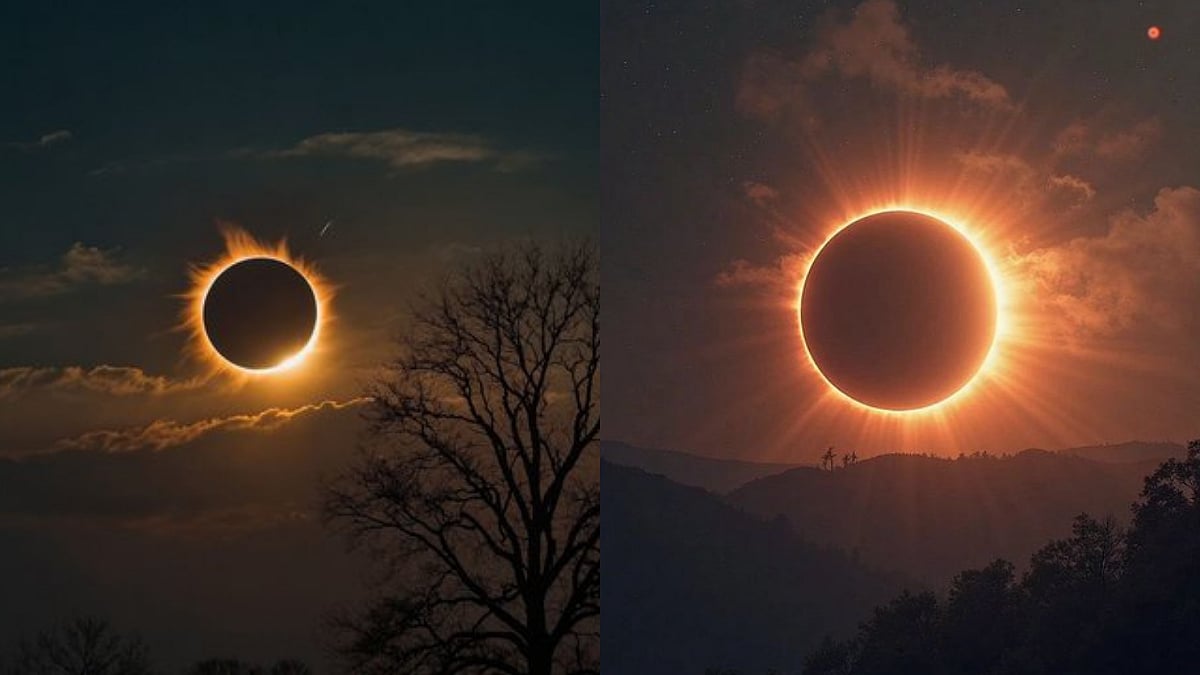
An annular solar eclipse, known as a 'ring of fire,' will occur on February 17, 2026. While visible in parts of Antarctica, southern Africa, and southern South America, this celestial event will unfortunately not be visible from India.
Annular solar eclipse scheduled for February 17, 2026.
Known as 'Ring of Fire' due to the Moon's partial obstruction of the Sun.
Not visible from any location across India.
Path of annularity primarily covers remote Antarctica.
Partial eclipse viewable in southern Africa and South America.
Maximum eclipse expected around 12:12 UTC (5:42 PM IST).
An annular solar eclipse, dubbed the 'ring of fire,' is set to grace the skies on Tuesday, February 17, 2026. This rare celestial phenomenon occurs when the Moon passes directly between the Earth and the Sun, but is too far away to completely cover the Sun, leaving a bright ring of sunlight visible around the Moon's silhouette. The eclipse will commence its partial phase at approximately 09:56 UTC, reaching its maximum at around 12:12 UTC (which translates to roughly 5:42 PM Indian Standard Time), and concluding by 14:27 UTC.
Crucially for an Indian audience, the annular solar eclipse of February 17, 2026, will not be visible from anywhere in India. Although the event coincides with late afternoon to early evening hours in India, the alignment places the entire eclipse below the horizon for observers in the subcontinent, meaning neither the annular nor partial phases will be observable. Instead, the path of annularity, where the spectacular 'ring of fire' can be witnessed, is limited to a remote region of Antarctica. Viewers in other parts of Antarctica, along with southern Africa (including countries like South Africa, Mozambique, and Madagascar) and the southernmost regions of South America (such as parts of Argentina and Chile), will experience a partial solar eclipse. Astronomy enthusiasts worldwide who cannot witness the event directly may still be able to follow it via international live broadcasts.
Read the full story on Quick Digest