Big Tech's AI Spending Soars, Raising Investor Concerns Globally
Major tech giants Google (Alphabet), Microsoft, Meta, and Amazon are collectively projected to invest up to $700 billion in capital expenditures in 2026, primarily for AI infrastructure. This unprecedented spending spree has unsettled investors and analysts globally, sparking concerns over cash flow, potential over-expansion, and the long-term return on investment.
Key Highlights
- Big Tech projected to spend up to $700 billion on AI in 2026.
- Massive capital expenditure drives investor and analyst anxiety.
- Concerns rise over free cash flow and return on AI investments.
- Market value wipeout for tech giants amidst AI spending fears.
- India is a key market for global tech AI infrastructure investments.
- Spending surge fuels AI arms race, focusing on data centers and chips.
The world's leading technology companies – Google's parent company Alphabet, Microsoft, Meta Platforms, and Amazon – are embarking on an unprecedented capital expenditure (CapEx) spree, collectively projected to invest a staggering sum, estimated between $650 billion and $700 billion, in 2026. This colossal three-digit figure, primarily directed towards building out artificial intelligence (AI) infrastructure, has undeniably 'spooked' investors and analysts globally, triggering significant market volatility and a re-evaluation of the AI investment landscape.
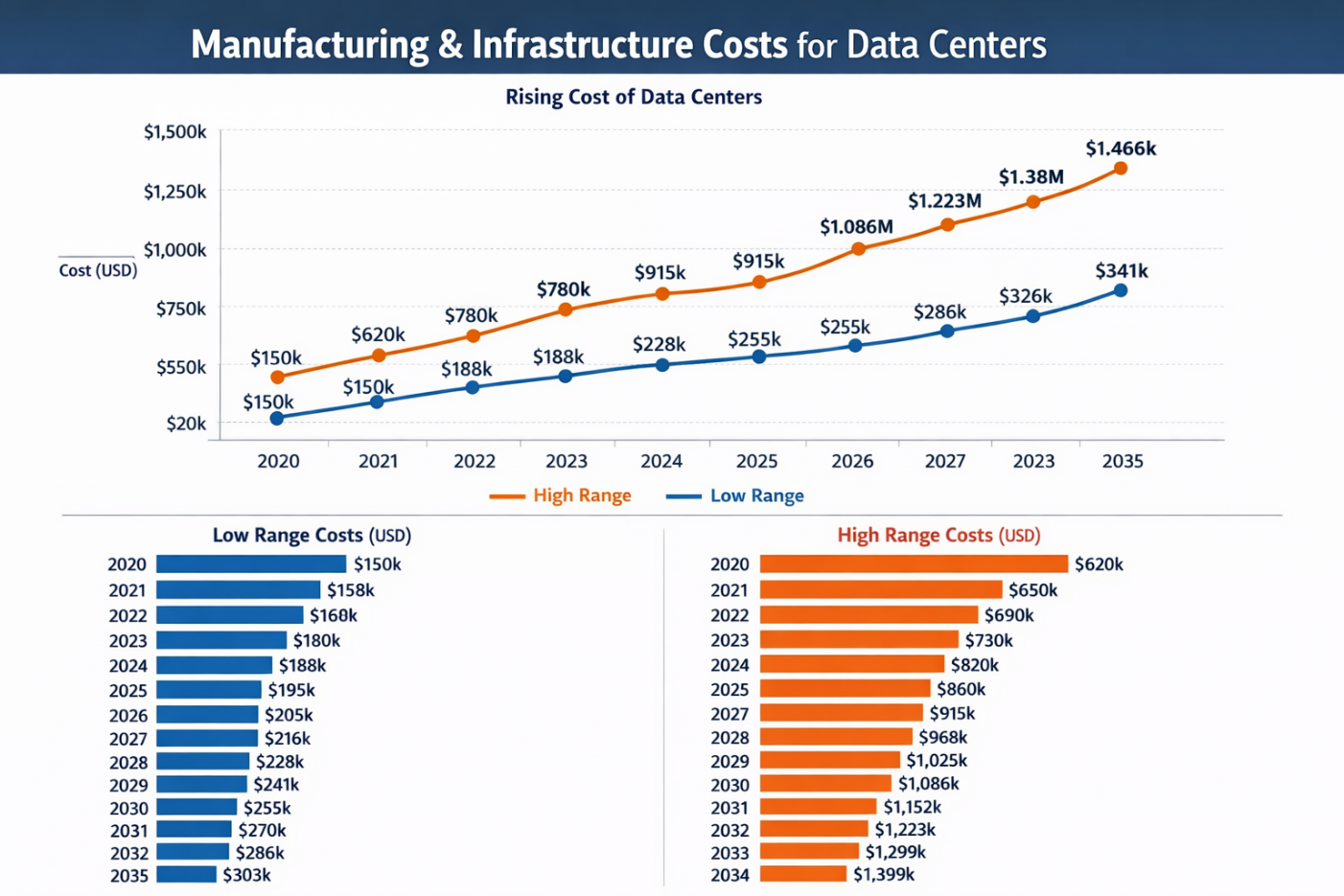
The core of this massive investment is the intense 'AI arms race' currently underway, as these tech giants vie for dominance in artificial intelligence and cloud computing. The bulk of the funds are earmarked for high-priced AI chips, expanding sprawling data centers, and developing advanced networking technology essential to power sophisticated AI models and bolster their cloud services. For instance, Amazon alone has projected capital expenditures of approximately $200 billion for 2026, a figure that significantly surpassed Wall Street's expectations and led to an immediate decline in its stock value. Similarly, Alphabet expects its 2026 CapEx to be in the range of $175 billion to $185 billion, nearly doubling its 2025 expenditure. Microsoft and Meta are also contributing significantly to this spending surge, with Meta projecting a substantial increase in its AI-related capital expenditure.
This aggressive spending, while indicative of the perceived immense potential of AI, has not been met with universal enthusiasm. Instead, it has generated considerable anxiety among investors and financial analysts. Market reactions have been swift and, in many cases, negative. Amazon's shares plunged by approximately 6% to 9% following its CapEx forecast, while Microsoft also experienced a notable drop. Some reports indicate that over $1 trillion in market value was wiped out from Big Tech stocks within a week, underscoring the severity of investor apprehension. This sentiment is largely driven by concerns over the immediate financial strain these investments place on companies, particularly regarding their free cash flow, which has seen a collective decline for these four companies from $237 billion in 2024 to $200 billion in 2025. Amazon, for example, has even projected negative free cash flow for 2026.
Analysts are questioning the sustainability of such massive outlays and the timeline for generating tangible returns on these colossal AI bets. There's a growing fear of an 'AI bubble' forming, where valuations and spending outpace realistic revenue generation. Experts worry about potential over-expansion of capacity and whether the upfront costs can be justified by future profits, with some calculating that the industry needs to generate hundreds of billions in new annual revenue to see a reasonable return on investment. This reflects a shift in investor sentiment, demanding not just big spending numbers but concrete evidence that AI investments are translating into earnings.
The implications of this global AI spending spree are also highly relevant to an Indian audience. India is rapidly emerging as a critical hub for AI development and digital infrastructure. Major global tech players, including Microsoft, Amazon, and Google, have already pledged billions in investments within India for data centers, cloud infrastructure, and AI training initiatives. For instance, Microsoft has committed ₹1.5 lakh crore, Amazon ₹2.9 lakh crore, and Google ₹1.25 lakh crore for AI-related infrastructure in India by 2030. This influx of investment is driven by India's vast digital population, burgeoning startup ecosystem, skilled software talent, and supportive government policies like the IndiaAI Mission, which aims to democratize access to core AI inputs. The rapid expansion of data centers, with India accounting for approximately 3% of global capacity and projected growth to 9.2 GW by 2030, highlights the country's strategic importance in the global AI landscape. Indian IT services companies are also actively upskilling their workforce and collaborating with tech giants, positioning India to play a significant role in the ongoing global AI transformation. While promising for India's technological advancement and economic growth, the global concerns over the financial viability and long-term returns of these massive AI investments will undoubtedly ripple through the Indian tech sector and impact investor sentiment within the country as well.
In conclusion, the "three-digit number" of $650-$700 billion in projected AI-related capital expenditure by leading tech companies has indeed caused considerable apprehension among global investors and analysts. The news highlights a critical juncture in the AI revolution, where the race for technological supremacy is testing traditional financial models and demanding greater clarity on the path to profitability. The global nature of this investment, and its significant impact on key markets like India, underscore its importance as a major business and technology story.
Frequently Asked Questions
What is the 'three-digit number' that has 'spooked' investors?
The 'three-digit number' refers to the collective capital expenditure (CapEx) projected by Google (Alphabet), Microsoft, Meta, and Amazon, which is estimated to be between $650 billion and $700 billion in 2026, primarily for Artificial Intelligence infrastructure.
Why are investors concerned about this massive AI spending?
Investors are concerned due to the sheer magnitude of the investments, the impact on companies' free cash flow, and the uncertainty surrounding the immediate returns on these colossal AI bets. There are also fears of an 'AI bubble' and potential over-expansion of capacity.
What are these tech giants investing in specifically?
The bulk of the investment is directed towards building out AI infrastructure, including purchasing high-priced AI chips, constructing and expanding massive data centers, and developing advanced networking technology required to power sophisticated AI models and enhance cloud services.
How has this spending impacted the stock market?
The announcement of these aggressive spending plans has led to significant market volatility, with shares of Amazon and Microsoft notably declining. Reports indicate that over $1 trillion in market value was wiped out from Big Tech stocks in the week following these announcements, reflecting widespread investor anxiety.
What is India's role in this global AI investment landscape?
India is emerging as a crucial market, attracting billions in AI and digital infrastructure investments from global tech giants like Microsoft, Amazon, and Google. This is driven by India's large digital population, skilled talent, robust startup ecosystem, and supportive government policies aimed at expanding AI capabilities within the country.