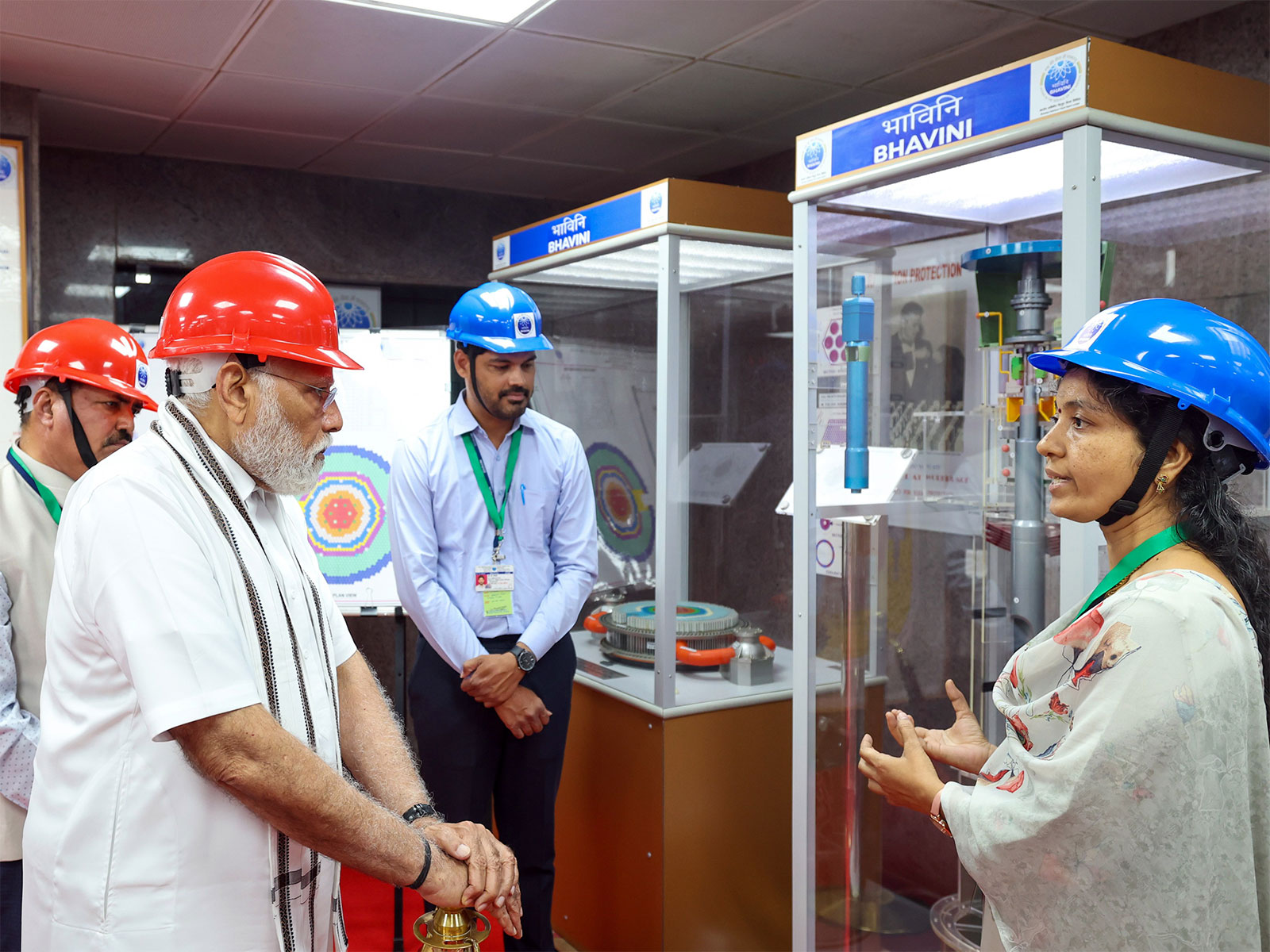
Kalpakkam Fast Breeder Reactor Attains Criticality, Hailed as Defining Step
India's indigenous Prototype Fast Breeder Reactor (PFBR) at Kalpakkam has achieved criticality, marking a significant milestone in the nation's nuclear energy program. Prime Minister Narendra Modi lauded this as a "proud moment" and a "defining step" towards energy self-reliance and harnessing India's vast thorium reserves. This advancement propels India into the second stage of its ambitious three-stage nuclear power strategy.
Key Highlights
- India's Kalpakkam Fast Breeder Reactor achieved criticality on April 6, 2026.
- PM Modi lauded the achievement as a "defining step" for India's nuclear journey.
- The reactor signifies progress in the second stage of India's nuclear program.
- It is crucial for harnessing India's vast thorium reserves for future energy.
- The 500 MWe reactor was indigenously designed and built.
- The project faced delays, with costs rising to over ₹7,700 crore.
India has reached a monumental milestone in its civil nuclear program with the Prototype Fast Breeder Reactor (PFBR) at Kalpakkam, Tamil Nadu, attaining 'criticality' on April 6, 2026. This means the reactor has achieved a self-sustaining nuclear fission chain reaction under controlled conditions, a crucial step before full-scale power generation.
Prime Minister Narendra Modi hailed this achievement as a "proud moment for India" and a "defining step" in the nation's civil nuclear journey. He emphasized that the indigenously designed and built reactor represents significant progress in the second stage of India's three-stage nuclear power program. In a post on X, PM Modi underscored that this advanced reactor, capable of producing more fuel than it consumes, reflects the depth of India's scientific capability and engineering strength. He also highlighted its importance as a decisive step towards harnessing India's vast thorium reserves in the third stage of the nuclear program.
The 500 MWe (MegaWatt electric) PFBR, located at the Indira Gandhi Centre for Atomic Research (IGCAR) campus in Kalpakkam, near Chennai, is a sodium-cooled fast breeder reactor. It was developed by Bharatiya Nabhikiya Vidyut Nigam Limited (BHAVINI), a government enterprise under the Department of Atomic Energy (DAE). The indigenous nature of the project is a point of national pride, with contributions from over 200 Indian industries, including numerous MSMEs, aligning with the 'Aatmanirbhar Bharat' (self-reliant India) initiative.
Fast Breeder Reactors are pivotal to India's long-term nuclear energy strategy because they are designed to 'breed' or generate more fissile material (like plutonium) than they consume. Initially, the PFBR will use Uranium-Plutonium Mixed Oxide (MOX) fuel. A surrounding 'blanket' of Uranium-238 will undergo transmutation to produce additional plutonium. Crucially, in later stages, Thorium-232 will be used in these reactors to produce Uranium-233, paving the way for the third stage of India's nuclear program. This stage aims to utilize the country's extensive thorium reserves, estimated to be among the largest in the world, ensuring long-term energy security.
The journey to criticality for the PFBR has been protracted. Construction began in 2004, and the project faced multiple delays, significantly extending its original completion timeline of September 2010. These delays also led to substantial cost overruns. The initial estimated cost of ₹3,492 crore increased to a revised estimate of ₹5,677 crore. More recent reports indicate the project's cost doubling from its original estimate to approximately ₹7,700 crore or ₹7,670 crore, with some parliamentary reports citing even higher figures like ₹8,181 crore. Core loading for the reactor commenced in March 2024, with Prime Minister Modi present for the initiation of this process. The Atomic Energy Regulatory Board (AERB) granted approval for the initial fuel loading and first approach to criticality on October 16, 2025, with final approvals for criticality following thereafter.
Once fully operational and connected to the grid, which is expected by September 2026, India will become only the second country globally, after Russia, to have a commercial operating fast breeder reactor. This achievement is a testament to India's sustained commitment to its indigenous nuclear power program, conceived by Homi Bhabha in the 1950s, which aims to secure energy independence by leveraging the country's unique resource profile of limited uranium and abundant thorium. The PFBR is equipped with advanced passive safety features, designed for automatic and safe shutdown in emergencies. The success of the Kalpakkam PFBR is a crucial step towards India's long-term energy goals, reducing dependence on fossil fuels and contributing to a more sustainable energy future.
Frequently Asked Questions
What is the significance of the Kalpakkam Fast Breeder Reactor attaining 'criticality'?
Attaining 'criticality' means the Kalpakkam Prototype Fast Breeder Reactor (PFBR) has initiated a self-sustaining nuclear fission chain reaction under controlled conditions. This is a crucial engineering milestone, indicating the reactor is operating as intended and paving the way for eventual power generation, marking a major advancement in India's nuclear energy self-reliance.
How does the PFBR contribute to India's three-stage nuclear power program?
The PFBR is central to the second stage of India's three-stage nuclear power program. It's designed to 'breed' more fissile material (plutonium) than it consumes from spent fuel, and later, it will be used to convert India's abundant thorium reserves into Uranium-233, which will fuel the third stage reactors. This strategy aims for long-term energy security by utilizing indigenous resources.
What are Fast Breeder Reactors, and why are they important for India?
Fast Breeder Reactors (FBRs) are advanced nuclear reactors that produce more fissile material than they consume. They are vital for India because the country has limited uranium but vast thorium reserves. FBRs enable the efficient use of available fuel and are a stepping stone to harnessing thorium, securing India's energy needs for centuries.
What is the current status of the Kalpakkam PFBR after achieving criticality?
After achieving criticality, the Kalpakkam PFBR will undergo a series of low-power physics experiments and gradual scaling up of operations. It is expected to be fully commissioned and connected to the commercial electricity grid by September 2026, making India only the second country globally to operate a commercial fast breeder reactor.
Has the Kalpakkam PFBR project faced any challenges?
Yes, the PFBR project has faced significant challenges, including multiple delays from its original completion target of 2010. These delays have also led to substantial cost overruns, with the project's cost increasing from initial estimates of ₹3,492 crore to over ₹7,700 crore.