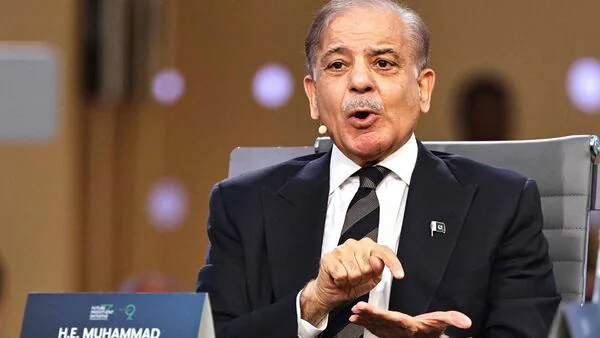
China's Diplomatic Push Crucial for US-Iran Ceasefire, Pakistan Mediates
Reports suggest China played a significant behind-the-scenes role in brokering the recent US-Iran ceasefire, complementing Pakistan's visible mediation efforts. While Trump acknowledged China's involvement, economic interests and energy security likely motivated Beijing's intervention to de-escalate the conflict.
Key Highlights
- China's discreet diplomacy was key to Iran accepting the ceasefire deal.
- Pakistan acted as a visible mediator, with China offering crucial last-minute support.
- US President Trump acknowledged China's role in bringing Iran to the negotiating table.
- China's economic interests and energy security concerns influenced its involvement.
- The ceasefire aims to de-escalate the conflict and allow for further negotiations.
The recent two-week ceasefire between the United States and Iran, announced on April 8, 2026, has brought to light a complex web of diplomatic efforts, with China emerging as a significant, albeit discreet, player. While Pakistan was widely recognized for its visible mediation, reports indicate that China's last-minute intervention was crucial in convincing Iran to agree to the truce. This development challenges the initial narrative that positioned Pakistan as the sole intermediary.
The article from India Today highlights that over the course of the Iran-US war, China, a key ally of Tehran, remained largely silent until a critical juncture. It was only when Pakistan, which was mediating between the two nations, reached out to Beijing for support that China entered the picture, seizing an opportunity to act as a peacemaker. This intervention ultimately proved decisive in securing Iran's agreement to the ceasefire.
US President Donald Trump himself acknowledged China's role, responding with "I hear yes" when asked if Beijing had been involved in pressuring Iran to negotiate. This statement lends credence to the idea that China's influence extended beyond mere diplomatic encouragement. Initially, China had been working with various intermediaries, including Pakistan, Turkey, and Egypt, to end the conflict, which had resulted in over 2,000 casualties in Iran. However, as Trump's deadline loomed and the threat of full-blown war intensified, China directly engaged with Iran, as confirmed by two Chinese officials cited by the Associated Press.
Several factors likely motivated China's involvement. From an economic standpoint, a prolonged conflict could severely impact China's ability to export goods globally, given its status as a major manufacturing hub. Furthermore, China is Iran's largest trading partner and a primary buyer of its oil, accounting for approximately 90 percent of Iran's exported oil. This deep economic interdependence means that instability in the region directly affects China's energy security and economic interests. A report by The New York Times, citing three Iranian officials, suggested that China's intervention was partly driven by concerns over the economic fallout from Trump's threats to strike Iran's energy facilities.
While Pakistan facilitated communication and maintained diplomatic channels, China's late, decisive push, largely driven by its economic interests and energy security concerns, is seen as the tipping point that brought Iran to the negotiating table. The New York Times report also indicated that China made a last-minute intervention to ease tensions alongside Pakistan's diplomatic efforts.
The ceasefire agreement includes a two-week truce and the reopening of the Strait of Hormuz, a vital energy corridor. Trump framed the deal as a "complete and perfect victory" for the US. Iran, on the other hand, claimed it as a victory for Tehran, with its Supreme National Security Council stating that Trump had accepted Iran's conditions for ending hostilities. The two sides are slated to continue negotiations in Islamabad, Pakistan, from April 10 to finalize the peace agreement.
The broader geopolitical context also plays a role. China has been seeking to expand its influence in the Middle East, evidenced by its role in mediating the normalization of relations between Iran and Saudi Arabia in 2023. Additionally, a summit between US President Trump and Chinese President Xi Jinping was scheduled for May, suggesting a mutual interest in de-escalating regional tensions ahead of their meeting.
In summary, the India Today article presents a nuanced view of the US-Iran ceasefire, emphasizing China's critical, behind-the-scenes role alongside Pakistan's visible mediation. This multifaceted diplomatic effort, driven by a combination of strategic, economic, and energy security interests, successfully averted a wider conflict and opened a window for further negotiations.
Frequently Asked Questions
What was the main outcome of the US-Iran ceasefire agreement?
The US and Iran agreed to a two-week ceasefire, which included the conditional reopening of the Strait of Hormuz. This de-escalated the immediate conflict and paved the way for further negotiations.
What role did China play in the US-Iran ceasefire?
While Pakistan was the visible mediator, reports suggest China played a crucial behind-the-scenes role, with its last-minute intervention helping to convince Iran to agree to the ceasefire. This was reportedly influenced by China's economic interests and energy security concerns.
Did President Trump acknowledge China's involvement in the ceasefire negotiations?
Yes, President Trump responded affirmatively when asked if China was involved in pressuring Iran to negotiate, stating
What is the significance of the Strait of Hormuz in this conflict?
The Strait of Hormuz is a vital energy corridor through which a significant portion of the world's oil supply passes. Its potential closure by Iran was a major point of contention and a key factor in the escalating tensions.
Where will further negotiations between the US and Iran take place?
Further negotiations to finalize a peace agreement are scheduled to take place in Islamabad, Pakistan, starting on April 10, 2026.