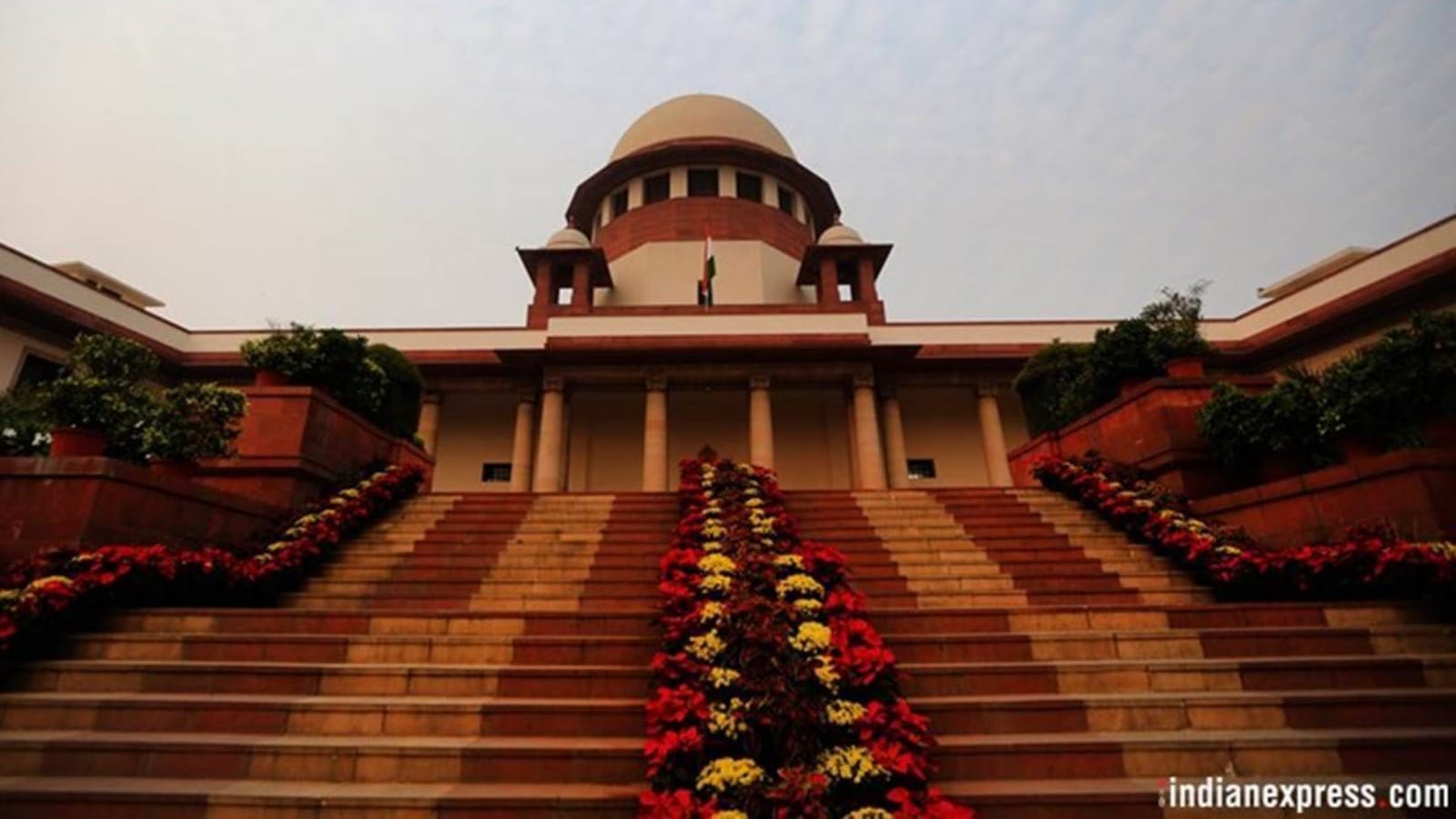
Supreme Court's 9-Judge Bench Continues Hearing Sabarimala Reference
The Supreme Court's nine-judge bench is continuing its hearing on the Sabarimala reference, focusing on constitutional issues concerning religious freedom and discrimination. Key discussions involve the interplay between Articles 25 and 26 of the Constitution, the scope of religious practices, and the concept of 'constitutional morality'. The bench has questioned the exclusion of devotees based on identity and the right to access deities.
Key Highlights
- Supreme Court's 9-judge bench hears Sabarimala reference.
- Discussions cover religious freedom and discrimination.
- Interplay between Articles 25 and 26 of Constitution examined.
- Court questions exclusion of devotees based on identity.
- Judges emphasize constitutional morality over personal beliefs.
The Supreme Court of India's nine-judge bench is in the midst of its seventh day of hearings for the Sabarimala reference, a pivotal case delving into the complex interplay between religious freedom, constitutional morality, and the rights of individuals within religious denominations. The bench, presided over by Chief Justice Surya Kant, includes Justices B.V. Nagarathna, M.M. Sundresh, Ahsanuddin Amanullah, Aravind Kumar, Augustine George Masih, Prasanna B. Varale, R. Mahadevan, and Joymalya Bagchi. This extensive bench was constituted to address significant constitutional questions that arose from the earlier five-judge bench's decision in 2018, which lifted the ban on women aged 10 to 50 from entering the Sabarimala Ayyappa Temple. The current proceedings aim to examine the scope and ambit of the right to freedom of religion under Article 25, and its relationship with the rights of religious denominations under Article 26 of the Constitution.
During the hearings, the court has raised critical questions about the exclusion of devotees. For instance, Justice B.V. Nagarathna queried whether a believer's right to approach and touch a deity could be denied, thereby questioning exclusionary practices that might infringe upon fundamental rights. The bench has also delved into the concept of 'constitutional morality,' with Solicitor General questioning its application in religious matters and Senior Advocate Abhishek Manu Singhvi arguing that courts should not test religious beliefs on external standards. This signifies a move towards a judicial interpretation that prioritizes constitutional principles over deeply entrenched traditional practices when they lead to discrimination.
The proceedings have seen arguments from various legal luminaries representing different stakeholders. Senior advocate V. Giri, appearing for the Sabarimala Achara Samrakshna Samiti, has emphasized the wisdom embedded in age-old customs, particularly the exclusion of women in a specific age group, arguing that maintaining the distinct characteristics of a temple is integral to its worship. He also contended that the concept of 'Naishtika Brahmachari' (permanent celibate) is an essential form of the religion in the context of the Sabarimala deity.
However, the bench has also probed the notion of religious denominations and their autonomy. Justice Nagarathna remarked that Hindu society must unite and that temples cannot exclude individuals on denominational lines, as such exclusion would weaken the denomination itself. This statement suggests a judicial inclination to ensure that religious practices do not lead to broader societal fragmentation or discrimination.
The historical context of the Sabarimala case is crucial. In September 2018, a five-judge bench had, by a 4:1 majority, declared the practice of barring women of certain ages from entering the temple unconstitutional, deeming it a violation of equality and freedom of religion. This verdict led to widespread protests, and subsequently, a review petition was filed, which was then referred to a larger bench. The current nine-judge bench is now tasked with reconsidering these issues and providing a comprehensive interpretation of the constitutional provisions related to religious freedom and the state's role in regulating such practices.
The Supreme Court's approach in this hearing underscores its commitment to balancing religious freedom with fundamental rights and social reform. The ongoing deliberations are expected to set significant legal precedents for the interpretation of Articles 25 and 26 of the Indian Constitution, particularly concerning the 'essential religious practice' doctrine and the application of 'constitutional morality' in matters of faith and tradition. The outcome will have far-reaching implications for the rights of individuals and the autonomy of religious institutions across India.
Frequently Asked Questions
What is the Sabarimala reference case?
The Sabarimala reference case involves a nine-judge bench of the Supreme Court of India hearing constitutional issues related to religious freedom and discrimination, stemming from the earlier verdict that allowed women of all ages to enter the Sabarimala Ayyappa Temple.
What are the key constitutional articles being discussed?
The primary articles under discussion are Article 25, which guarantees the right to freedom of religion, and Article 26, which deals with the rights of religious denominations to manage their own affairs.
What is 'constitutional morality' in the context of this case?
Constitutional morality refers to the adherence to constitutional principles and values, even when they may conflict with deeply entrenched traditional or religious practices, especially concerning equality and non-discrimination.
What was the Supreme Court's earlier verdict on Sabarimala?
In 2018, a five-judge bench of the Supreme Court lifted the ban on women aged 10 to 50 from entering the Sabarimala temple, ruling the practice unconstitutional. This verdict was later referred to a larger bench for reconsideration.
Who are the key figures involved in the current hearings?
The nine-judge bench is presided over by Chief Justice Surya Kant and includes justices like B.V. Nagarathna. Various senior advocates are representing different parties in the case, arguing on behalf of religious groups and the government.