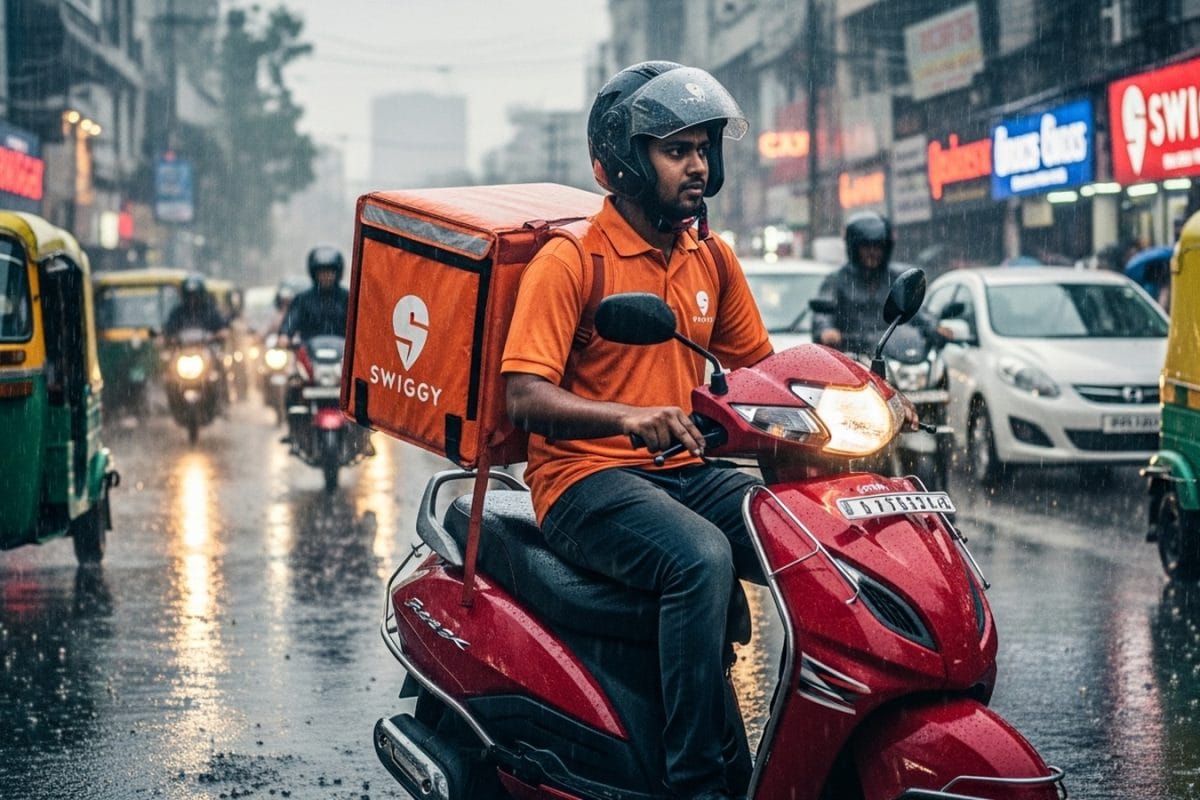
Gig Workers Strike Nationwide Over Fuel Price Hike, Demand ₹20/km
Gig workers in India are observing a five-hour nationwide shutdown today, May 16, 2026, protesting a recent ~₹3/litre fuel price hike. Organized by GIPSWU, the strike demands a minimum rate of ₹20 per kilometre, citing stagnant earnings and rising operational costs. Services like food delivery and ride-hailing face disruptions across major cities.
Key Highlights
- Gig workers initiate five-hour nationwide shutdown on May 16, 2026.
- Protest against recent ~₹3/litre fuel price hike across India.
- Union demands minimum service rate of ₹20 per kilometre for workers.
- Shutdown impacts app-based services like food delivery and ride-hailing.
- Nearly 1.2 crore gig workers affected by rising operational costs.
- Strike highlights ongoing concerns over stagnant pay and social security.
Gig workers across India have launched a five-hour nationwide shutdown of app-based services today, May 16, 2026, from 12 pm to 5 pm. This protest, organized by the Gig & Platform Service Workers Union (GIPSWU), aims to highlight severe financial distress caused by a recent hike in fuel prices and to demand a revised payment structure from both the government and digital platform companies. The collective action is expected to significantly disrupt various app-based services across the country, affecting millions of gig workers and consumers alike.
The immediate trigger for the shutdown is the approximately Rs 3 per litre increase in petrol and diesel prices, which came into effect on May 15, 2026. This marks the first substantial nationwide fuel price hike in nearly four years. GIPSWU attributes this increase to elevated international crude oil prices and continued instability in global energy markets, particularly influenced by the West Asia conflict and tensions around the Strait of Hormuz. The price revisions have pushed petrol in Delhi to approximately Rs 97.77 per litre and diesel to around Rs 90.67 per litre. In cities like Hyderabad, petrol prices have reportedly surpassed Rs 110 per litre, and diesel nearly Rs 99 per litre following the latest adjustments.
The Gig & Platform Service Workers Union (GIPSWU), an all-India women-led organization, is primarily demanding a statutory or negotiated minimum service rate of Rs 20 per kilometre for all delivery and transport workers. GIPSWU President Seema Singh articulated that existing compensation structures and incentives offered by app-based platforms are insufficient to absorb the rapidly rising operational costs, including fuel and vehicle maintenance. She highlighted that the hike, coupled with increased LPG cylinder rates, intensifies financial pressure on workers already struggling with rising living costs, warning that many gig workers might be forced to abandon the sector if their earnings are not revised to match increasing expenses. The union has submitted memorandums to the Government of India and major digital platforms, urging them to implement a fair and sustainable payment model.
This five-hour shutdown, scheduled from 12 pm to 5 pm today, is anticipated to cause significant service disruptions across various app-based sectors, including food delivery, ride-hailing, logistics, and quick-commerce. Major platforms such as Swiggy, Zomato, Blinkit, Uber, Ola, Rapido, Zepto, Dunzo, Urban Company, Porter, Amazon Flex, and Instamart are expected to experience interruptions, leading to longer waiting times and reduced app availability in metropolitan areas like Delhi, Mumbai, Bengaluru, Hyderabad, Chennai, Pune, and Kolkata. GIPSWU estimates that approximately 1.2 crore (12 million) gig and platform workers nationwide could be directly impacted by the increased fuel prices, emphasizing the broad scope and potential severity of the economic challenge facing this workforce.
The current protest is a continuation of ongoing struggles by gig workers in India for improved working conditions and fairer compensation. Many gig workers, who predominantly use two-wheelers, are disproportionately affected by fuel price volatility, as they typically bear these costs themselves while their per-delivery payments often remain unchanged. The precarious nature of their income, coupled with long working hours in challenging conditions, including heatwaves, further exacerbates their financial vulnerability. Previous instances of collective action by gig worker unions, such as the Indian Federation of App-Based Transport Workers (IFAT) and GIPSWU, in December 2025 and January 2026, saw hundreds of thousands of workers protesting low wages, lack of social security, and exploitative practices like ultra-fast delivery targets. These earlier strikes called for fundamental changes, including a minimum monthly wage and social security benefits, demonstrating a sustained demand for systemic reforms within the gig economy.
India's gig economy is experiencing rapid growth, with NITI Aayog projecting the number of gig workers to rise from 7.7 million in 2020-21 to 23.5 million by 2029-30. However, the Economic Survey 2025-26 cautioned that this booming sector is characterized by income insecurity, a lack of social security, and work allocation driven by potentially biased algorithms, leaving a significant portion of gig workers vulnerable. The survey noted that approximately 40 percent of gig workers earn below Rs 15,000 per month. While India's Labour Codes have acknowledged gig workers, progress in implementing welfare schemes has been slow. This ongoing strike underscores the urgent need for comprehensive policy interventions and revised platform practices to ensure fair compensation and dignified working conditions for a workforce integral to India's digital economy.
Frequently Asked Questions
Why are gig workers in India striking today?
Gig workers in India are striking today, May 16, 2026, for five hours to protest a recent ~₹3 per litre hike in petrol and diesel prices. They are demanding a minimum service rate of ₹20 per kilometre to offset their increasing operational costs and stagnant earnings.
Which union organized the nationwide shutdown and what are their key demands?
The nationwide shutdown was organized by the Gig & Platform Service Workers Union (GIPSWU). Their primary demand is the implementation of a statutory or negotiated minimum service rate of ₹20 per kilometre for delivery and transport workers. They also seek a revision of current compensation structures to account for rising fuel and living costs.
What is the impact of this strike on app-based services?
The five-hour strike, from 12 pm to 5 pm, is expected to cause significant disruptions to app-based services such as food delivery (Swiggy, Zomato, Blinkit) and ride-hailing (Uber, Ola, Rapido). Consumers in major Indian cities may experience longer waiting times and reduced availability of these services.
How many gig workers are affected by the fuel price hike and participating in the protest?
GIPSWU estimates that nearly 1.2 crore (12 million) gig and platform workers across India could be directly affected by the recent fuel price increase. While the exact number participating in the shutdown varies, the call for protest is nationwide and highlights widespread discontent among this workforce.
What is the broader context of gig worker protests in India?
This strike is part of an ongoing series of protests by gig workers in India, who have previously staged demonstrations in late 2025 and early 2026. These protests consistently highlight issues such as stagnant wages, lack of social security benefits, inadequate working conditions, and exploitative practices by platform companies amidst the rapid growth of India's gig economy.