Iran claims hitting US AWACS in Saudi; US denies
Iran claims it struck a US AWACS aircraft in Saudi Arabia, a claim disputed by the US. The incident, if true, would represent a significant escalation and potential loss of a critical surveillance asset.
Key Highlights
- Iran alleges strike on US AWACS jet in Saudi Arabia.
- US military denies any AWACS aircraft were targeted or damaged.
- E-3 Sentry AWACS provides vital airborne early warning and control.
- Damage to an AWACS would be a substantial operational setback.
- Incident highlights escalating regional tensions and information warfare.
The news report from WION claims that Iran has struck a US Airborne Warning and Control System (AWACS) aircraft stationed at a Saudi Arabian airbase. Iran's state media has purportedly reported hitting an American AWACS plane, a claim that, if substantiated, would mark a significant development in regional military activities and a potential escalation of tensions.
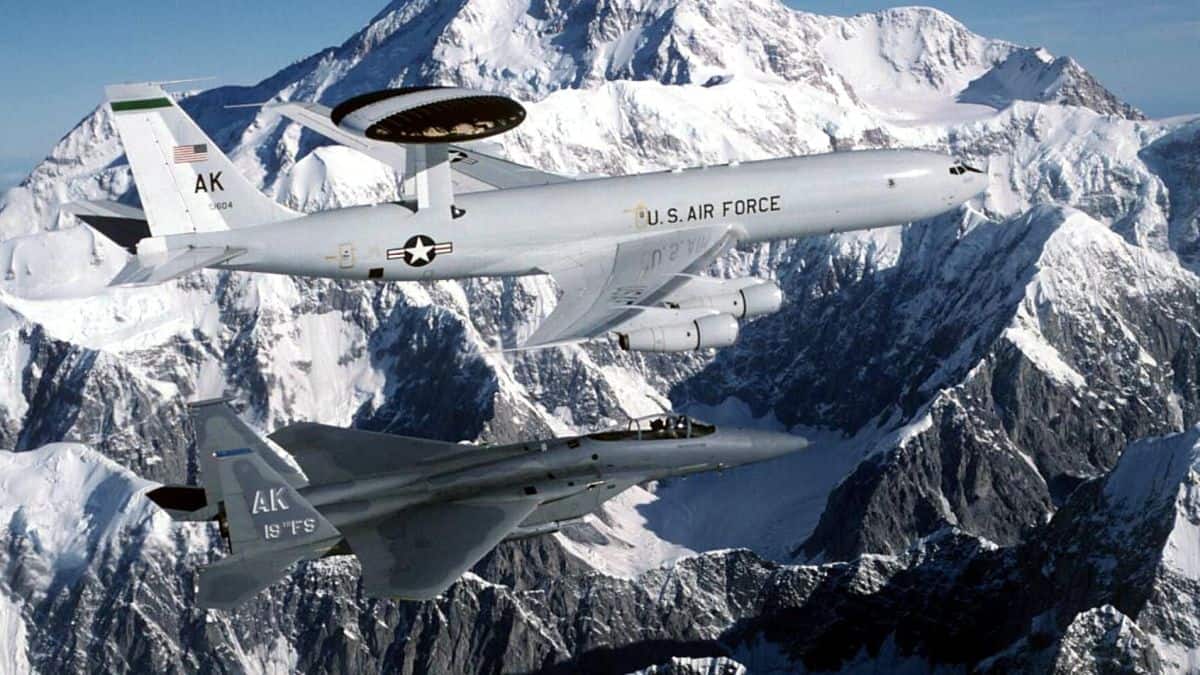
The E-3 Sentry, the primary AWACS aircraft used by the United States, is a critical asset for modern air warfare. It provides real-time airborne surveillance, command, and control capabilities, allowing military forces to track enemy aircraft, manage airspace, and coordinate air operations over vast distances. Its distinctive rotating radar dome is a symbol of its extensive observational power. The loss or severe damage of such a sophisticated and vital platform would represent a substantial operational blow to any military force, diminishing its ability to conduct effective air operations and maintain situational awareness. The replacement cost for a single damaged E-3 Sentry is estimated to be substantial, with reports suggesting it could exceed $700 million, not including the extensive operational and training infrastructure required to support such a complex system.
However, crucial to the verification of this claim is the response from the United States military. Initial reports and subsequent statements from US officials have vehemently denied that any AWACS aircraft were targeted or damaged during any recent Iranian strikes in Saudi Arabia. This direct contradiction underscores the difficulty in verifying claims during periods of heightened conflict and information warfare, where both sides may present narratives that serve their strategic interests. The BBC reported on photos circulating that appeared to show a heavily damaged US radar jet at a Saudi base, but did not definitively confirm it was an AWACS or attribute the damage to an Iranian strike.
The situation raises several critical questions. Firstly, what specific evidence does Iran possess to support its claim? Secondly, what is the nature of the damage depicted in any circulating imagery, and can it be conclusively linked to an Iranian attack? Thirdly, what is the strategic implication for US and allied air operations in the region if such an attack were to occur, even if unacknowledged? The Al Jazeera article highlights that Iran has claimed responsibility for targeting other assets, including air tankers, in the past month, suggesting a pattern of claims that require careful scrutiny.
NDTV has also reported on Iran's claims of hitting American AWACS aircraft in a Saudi airbase strike, mirroring the WION report. The lack of independent confirmation and the strong denial from the US military suggest that the Iranian claim may be part of a broader information campaign or an exaggeration. The precise nature and location of any alleged incident remain unconfirmed by independent, credible sources. The operational status of US AWACS in the region and the extent of any potential vulnerabilities are sensitive matters that are unlikely to be disclosed publicly. Therefore, while the claim of an Iranian strike on a US AWACS is a serious accusation with significant potential ramifications, it remains unverified and contested. The incident, or the claim of it, serves as a stark reminder of the ongoing geopolitical tensions and the importance of relying on corroborated information from multiple, credible sources, especially in conflict zones. The potential damage to a key surveillance asset like an E-3 Sentry would not only be a military setback but could also embolden adversaries and necessitate a significant reassessment of regional security protocols and defensive postures. The complex interplay of military actions, claims, and counter-claims in this volatile region demands a cautious and evidence-based approach to reporting.
It is important to note that the temporal context of such claims is crucial for verification. As of the current date, March 30, 2026, there is no widely corroborated, independent confirmation of a US AWACS being hit by Iran in Saudi Arabia. The reports rely heavily on Iranian state media claims which are then amplified by news outlets like WION, with subsequent denials from the US military. This situation fits within the broader context of the ongoing proxy conflicts and information warfare prevalent in the Middle East, where attributing specific actions and confirming their outcomes can be extremely challenging.
Frequently Asked Questions
What is an AWACS aircraft?
AWACS stands for Airborne Warning and Control System. The most common type is the US E-3 Sentry, which is a highly modified Boeing 707 aircraft equipped with powerful radar and surveillance equipment, allowing it to act as a mobile command center and detect aircraft, ships, and ground vehicles over long distances.
Why is an AWACS aircraft considered important?
AWACS aircraft are crucial for military operations as they provide a comprehensive, real-time picture of the airspace and surrounding battlefields. They enable commanders to track enemy movements, coordinate friendly forces, provide early warning of incoming threats, and manage complex air traffic, significantly enhancing situational awareness and operational effectiveness.
What is the significance of Iran claiming to hit a US AWACS?
If Iran successfully struck a US AWACS, it would represent a major escalation of conflict and a significant blow to US military capabilities in the region. It would demonstrate a potent offensive capability against a high-value, sophisticated asset and could dramatically alter the regional military balance.
Why is there a dispute over the alleged strike?
The dispute arises because Iran claims to have hit the aircraft, but the US military denies any such incident occurred or that its aircraft were targeted or damaged. In situations of conflict or heightened tension, claims from involved parties can be part of information warfare, making independent verification essential but often difficult.