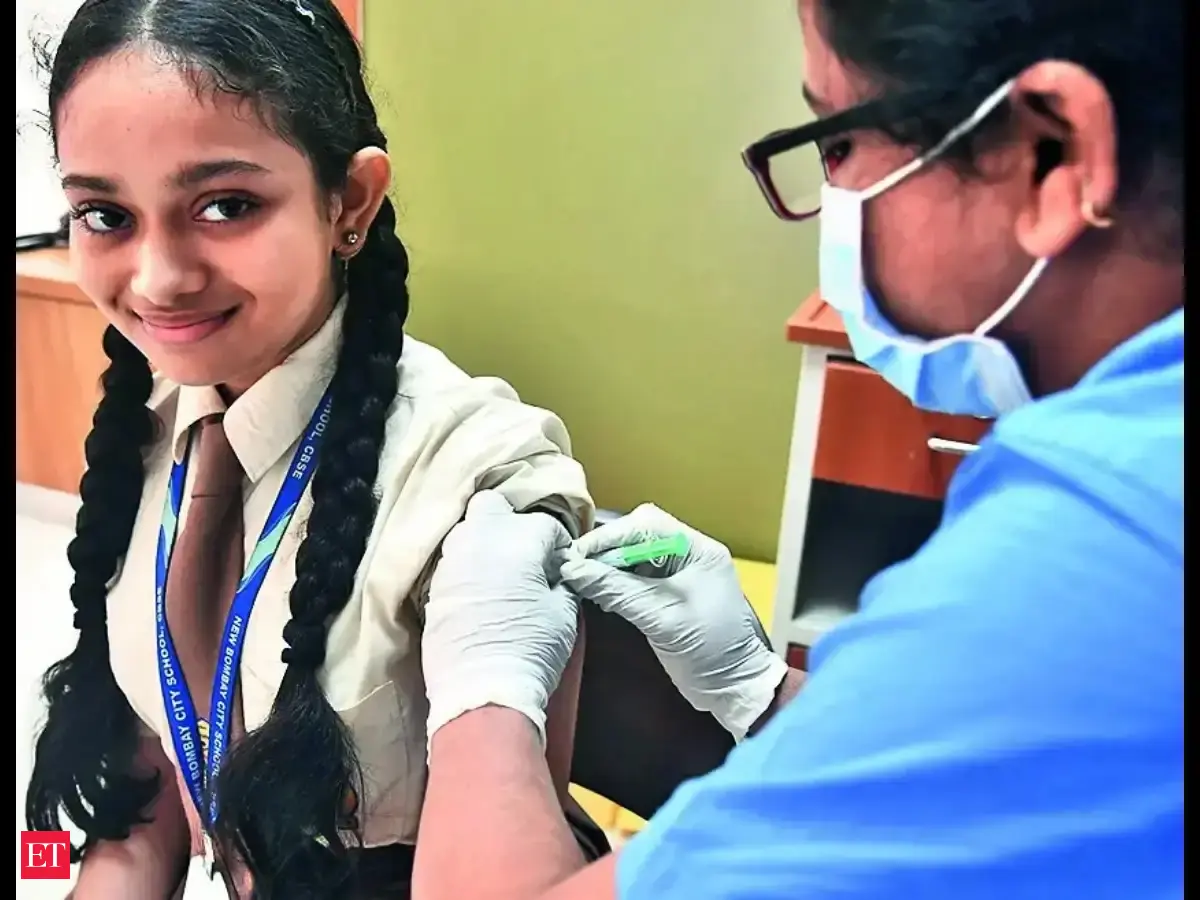
India's HPV Vaccination Drive Administers 50 Lakh Doses in Three Months
India's nationwide Human Papillomavirus (HPV) vaccination drive has administered nearly 50 lakh (5 million) doses to 14-year-old girls within its first three months. Launched on February 28, 2026, the free government initiative aims to prevent cervical cancer, which disproportionately affects Indian women. The Ministry of Health and Family Welfare (MoHFW) highlighted significant progress, with states like Madhya Pradesh and Gujarat achieving 100% coverage.
Key Highlights
- Nationwide HPV drive administered 50 lakh doses to 14-year-old girls.
- Milestone achieved within three months of the February 2026 launch.
- Targets 1.15 crore girls annually to combat cervical cancer.
- Madhya Pradesh and Gujarat achieved 100% coverage in target group.
- Vaccine provided free at government health facilities across India.
India has achieved a significant milestone in its fight against cervical cancer, with the nationwide Human Papillomavirus (HPV) vaccination drive successfully administering nearly 50 lakh (5 million) doses to 14-year-old girls within the first three months of its launch. This ambitious public health initiative, spearheaded by the Ministry of Health and Family Welfare (MoHFW), commenced on February 28, 2026, with Prime Minister Narendra Modi officially launching the program in Ajmer, Rajasthan.
The rapid rollout underscores India's commitment to safeguarding young lives and combating cervical cancer, which remains the second most common cancer among women in the country. Annually, India records over 1.2 lakh new cases and nearly 80,000 deaths due to cervical cancer, accounting for approximately 25% of global cervical cancer fatalities.
The HPV vaccination drive targets approximately 1.15 crore (11.5 million) girls aged 14 years across all States and Union Territories each year. During the intensive three-month campaign, girls who turn 15 within 90 days of the launch are also eligible to receive the vaccine free of cost at designated government health facilities, including Ayushman Arogya Mandirs (Primary Health Centres), Community Health Centres, Sub-District and District Hospitals, and Government Medical Colleges.
According to the MoHFW, the campaign has gained strong momentum. Notably, states such as Madhya Pradesh and Gujarat have already achieved 100% coverage of their respective target populations for this drive, while Mizoram has reached 93%. This progress highlights the robustness of India's public health system and the tireless efforts of frontline health workers across the country.
The program primarily utilizes a single dose of Gardasil, a quadrivalent HPV vaccine manufactured by MSD, which protects against HPV types 16 and 18 – responsible for approximately 70% of cervical cancers – as well as types 6 and 11, which cause genital warts. The decision to adopt a single-dose regimen aligns with recommendations from the World Health Organization's Strategic Advisory Group of Experts (SAGE) on Immunization, which concluded that a single dose offers comparable protection to two-dose schedules.
While the indigenous HPV vaccine, Cervavac, developed by the Serum Institute of India, has been approved, its efficacy in a single-dose regimen is still under assessment through ongoing studies by the Indian Council of Medical Research (ICMR). Its full inclusion in the national immunization program is anticipated after 2027, following the expected results of these studies. Currently, India is leveraging doses from the GAVI vaccine alliance for the national program.
Historically, HPV vaccine uptake in India faced several barriers, including high cost (up to ₹4,000 per dose in private facilities), low public awareness, sociocultural stigma, and insufficient assistance from the health system. The current free and widespread government-led initiative aims to overcome these challenges, making the vaccine accessible to a broader population, particularly in rural and low-income areas where cervical cancer burden is high.
The vaccination is voluntary, and informed consent from parents or guardians is obtained prior to administration. Each vaccination session is supervised by trained medical officers and supported by skilled healthcare teams, with cold chain points ensuring vaccine viability and facilities linked for managing any rare adverse events following immunization.
This nationwide drive is a critical step towards realizing the government's vision of 'Swastha Nari' (Healthy Woman) and advancing global goals for cervical cancer elimination. Experts project that this initiative will have a significant impact on reducing the disease burden, saving lives, and bringing about substantial savings on treatment costs in the long run.
Frequently Asked Questions
What is the primary goal of India's HPV vaccination drive?
The primary goal of India's HPV vaccination drive is to prevent cervical cancer among women, which is the second most common cancer and a leading cause of cancer-related deaths in the country.
Who is eligible for the free HPV vaccine under this program?
Girls aged 14 years across all States and Union Territories are the primary target. Additionally, during the intensive three-month campaign, girls turning 15 within 90 days of the launch are also eligible.
Which vaccine is currently being used in India's national HPV vaccination program?
The national program is currently using a single dose of Gardasil, a quadrivalent HPV vaccine from MSD. The indigenous Cervavac vaccine's single-dose efficacy is still under evaluation for future inclusion.
Where can eligible girls receive the HPV vaccine?
The vaccine is provided free of cost at designated government health facilities, including Ayushman Arogya Mandirs (Primary Health Centres), Community Health Centres, Sub-District and District Hospitals, and Government Medical Colleges.
What is the significance of reaching 50 lakh doses in three months?
Administering 50 lakh doses in three months signifies a rapid and successful initial phase of the nationwide program, highlighting a strong commitment and effective implementation to significantly increase HPV vaccine coverage and reduce the future burden of cervical cancer in India.