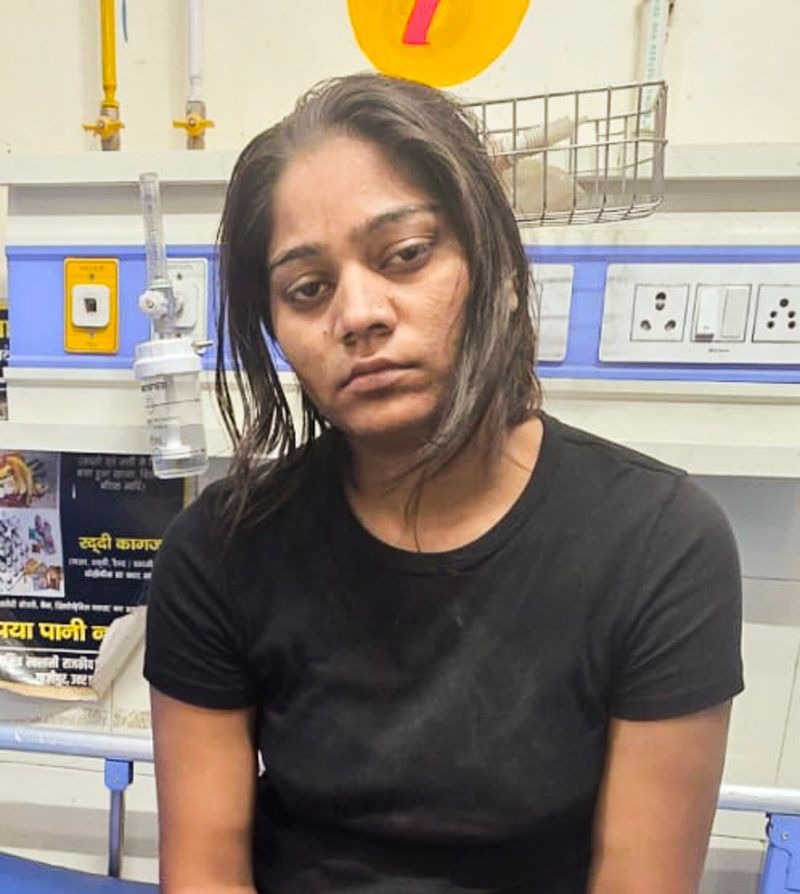
Supreme Court weighs cancelling bail in Meghalaya honeymoon murder case
The Supreme Court is considering cancelling the bail of Sonam Raghuvanshi, accused of murdering her husband during their honeymoon in Meghalaya. The court has offered her two options: voluntary surrender pending witness examination or defending her bail, with a decision expected soon. The case highlights legal complexities surrounding arrest procedures and bail validity.
Key Highlights
- Supreme Court weighs cancelling bail for Sonam Raghuvanshi.
- Accused of husband's murder during Meghalaya honeymoon.
- Raghuvanshi offered voluntary surrender or to defend bail.
- Case hinges on arrest procedures and bail validity.
- Meghalaya government challenges High Court's bail order.
The Supreme Court of India is currently contemplating the cancellation of bail granted to Sonam Raghuvanshi, who stands accused of the murder of her husband, Raja Raghuvanshi, during their honeymoon in Meghalaya in May 2025. This critical development stems from the Meghalaya government's appeal against a High Court order that upheld the bail previously granted to Raghuvanshi by a trial court. The High Court's decision was largely based on alleged procedural lapses during her arrest, specifically the incorrect mention of legal sections in the arrest memo, which it deemed a significant flaw. The Supreme Court, however, has indicated a graver concern with the substance of the allegations and Raghuvanshi's conduct, presenting her with two distinct options: voluntary surrender while key prosecution witnesses are examined, or to actively defend her existing bail.
The timeline of events leading to this Supreme Court intervention is crucial. Raja Raghuvanshi, a businessman from Indore, and his wife Sonam were on their honeymoon in Meghalaya when they disappeared on May 23, 2025. Raja's body was subsequently recovered from a gorge on June 2, 2025. The prosecution alleges that Sonam conspired with hired assailants, reportedly with her lover, to murder her husband for financial gain. Sonam was arrested on June 9, 2025, and spent over 10 months in judicial custody before being granted bail by a trial court on April 27, 2026. The trial court's reasoning for granting bail highlighted that the investigating agency failed to properly communicate the grounds of her arrest, citing errors in arrest documents that mentioned an incorrect section of the Bharatiya Nyaya Sanhita (BNS) instead of the murder-related section.
The Meghalaya government challenged this bail order in the High Court, arguing that the errors were typographical and caused no prejudice. However, the High Court dismissed the appeal, questioning the repeated nature of the error across official documents and noting irrelevant references in the arrest records. The state then escalated the matter to the Supreme Court. On July 3, 2026, the Supreme Court refused to stay the bail order immediately, noting that Raghuvanshi had already been released and had complied with bail conditions. The court, however, expressed reservations about the High Court's reasoning and issued a notice to Sonam.
More recently, on July 21, 2026, the Supreme Court bench, comprising Justices MM Sundresh and PB Varale, indicated a stronger inclination towards cancelling her bail. The court questioned Raghuvanshi's conduct and the timing of her challenge regarding the arrest grounds. The judges emphasized that they did not want to surprise her but wanted her to understand their perspective, suggesting that voluntary surrender might be the more prudent option. The court pointed out that only a few prosecution witnesses (four out of 94) had been examined so far, and suggested that if she surrendered, her bail plea could be reconsidered after the trial court records the evidence of the remaining key witnesses.
The legal nuances of this case are significant, particularly concerning the interpretation of arrest procedures and the grounds for bail cancellation. While the High Court focused on the procedural lapse of incorrect legal sections cited in the arrest memo, the Supreme Court appears to be weighing this against the alleged severity of the crime and the accused's behavior. The Supreme Court's stance reflects a broader judicial concern about the increasing number of appeals against bail orders and the need to balance individual liberty with the administration of justice. The case is scheduled for further hearing, with Sonam Raghuvanshi expected to provide her decision on surrender by July 23, 2026. The brother-in-law of the victim, Vipin Raghuvanshi, has reiterated his belief that Sonam has been lying throughout the investigation and expressed faith in the judiciary's pursuit of justice for his brother. The Bar and Bench, the source of the original article, is a credible legal news outlet, rated as 'Least Biased' and 'Mostly Factual' by Media Bias Fact Check.
Frequently Asked Questions
What is the Meghalaya honeymoon murder case?
The Meghalaya honeymoon murder case involves the death of Raja Raghuvanshi, who was allegedly murdered during his honeymoon with his wife, Sonam Raghuvanshi, in Meghalaya in May 2025. Sonam is the prime accused in the case.
What is the latest development in the Supreme Court regarding Sonam Raghuvanshi's bail?
The Supreme Court is currently considering cancelling the bail granted to Sonam Raghuvanshi. The court has given her two options: to voluntarily surrender while key prosecution witnesses are examined, or to defend her bail. A decision is pending.
Why was Sonam Raghuvanshi initially granted bail?
Sonam Raghuvanshi was initially granted bail due to alleged procedural lapses in her arrest, including the incorrect mention of legal sections in the arrest memo. The High Court upheld this bail, citing these flaws.
What are the main arguments presented in the Supreme Court?
The Meghalaya government, appealing the bail order, argues that the allegations are grave and the bail was granted on technical grounds. Sonam Raghuvanshi's defense has previously highlighted procedural flaws in her arrest. The Supreme Court is weighing these arguments against the conduct of the accused and the need for a fair trial.