World's Largest Iceberg A23a Nears Complete Disintegration | Quick Digest
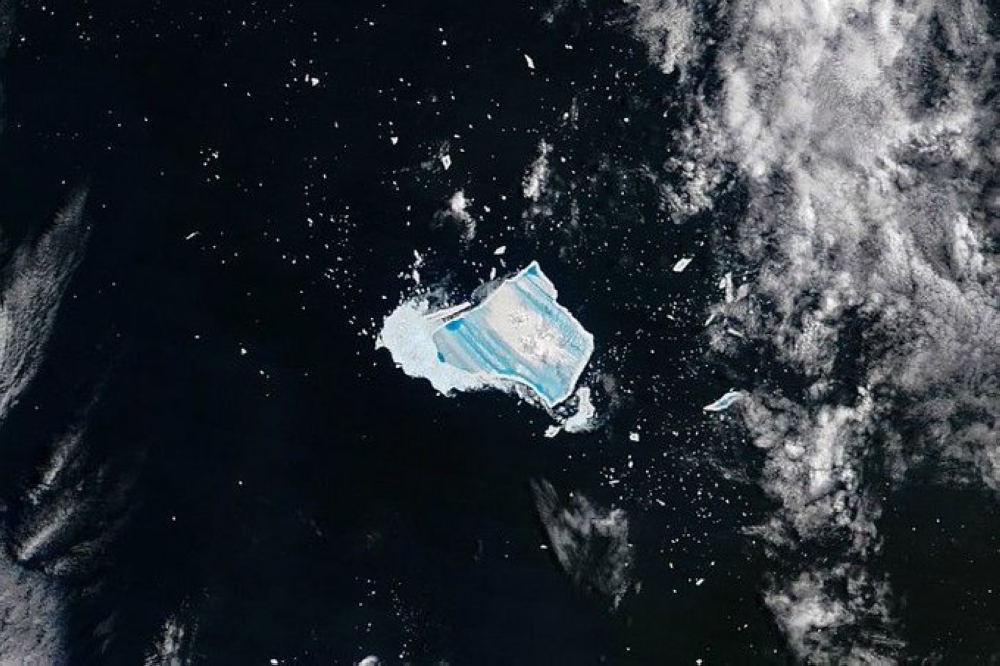
Iceberg A23a, once the world's largest, is in its final stages of disintegration, expected to vanish within weeks. Satellite imagery confirms its rapid break-up in warmer waters after nearly 40 years since calving from Antarctica. Scientists are closely monitoring the event.
A23a was the world's largest iceberg, originally spanning about 4,000 sq km.
After decades grounded, it broke free in 2020 and began drifting north.
Satellite data from January 2026 shows it has shrunk significantly.
Meltwater ponds and warmer ocean temperatures are accelerating its demise.
Scientists predict its complete disappearance within days to weeks.
Its journey has provided valuable data on 'megaberg' dynamics and climate change.
Iceberg A23a, which once held the title of the world's largest iceberg by surface area, is now in the final stages of its disintegration and is expected to disappear completely within weeks. Calving from Antarctica's Filchner-Ronne Ice Shelf in 1986, it initially measured around 4,000 square kilometers, more than three times the size of Rome. After being grounded on the seabed for over three decades, A23a broke free in 2020 and began a remarkable journey northward, propelled by ocean currents and winds.
Recent satellite imagery, including data from China's Fengyun-3D satellite on January 14, 2026, shows the main body of A23a has significantly shrunk to approximately 506 square kilometers, less than one-eighth of its original size. The collapse has dramatically accelerated in recent weeks, with meltwater ponds forming on its surface—a clear sign of rapid demise. Experts from the China Meteorological Administration, NASA, and the British Antarctic Survey confirm that warmer sea temperatures in the South Atlantic, combined with rising air temperatures and 'hydrofracturing' from meltwater, are hastening its breakup. Its journey has provided invaluable scientific data, enhancing our understanding of 'megaberg' dynamics and the broader impacts of climate change on Antarctic ice loss. This event underscores the natural life cycle of icebergs but also highlights the ongoing monitoring of polar regions in a changing climate.
Read the full story on Quick Digest