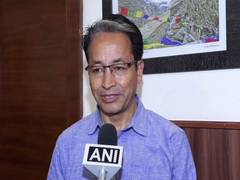
Centre, Ladakh Agree on Elected UT Body with Legislative Powers
The Centre and Ladakh representatives reached an in-principle understanding to establish an elected Union Territory (UT) level body with legislative, executive, and financial powers. Constitutional safeguards under Article 371-like provisions were also agreed upon, addressing Ladakh's long-standing demands for greater autonomy and protection.
Key Highlights
- Centre and Ladakh leaders reached in-principle agreement on elected UT body.
- Proposed body to have legislative, executive, financial powers.
- Executive head, proposed as Chief Minister, to control bureaucracy.
- Constitutional safeguards under Article 371 (A, F, G) agreed, not Sixth Schedule.
- Statehood is a future possibility, tied to revenue criteria.
- Sonam Wangchuk was part of the Ladakh delegation.
The Union Government and representatives from Ladakh have achieved a significant "in-principle understanding" regarding the establishment of an elected legislative body at the Union Territory (UT) level. This agreement aims to restore democratic processes and provide crucial constitutional safeguards to the region. This breakthrough was announced following a pivotal meeting held on Friday, May 22, 2026, in New Delhi, involving officials from the Ministry of Home Affairs (MHA) and a delegation representing Ladakh, specifically members of the Leh Apex Body (LAB) and the Kargil Democratic Alliance (KDA).
The discussions culminated in a broad consensus on several critical points that address the long-standing demands of the Ladakhi people for greater autonomy and the protection of their unique identity, land, and culture. The proposed model envisions a UT-level elected body endowed with "full legislative, executive and financial powers." A particularly significant aspect of this understanding is that all bureaucrats of the UT, including the Chief Secretary, will report to the executive head of this elected body, which is proposed to be a "Chief Minister." This structure is designed to grant substantial administrative control to local elected representatives, marking a notable shift from the existing bureaucratic administration of Ladakh, which currently functions as a Union Territory without a legislature.
While the Ladakh bodies, primarily the LAB and KDA, have consistently advocated for full statehood and inclusion under the Sixth Schedule of the Constitution, the Centre has offered a different framework for constitutional safeguards. The agreement includes providing protections along the lines of Articles 371A, 371F, and 371G of the Constitution, which are currently applicable to states such as Nagaland, Sikkim, and Mizoram. These specific articles are designed to protect regional customs, indigenous cultures, land rights, and ensure equitable economic development. This represents a compromise from the demand for Sixth Schedule status, which typically provides for autonomous district councils with legislative, judicial, and executive powers, primarily for tribal areas in designated northeastern states. Ladakh, with an estimated 97% tribal population, has consistently argued that Sixth Schedule status is essential to safeguard its fragile ecosystem and cultural heritage from potential industrial exploitation.
The path to this agreement has been characterized by years of sustained agitation and several rounds of often inconclusive talks. Since Ladakh was re-organized as a Union Territory, separate from the erstwhile state of Jammu and Kashmir, in August 2019, following the abrogation of Article 370, there has been a persistent demand for democratic representation and constitutional protections. Leaders from the region, including the widely recognized climate activist Sonam Wangchuk, have spearheaded numerous protests, hunger strikes, and marches to draw national attention to their core demands: statehood, Sixth Schedule status, job reservations for local youth, and enhanced parliamentary representation. It is notable that Sonam Wangchuk was an active participant in the delegation that met with MHA officials on May 22, 2026.
The Centre clarified that the immediate grant of full statehood to Ladakh is currently not feasible, primarily due to the region's inadequate revenue generation to independently sustain its own expenditure liabilities, such as employee salaries. However, MHA officials indicated that the proposed new administrative setup could serve as a stepping stone towards full statehood in the future, once Ladakh achieves the necessary revenue generation criteria. This "in-principle" understanding means that while the fundamental framework has been established, the finer operational details, including the precise composition, structure, and legislative framework of the new elected bodies, will be meticulously worked out through further consultations between the MHA and Ladakh representatives, in collaboration with legal and constitutional experts. This consensus represents a significant and tangible step forward in addressing the political aspirations of the Ladakhi people and marks the most substantive progress on these demands since 2019.
Beyond the UT-level elected body, the agreement also reportedly includes the establishment of similar elected bodies or councils in each of the seven districts of Ladakh, implying a greater degree of decentralization and strengthening of local governance. Furthermore, explicit safeguards for land, jobs, and culture are expected to be implemented under the newly adopted Article 371-like framework. This development aims to foster an environment of peace, stability, and mutual trust, thereby facilitating continued constructive dialogue in this strategically sensitive border region. Previous rounds of talks had faced stalemates, particularly following incidents of violence in September 2025 during protests in Leh, which resulted in casualties and the temporary detention of Sonam Wangchuk under the National Security Act (NSA), though his detention was later revoked. The successful resumption of dialogue and this recent breakthrough agreement underscore a renewed commitment from both the Union Government and Ladakhi stakeholders to find a viable and sustainable governance model for the Union Territory.
Frequently Asked Questions
What was the main outcome of the meeting between the Centre and Ladakh representatives?
The Centre and Ladakh representatives reached an "in-principle understanding" to create an elected body at the Union Territory (UT) level in Ladakh. This body will be vested with legislative, executive, and financial powers.
What kind of elected body will be established in Ladakh, and what powers will it have?
A Union Territory-level elected legislative body will be established. It is proposed to be headed by a 'Chief Minister' to whom all UT bureaucrats, including the Chief Secretary, will report. This body will possess full legislative, executive, and financial powers.
Why did Ladakh not receive Sixth Schedule status, and what alternative constitutional safeguards were agreed upon?
While Ladakh leaders sought Sixth Schedule status, the Centre agreed to provide constitutional safeguards along the lines of Articles 371A, 371F, and 371G, which apply to states like Nagaland, Sikkim, and Mizoram. These articles protect regional customs, indigenous cultures, and land rights. The Sixth Schedule was considered not directly applicable in this context.
What are the key demands that Ladakh leaders, including Sonam Wangchuk, have been advocating for?
Ladakh leaders, including activist Sonam Wangchuk, have consistently demanded statehood for Ladakh, inclusion under the Sixth Schedule of the Constitution, job reservations for local youth, and enhanced parliamentary representation, all aimed at protecting their unique identity, environment, and culture.
What is the Centre's stance on granting full statehood to Ladakh?
The Centre indicated that full statehood for Ladakh is currently not feasible due to insufficient revenue generation to meet its own expenditures. However, it was conveyed that the newly proposed administrative setup could lead towards full statehood in the future once Ladakh meets the necessary revenue criteria.