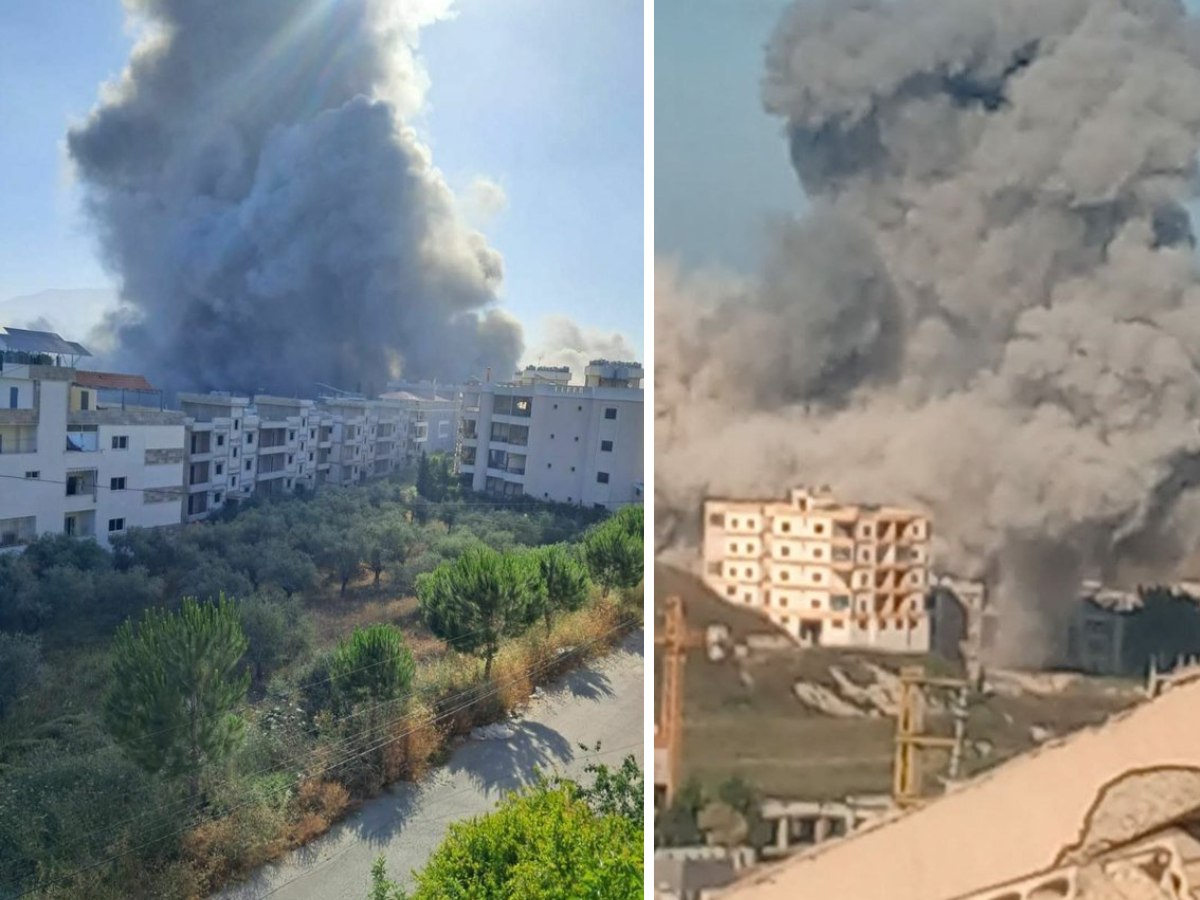
Israel-Hezbollah Ceasefire Holds Amidst Reports of Continued Attacks
Reports suggest Israel continued attacks on Lebanon following an agreed ceasefire with Hezbollah, raising concerns about the stability of the truce. International bodies are monitoring the situation closely.
Key Highlights
- Ceasefire agreement between Israel and Hezbollah reported.
- Allegations of continued Israeli attacks on Lebanon surface.
- International community closely observing the fragile truce.
- Concerns rise over potential escalation of border conflict.
- Impact on civilian populations in border regions is significant.
Following intense cross-border hostilities, Israel and Hezbollah reportedly agreed to a ceasefire, a development initially reported by multiple international news outlets, including Al Jazeera, BBC, and The Guardian. However, immediately after this agreement, Al Jazeera published a report claiming that Israel continued its attacks on Lebanon, casting doubt on the effectiveness and adherence to the ceasefire. This contradiction between the reported agreement and subsequent actions necessitates a thorough verification of the claims made by Al Jazeera and other sources.
The initial reports of a ceasefire, often facilitated by international or regional mediators, typically signal a de-escalation of tensions. In this context, the agreement between Israel and Hezbollah, two long-standing adversaries with a history of violent confrontations, would normally be a significant development aimed at preventing further loss of life and destruction. The involvement of a US official in confirming the ceasefire, as reported by The Hindu, would lend further weight to its authenticity.
However, the core of the Al Jazeera article focuses on the alleged continuation of Israeli attacks post-ceasefire. Verifying such claims requires corroboration from independent sources on the ground, satellite imagery analysis, and official statements from both parties involved, as well as international observers. Real-time information from the region is crucial. If attacks did indeed continue, it raises several critical questions: Was the ceasefire poorly communicated or understood? Was it a deliberate violation by one party? Or were the reported attacks misinterpretations of defensive actions or pre-planned operations that were not halted in time?
The geopolitical implications of such a fragile ceasefire are profound. A breakdown in the truce could lead to a renewed and potentially more intense conflict, with devastating consequences for Lebanon, already grappling with severe economic and political instability. For Israel, continued conflict on its northern border diverts military resources and poses a security challenge. The impact on civilian populations in southern Lebanon and northern Israel, who often bear the brunt of such escalations, is invariably severe, leading to displacement, casualties, and destruction of infrastructure.
Given India's strategic interests in the Middle East and its policy of maintaining balanced relations with all parties in the region, news of escalating conflict or a fragile ceasefire in this area is of considerable importance. India often advocates for de-escalation and peaceful resolution of disputes. Therefore, understanding the precise sequence of events – the agreement to a ceasefire and the alleged subsequent attacks – is vital for informing policy and public understanding. The credibility of the sources reporting these events is paramount. Al Jazeera, while a reputable news organization, has at times been accused of bias, necessitating cross-referencing with other international news agencies known for their rigorous fact-checking and reporting standards, such as Reuters, AP, and international organizations monitoring the conflict.
The situation described, where an agreement is immediately followed by alleged violations, is a common feature in complex geopolitical conflicts. It often highlights the challenges of enforcing ceasefires, the presence of hardline factions within groups, or the difficulty in coordinating military actions with diplomatic agreements. The verification process, therefore, must sift through conflicting narratives and ground realities to present an objective picture. If the claims of continued attacks are substantiated, it would indicate a significant breach of the agreement and a severe blow to de-escalation efforts, requiring urgent international attention and diplomatic intervention. Conversely, if the claims are found to be exaggerated or unsubstantiated, it would highlight the importance of precise reporting and avoiding premature conclusions. The absence of immediate, widespread corroboration for continued attacks after an agreed ceasefire could suggest that the initial reports of the ceasefire were accurate and that any subsequent incidents were isolated or defensive in nature, though this would still require careful scrutiny. The context of ongoing, low-level exchanges that may have continued despite a broader cessation of hostilities is also a possibility that needs to be considered. The verification of this news hinges on the ability to obtain real-time, corroborated reports from the ground and official statements that clarify the events following the reported ceasefire agreement. Without such corroboration, the Al Jazeera report's specific claims about continued attacks would remain unverified.
Frequently Asked Questions
What is the nature of the conflict between Israel and Hezbollah?
The conflict between Israel and Hezbollah is a long-standing geopolitical and military confrontation primarily driven by territorial disputes, political ideologies, and regional power dynamics. Hezbollah, a Lebanese Shia Islamist political party and militant group, views Israel as an occupying force and a threat. Israel, in turn, considers Hezbollah a major security threat due to its military capabilities and its alignment with Iran.
What are the implications of a ceasefire agreement in this region?
A ceasefire agreement between Israel and Hezbollah is significant as it signals a temporary cessation of hostilities, aiming to prevent further loss of life and destruction. However, the history of such agreements in the region is often marked by fragility, with potential for renewed violence. Its success depends on adherence by both parties and effective monitoring mechanisms.
Why is the news of continued attacks after a ceasefire agreement important?
The continuation of attacks after a ceasefire agreement is critical because it undermines the truce, raises doubts about the sincerity of the parties involved, and carries the risk of escalating the conflict. This can lead to a humanitarian crisis, further destabilize the region, and draw international concern and intervention.
How does this conflict affect India?
While not directly involved militarily, India has strategic and economic interests in the Middle East. Escalations in this region can impact oil prices, trade routes, and the security of Indian expatriates. India's foreign policy generally advocates for peace and stability, so it closely monitors such developments.