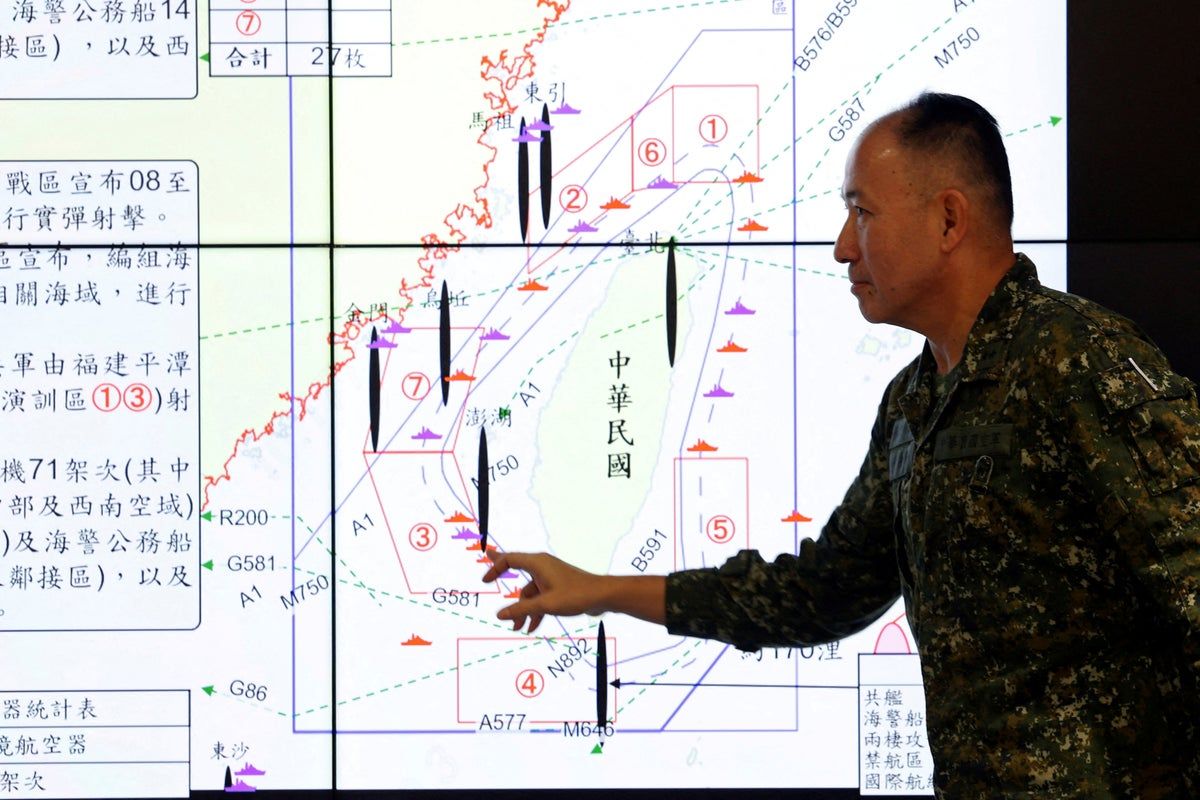
Taiwan Conducts Combat Drills Amidst Heightened China Tensions
Taiwan is conducting five days of combat readiness drills, simulating defensive maneuvers against potential invasion. These exercises underscore the ongoing geopolitical tensions between Taiwan and mainland China, a situation closely monitored globally.
Key Highlights
- Taiwan's military exercises simulate defense against invasion.
- Drills are a response to increased military pressure from China.
- International community closely watches the Taiwan-China situation.
- Taiwan reaffirms commitment to its defense capabilities.
- Geopolitical tensions in the Taiwan Strait remain high.
Taiwan, a self-governing democracy, has initiated a series of five-day combat readiness drills, designed to simulate a robust defense against potential aggression. These exercises are a clear signal of Taiwan's determination to bolster its military preparedness amidst escalating tensions with mainland China. The drills, which began recently, involve various branches of Taiwan's armed forces and are intended to test and refine response mechanisms to a range of possible scenarios, including invasion attempts and blockades. The exercises are comprehensive, aiming to enhance the effectiveness of joint operations and the resilience of the island's defense forces.
China, which claims Taiwan as its own territory and has not ruled out the use of force to achieve unification, has significantly increased its military activities around the island in recent years. These activities include frequent air and naval incursions into Taiwan's air defense identification zone and large-scale military exercises that simulate an invasion. Taiwan views these actions as a direct threat to its sovereignty and regional stability. The current drills are therefore seen as a necessary countermeasure and a demonstration of Taiwan's resolve to defend itself.
The international community, particularly the United States and its allies, are closely observing the developments in the Taiwan Strait. The strategic importance of Taiwan, both economically as a global leader in semiconductor manufacturing and geopolitically, makes any escalation in tensions a matter of significant global concern. The potential for conflict in the region carries substantial risks for global supply chains, international trade, and regional security. The United States, while acknowledging Beijing's "one China" policy, maintains robust unofficial relations with Taiwan and provides it with defensive weaponry, a stance that often draws strong objections from China.
Taiwan's government has consistently stated its commitment to maintaining peace and stability in the region, while also emphasizing its right to self-defense. The drills are part of a broader strategy to modernize its military, enhance its asymmetric warfare capabilities, and deter any potential aggression. The exercises are expected to involve simulated responses to aerial and maritime threats, as well as ground defense scenarios. The Taiwanese Ministry of National Defense has stated that these drills are routine and are designed to improve combat effectiveness, but their timing and scale are often interpreted as a direct response to China's assertive military posture.
The geopolitical landscape surrounding Taiwan is complex and dynamic. Taiwan's democratic system, its strategic location, and its advanced technological capabilities make it a focal point of international relations. The ongoing military drills serve as a reminder of the fragile peace in the region and the significant challenges Taiwan faces in safeguarding its autonomy. The international community's response, combined with Taiwan's own defensive efforts, will continue to shape the trajectory of cross-strait relations. The global impact of any conflict, however limited, would be profound, underscoring the critical need for de-escalation and peaceful resolution of disputes. The drills are a stark illustration of Taiwan's commitment to ensuring its security and deterring coercion.
For India, the situation in Taiwan holds indirect relevance. India shares concerns about China's assertive behavior in its own neighborhood, including the Indo-Pacific region. Any instability or conflict in the Taiwan Strait could have ripple effects on global trade routes and supply chains, which are crucial for India's economy. Furthermore, the geopolitical dynamics involving China, Taiwan, and the United States influence the broader strategic balance in Asia, a region where India plays a significant role. Therefore, while the drills are primarily a bilateral issue between Taiwan and China, they are part of a larger geopolitical narrative that has implications for India's foreign policy and national security considerations, particularly in the context of its own border disputes with China and its growing strategic partnerships with countries in the Indo-Pacific. The drills underscore the importance of maintaining a strong defense posture and diplomatic engagement in a rapidly evolving regional security environment.
Frequently Asked Questions
Why is Taiwan conducting combat readiness drills?
Taiwan is conducting these drills to enhance its military preparedness and simulate defensive maneuvers in response to increasing military pressure and potential aggression from mainland China.
What is the current relationship between Taiwan and China?
China considers Taiwan a breakaway province to be reunified with the mainland, by force if necessary, while Taiwan is a self-governing democracy that maintains its own military and government.
What is the international community's stance on Taiwan?
Many countries, including the United States, acknowledge China's "one China" policy but maintain unofficial relations with Taiwan and support its right to self-defense, viewing stability in the Taiwan Strait as crucial.
How do these drills affect regional stability?
While Taiwan views these drills as defensive, they can heighten tensions in the Taiwan Strait, a strategically vital and economically important region. The international community closely monitors these developments due to the potential for broader regional and global impact.