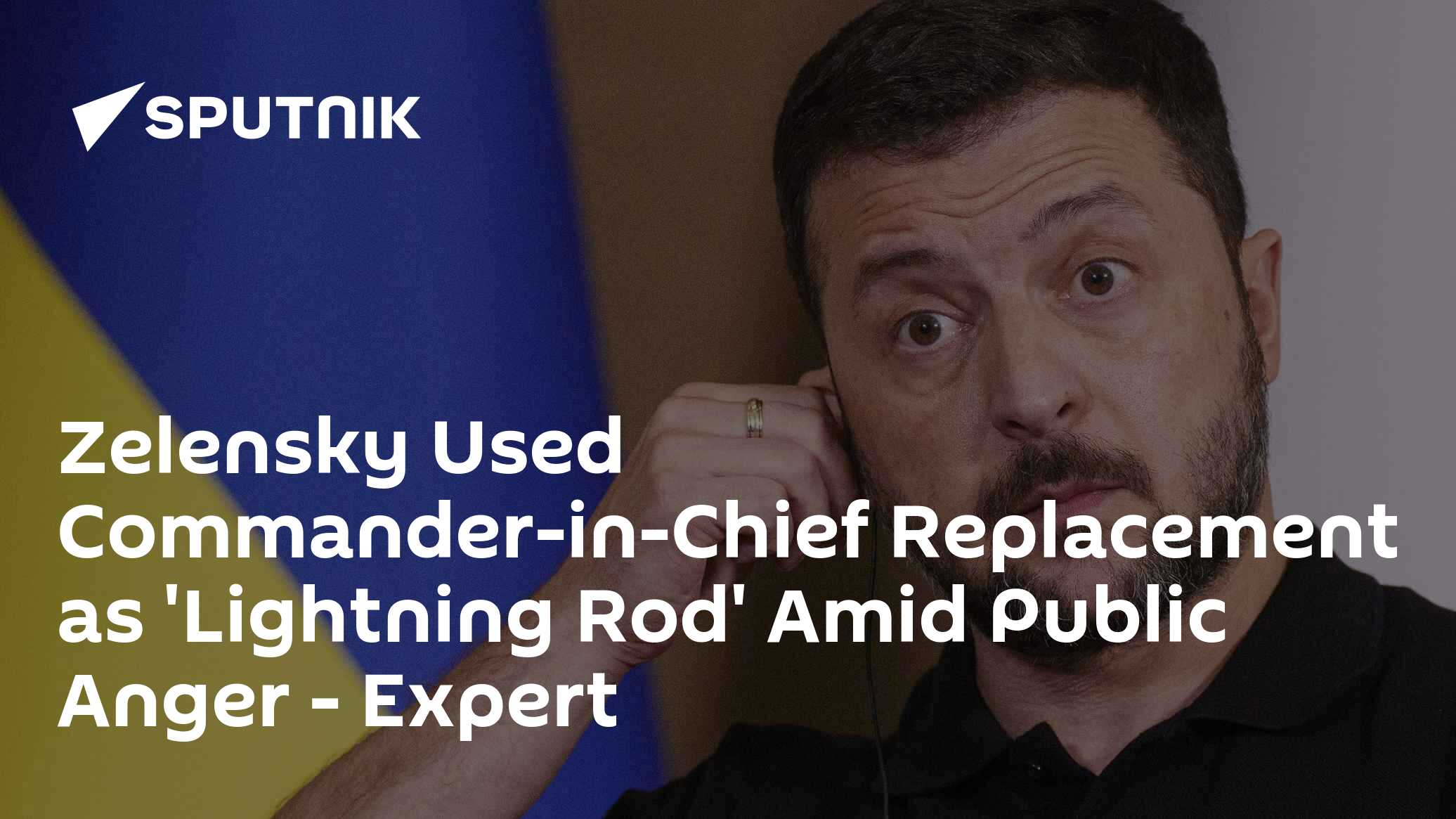
Zelensky Sacks Army Chief Syrskyi Amid Protests, Appoints Drapatyi
Ukrainian President Volodymyr Zelensky has dismissed Army Chief Oleksandr Syrskyi following widespread protests, appointing Major General Mykhailo Drapatyi as his successor. This significant military leadership change comes amid ongoing war with Russia and a political crisis over military reforms.
Key Highlights
- Zelensky dismissed Oleksandr Syrskyi as Commander-in-Chief on July 21, 2026.
- Major General Mykhailo Drapatyi was appointed as the new army chief.
- Sacking followed widespread protests triggered by former Defense Minister's dismissal.
- Mykhailo Fedorov accused Syrskyi of blocking military reforms and having outdated views.
- The move is a major leadership shake-up amidst Ukraine's ongoing war with Russia.
- Fedorov was offered a prominent new role in defence technology coordination.
Ukrainian President Volodymyr Zelensky announced a significant shake-up in the nation's military leadership on Tuesday, July 21, 2026, dismissing Oleksandr Syrskyi as the Commander-in-Chief of the Armed Forces of Ukraine. This marks the second time during the ongoing full-scale invasion that Zelensky has replaced his top military commander, following the earlier dismissal of Valerii Zaluzhnyi in February 2024. The decision to remove Syrskyi came after days of widespread protests across Kyiv and other Ukrainian cities, where citizens demanded his removal.
Syrskyi, 60, who had served in the role since February 8, 2024, was replaced by Major General Mykhailo Drapatyi, the former commander of Ukraine's joint forces. Drapatyi, a 43-year-old decorated general, is well-regarded within the army and by the public, known for his innovative approach and advocacy for integrating drone warfare and faster battlefield decisions. His appointment is expected to usher in a reorganisation of the army's command structure and an update to the country's defence strategy.
The political crisis that led to Syrskyi's dismissal was primarily triggered by the removal of the highly popular and tech-savvy Defense Minister Mykhailo Fedorov, just a week prior. Fedorov, 35, had been credited with significant efforts to modernize the military, but his reform initiatives reportedly brought him into conflict with Syrskyi's leadership. Following his dismissal, Fedorov publicly accused Syrskyi of blocking his proposed military reforms, fostering an outdated, Soviet-style command culture, and pressuring President Zelenskyy to remove him from his post. Syrskyi, for his part, denied these charges.
The public backlash against Fedorov's removal was substantial, with thousands taking to the streets, demanding his reinstatement and, subsequently, Syrskyi's dismissal. The protests highlighted a rare public display of division within Ukraine's political and military leadership, even as Ukrainian forces have managed to slow Russia's advances and conduct successful long-range drone strikes. This internal turmoil presented a challenge for President Zelenskyy at a critical juncture in the war, pushing him to address the public's concerns.
In an effort to de-escalate the situation, President Zelenskyy offered Mykhailo Fedorov a new, prominent leadership position within the government. The proposed role aims to unify the state's technological capabilities and ensure their further development, focusing on military modernization and strategic planning within the National Security and Defence Council. While Fedorov initially insisted on returning only as Defense Minister, reports indicate an agreement was reached, with him accepting an expanded national security role with real powers in defence technology coordination. This move appears to have contained the immediate crisis surrounding Fedorov's departure.
President Zelenskyy, in announcing Syrskyi's departure, acknowledged his contributions, particularly in leading the defense of Kyiv at the onset of the full-scale invasion in 2022 and overseeing the counter-incursion into Russia's Kursk province in the summer of 2024. However, he emphasized the need for "new approaches and new strategies" to reset the Armed Forces. The appointment of Drapatyi, along with other potential leadership changes in the army, signals a renewed focus on modernizing Ukraine's military and adapting to the evolving demands of the conflict. Mykhailo Drapatyi's first task as Commander-in-Chief will be to present a team for resetting the Armed Forces of Ukraine. This leadership transition is a pivotal moment for Ukraine, as it seeks to maintain national unity and strategic effectiveness amidst ongoing hostilities with Russia. The shift in command is also expected to address pressing issues like mobilization, a challenge given nearly five years of full-scale war.
Frequently Asked Questions
Who was the Ukrainian Army Chief dismissed by President Zelenskyy?
President Volodymyr Zelenskyy dismissed Oleksandr Syrskyi as the Commander-in-Chief of the Armed Forces of Ukraine on July 21, 2026.
Who replaced Oleksandr Syrskyi as Ukraine's top military commander?
Major General Mykhailo Drapatyi, formerly the commander of Ukraine's joint forces, was appointed as the new Commander-in-Chief of the Armed Forces of Ukraine.
What led to the dismissal of Army Chief Syrskyi?
Syrskyi's dismissal followed widespread protests across Ukraine, which were sparked by the earlier removal of Defense Minister Mykhailo Fedorov. Fedorov had accused Syrskyi of impeding military reforms and adhering to outdated command practices.
What is Mykhailo Fedorov's new role?
President Zelenskyy offered Mykhailo Fedorov a prominent position within the government to unify the state's technological sector and ensure its development, specifically in a national security role focused on defence technology and strategic planning.
Why is this military leadership change significant for Ukraine?
This is a pivotal moment as it reflects a push for military modernization and reform in response to public dissatisfaction and internal disagreements over strategy. It aims to enhance Ukraine's effectiveness in the ongoing war with Russia and address challenges like troop mobilization.