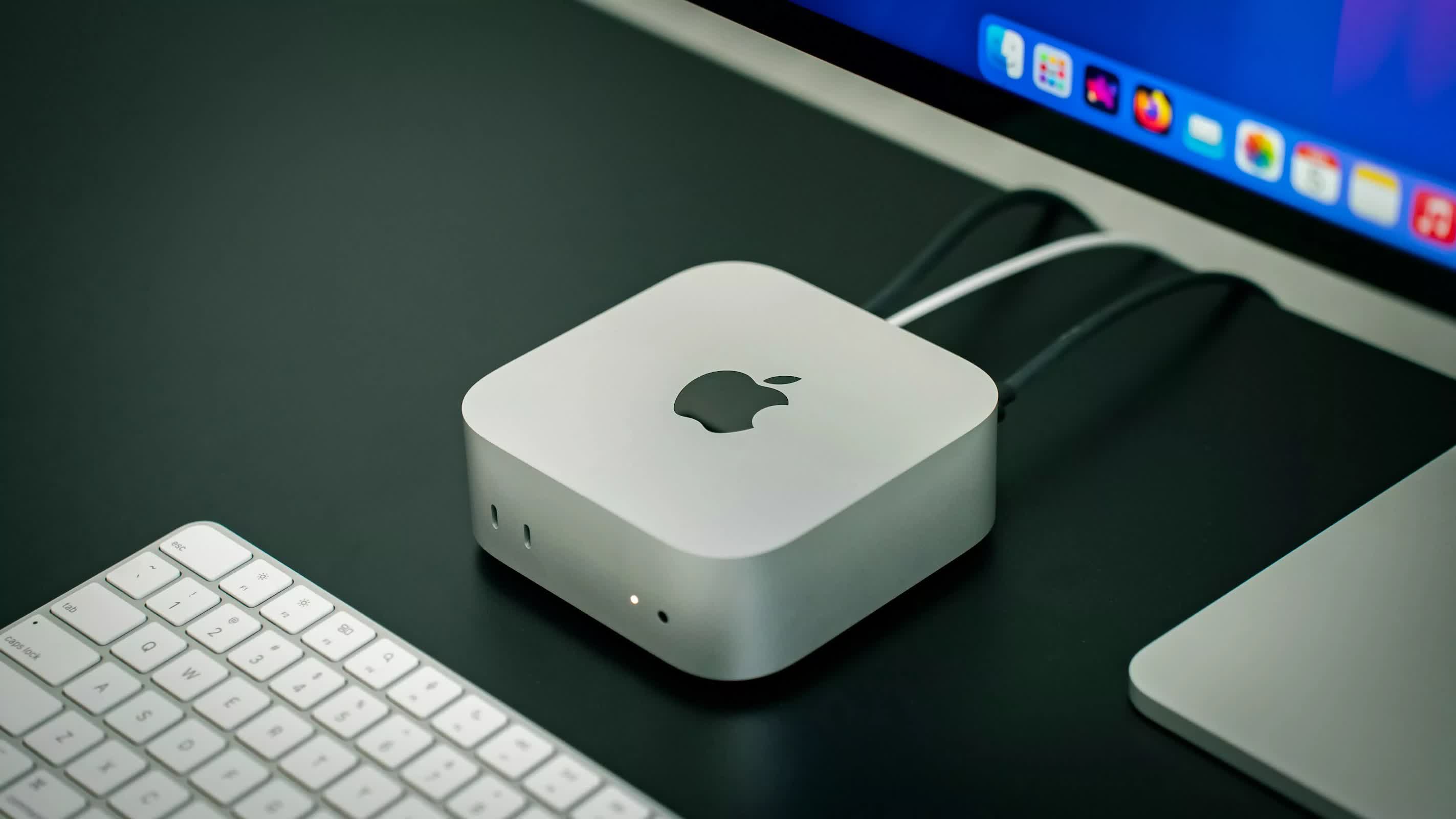
Apple Mac Mini Prices Rise Amid Surging AI Demand and Chip Shortages
Apple has increased the starting price of its Mac Mini to $799, discontinuing the $599 model. This adjustment is primarily driven by a significant surge in demand from AI developers and ongoing global memory chip shortages, impacting availability and pushing prices on resale markets.
Key Highlights
- Apple raises Mac Mini starting price to $799, discontinuing cheaper model.
- Surge in AI developer demand for Mac Mini cited as key reason.
- Global memory chip shortages exacerbate supply constraints and price hikes.
- Mac Mini's compact design and Apple Silicon appeal to local AI workloads.
- Secondary markets show inflated prices due to retail scarcity.
- Other tech companies also face rising component costs and supply issues.
Apple has recently increased the starting price for its Mac Mini, with the entry-level model now set at $799, effectively discontinuing the previously available $599 configuration. This significant price adjustment, initially reported by the Wall Street Journal, is attributed to an unexpected surge in demand for the compact desktop computer, largely driven by artificial intelligence (AI) developers. The cheapest Mac Mini model at $599 is no longer listed on Apple's website, indicating a strategic pricing shift.
The burgeoning interest in the Mac Mini stems from its unexpected utility as an efficient and relatively affordable platform for running local AI agents and models. AI developers and enthusiasts are increasingly gravitating towards the Mac Mini, particularly its higher-memory configurations, due to its Apple Silicon processors, which offer robust performance for AI workloads in a power-efficient and small-form-factor design. The release of open-source tools like OpenClaw, designed for building and running autonomous AI agents, has further accelerated this trend, positioning the Mac Mini as a preferred device for continuous, local AI experimentation without the need for extensive cloud infrastructure.
This spike in demand has led to considerable supply constraints, with various Mac Mini configurations, especially those with larger RAM capacities, frequently listed as "currently unavailable" on Apple's online store. Shipping times for other available models have also extended to several weeks or even months. Apple CEO Tim Cook acknowledged this situation, stating on the company's latest earnings call that customer adoption of Macs for AI is happening faster than anticipated, leading to a projected supply-demand imbalance for the Mac Mini that could last for several months.
Beyond just surging demand, the pricing and availability issues are compounded by a broader global shortage of crucial memory components, specifically DRAM and NAND chips. The overwhelming demand for these chips from the rapidly expanding AI data center industry has pushed their prices to unprecedented levels, significantly impacting the cost and supply for consumer electronics manufacturers. Suppliers are prioritizing high-volume, high-margin orders from AI-focused enterprises, leaving less capacity and higher costs for devices like personal computers and smartphones.
The ripple effects are not confined to Apple. Other major tech manufacturers, including Dell, Lenovo, and HP, are also grappling with increased component costs and subsequent price hikes for their products or facing their own supply chain challenges. Some reports indicate that RAM now constitutes up to 35% of the PC build cost for companies like HP. This suggests a systemic shift in the electronics market, where AI development is dictating hardware priorities and pricing across the board.
The scarcity at retail has also fueled a robust secondary market, where Mac Mini units, particularly the now-discontinued $599 base model (M4 version), are being resold at significantly inflated prices on platforms like eBay. Some new "open box" units have been listed for as much as $715-$795, with refurbished models reaching up to $979, far exceeding their original retail value. This indicates a strong willingness among buyers to pay a premium for immediate access to these in-demand machines.
Looking ahead, there are expectations for new Mac Mini models featuring the M5 and M5 Pro chips in 2026. However, given the current market conditions and ongoing memory shortages, these new releases could potentially come with further price increases. The situation underscores the dynamic interplay between technological innovation, market demand, and global supply chain vulnerabilities, with AI emerging as a dominant force reshaping the consumer electronics landscape.
For an Indian audience, these global trends are highly relevant. India is a growing market for technology, and any increases in prices for popular devices like the Mac Mini, or shortages in components, will directly affect consumers, businesses, and the burgeoning AI development community within the country. The shift in manufacturing priorities towards AI components could also influence the availability and pricing of a wide range of electronics in India, making this a significant market trend to monitor.
Frequently Asked Questions
Why did Apple increase the starting price of the Mac Mini?
Apple increased the starting price of the Mac Mini from $599 to $799 primarily due to a significant surge in demand from AI developers and ongoing global shortages of memory chips essential for its production.
How is AI demand influencing Mac Mini sales and prices?
AI developers are increasingly purchasing Mac Minis for running local AI agents and models due to their powerful Apple Silicon chips, compact design, and energy efficiency. This unexpected demand has led to shortages, extended shipping times, and increased prices both officially and on secondary markets.
What is the role of global chip shortages in this situation?
A severe global shortage of DRAM and NAND memory chips, driven by overwhelming demand from AI data centers, is a major factor. This scarcity drives up component costs, forcing manufacturers like Apple to adjust pricing and impacting the overall supply of consumer electronics.
Will the higher prices and shortages affect other consumer electronics?
Yes, the trends observed with the Mac Mini, stemming from AI demand and chip shortages, are impacting the broader consumer electronics market. Other manufacturers like Dell, Lenovo, and HP are also experiencing higher component costs and adjusting prices or facing supply issues for their products.
When can consumers expect new Mac Mini models or improved availability?
While new Mac Mini models featuring M5 and M5 Pro chips are anticipated in 2026, Apple CEO Tim Cook has indicated that supply-demand imbalances could persist for several months. Availability of current models remains tight, and future prices may also be affected by ongoing market conditions.