Haq Film's Inspiration: Real Shah Bano Case vs. Reel Story | Quick Digest
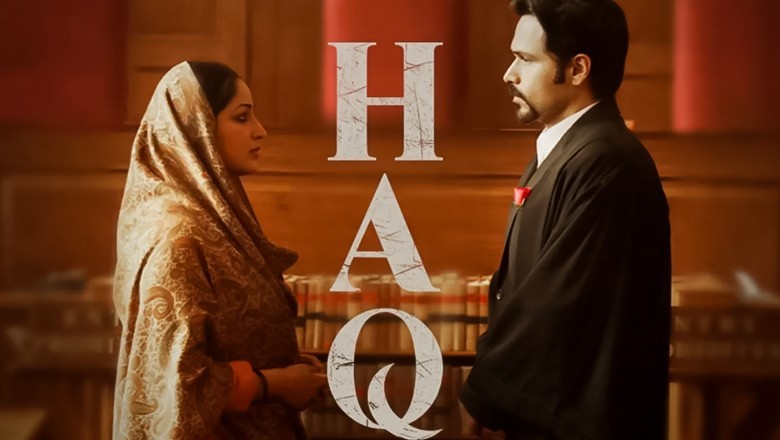
The film 'Haq', starring Yami Gautam, is inspired by the landmark 1985 Shah Bano Begum maintenance case in India. While drawing from real events, the movie takes creative liberties, portraying a fictionalized account of a Muslim woman's fight for justice and dignity.
Film 'Haq' is inspired by India's historic Shah Bano Begum maintenance case.
Shah Bano case involved a 62-year-old Muslim woman seeking maintenance after divorce.
Supreme Court ruled in Shah Bano's favor in 1985, upholding Section 125 CrPC.
'Haq' portrays protagonist Shazia Bano as younger and achieving a dignified legal victory.
Real Shah Bano, in her 60s, eventually withdrew her claim due to social pressure.
The film ignites fresh debates on women's rights, faith, and Uniform Civil Code.
The India Today article accurately highlights that the recently released film 'Haq,' starring Yami Gautam Dhar and Emraan Hashmi, is deeply inspired by the landmark Shah Bano Begum case, one of India's most significant and controversial Supreme Court judgments regarding maintenance for divorced Muslim women. The real Shah Bano Begum, a Muslim woman from Indore, Madhya Pradesh, married lawyer Mohammed Ahmed Khan in 1932. After over four decades of marriage and five children, Khan divorced her in 1978 and stopped providing financial support when she was 62 years old. Shah Bano then approached a local court in Indore, seeking maintenance under Section 125 of the Code of Criminal Procedure (CrPC), 1973, a secular provision for financial support. Khan contested this, arguing that under Muslim Personal Law, maintenance was only due during the 'iddat' period (approximately three months post-divorce).
In April 1985, the Supreme Court ruled in Shah Bano's favor, asserting that Section 125 applies to all citizens irrespective of religion, aimed at preventing destitution. This verdict sparked considerable political and religious backlash, leading the Rajiv Gandhi-led government to pass the Muslim Women (Protection of Rights on Divorce) Act, 1986, which diluted the Supreme Court's ruling by largely limiting maintenance to the 'iddat' period. Shah Bano, facing immense social and religious pressure, subsequently withdrew her claim.
'Haq' is a fictionalized account that takes creative liberties for dramatic and inspirational effect. In the film, Yami Gautam plays Shazia Bano, depicted as a younger woman, the daughter of a maulvi, who actively participates in courtroom debates and ultimately wins her case with dignity. In reality, Shah Bano was in her 60s, the daughter of a police constable, had limited courtroom visibility, and eventually capitulated to pressure. Despite these differences, the film effectively revisits the fundamental questions of women's rights, faith, and justice, sparking fresh conversations about the Uniform Civil Code.
Read the full story on Quick Digest