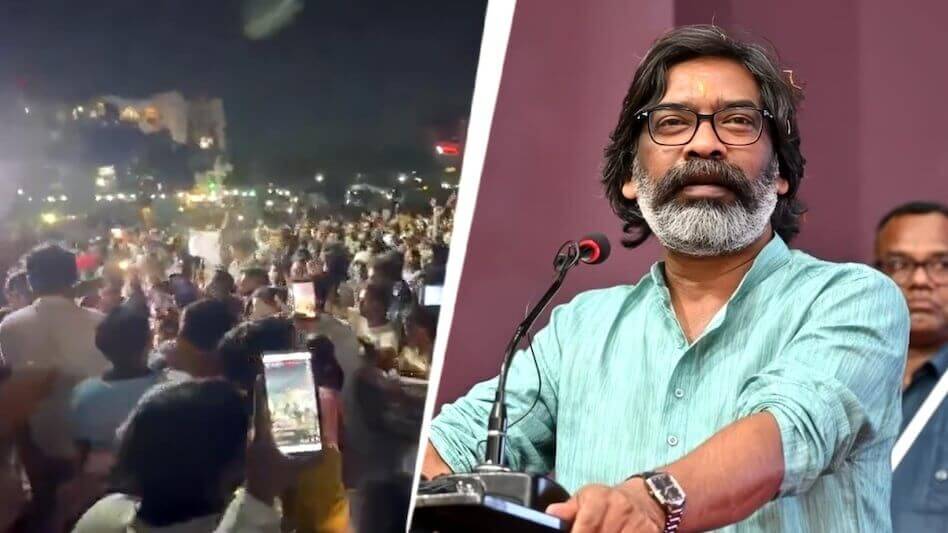
Sonam Wangchuk Backs Jharkhand Exam Protests Amid Intensifying Hunger Strike
Educationist Sonam Wangchuk has urged Jharkhand student leader Devendra Nath Mahato to consume water and salt while supporting the ongoing protests against alleged irregularities in JPSC and JSSC exams. Mahato, on an indefinite hunger strike, agreed to hydrate as five more joined the fast, escalating pressure on the state government for reforms and a CBI probe.
Key Highlights
- Sonam Wangchuk urged hunger striker Devendra Nath Mahato to take water and salt.
- Mahato agreed to consume water and salt, continuing his modified fast.
- Five additional protesters joined the indefinite hunger strike, raising total to six.
- Students demand CBI probe into JPSC, JSSC exam irregularities and reforms.
- Jharkhand government invited protesters for talks amidst ongoing CID investigation.
- Protests at Ranchi's Jaipal Singh Munda Stadium started on July 25.
Environmentalist and educationist Sonam Wangchuk has extended his support to the ongoing student protests in Jharkhand, urging the prominent student leader Devendra Nath Mahato to consume water and salt during his indefinite hunger strike. Mahato, spearheading the agitation against alleged irregularities in state recruitment examinations, agreed to hydrate following Wangchuk's appeal, while affirming his commitment to continue his fast without food until demands are met. This development comes as the protest intensified, with five more individuals joining the indefinite hunger strike, bringing the total number of fasting protesters to six.
The students in Jharkhand have been protesting since July 25, staging a round-the-clock sit-in at Ranchi's Jaipal Singh Munda Stadium. Devendra Nath Mahato of the Jharkhand Krantikari Loktantrik Morcha (JKLM) began his indefinite hunger strike on August 2. The agitation gained significant momentum after the Jharkhand Public Service Commission (JPSC) declared the results of the 14th Civil Services Preliminary Examination on July 5, leading to widespread allegations of irregularities.
The core demands of the protesting students are multifaceted and address a systemic lack of transparency and fairness in the state's recruitment processes. They primarily call for a Central Bureau of Investigation (CBI) inquiry into the alleged irregularities in recruitment examinations conducted by both the JPSC and the Jharkhand Staff Selection Commission (JSSC). Furthermore, they demand the cancellation of the 14th JPSC Civil Services Preliminary Test, a comprehensive review of all examinations conducted by controversial agencies like TSR Data Processing Private Limited (TDPL), and the introduction of a 'not attempted' option as a fifth choice on OMR sheets to prevent malpractices.
The allegations against JPSC and JSSC are not new; Jharkhand's civil services examinations have been plagued by controversies for over two decades, with instances of paper leaks, missing OMR sheets, and other irregularities leading to numerous court cases and delayed recruitments. The current protest was triggered by allegations surrounding the 14th JPSC exam, including claims that candidates with lower marks qualified while those with higher marks failed, and the emergence of alleged OMR sheets on social media. The resignation of former JPSC chairman L. Khiangte amid a CID probe has further fueled public outrage.
Sonam Wangchuk, known for his activism in Ladakh and his recent 26-day fast over the NEET paper leak issue, emphasized his support for genuine movements concerning education and environment. During his call with Mahato on Wednesday (August 5, 2026), he acknowledged the gravity of Mahato's sacrifice but stressed the importance of preserving life to continue the fight for justice. Mahato's decision to consume water was influenced by Wangchuk's appeal and warnings from doctors about his deteriorating health.
The Jharkhand government, led by Chief Minister Hemant Soren, has acknowledged the seriousness of the students' concerns. CM Soren stated that the government is awaiting the investigation report from the Crime Investigation Department (CID) of the Jharkhand police. The CID has already questioned former JPSC chairman L. Khiangte and arrested several individuals, including JPSC officials and employees of the private agency TDPL, in connection with the alleged irregularities. On August 5, government officials invited a delegation of five protesters for talks at the Chief Minister's residence, a step that indicates the government's willingness to engage with the agitating students.
The protests have garnered support from various political parties and student organizations. The opposition, including BJP, has sought the resignation of CM Soren and demanded a CBI probe. The Jharkhand Mukti Morcha (JMM), a partner in the ruling coalition, has also expressed solidarity with the aspirants and indicated that a high-level committee would be formed to address their demands. The students, however, remain firm, asserting that their agitation will continue until concrete decisions are made on their demands, not just assurances.
As the Monsoon Session of the Jharkhand Assembly approaches, the students have announced plans to intensify their protest with an 'Assembly gherao' (siege), escalating the pressure on the state government. This movement has transcended a single examination dispute, becoming a broader reflection of youth frustration over delayed recruitments, paper leaks, and perceived unfairness in government hiring across India, thus posing a significant test for the Hemant Soren government's credibility and the integrity of India's public recruitment system.
Frequently Asked Questions
Why are students protesting in Jharkhand?
Students in Jharkhand are protesting against alleged widespread irregularities, paper leaks, and lack of transparency in competitive examinations conducted by the Jharkhand Public Service Commission (JPSC) and the Jharkhand Staff Selection Commission (JSSC), particularly the 14th JPSC Civil Services Preliminary Examination results.
Who is Devendra Nath Mahato and what is his role in the protest?
Devendra Nath Mahato is a prominent student leader and a member of the Jharkhand Krantikari Loktantrik Morcha (JKLM). He is at the forefront of the student protest and began an indefinite hunger strike on August 2 to press for the protesters' demands.
What was Sonam Wangchuk's involvement in the Jharkhand protest?
Environmentalist and educationist Sonam Wangchuk spoke to Devendra Nath Mahato, urging him to consume water and salt to preserve his health while continuing his protest. Wangchuk expressed solidarity with the students and their demands for fair examinations.
What are the key demands of the protesting students?
The primary demands include a CBI inquiry into exam irregularities, cancellation of the 14th JPSC Civil Services Preliminary Test, review of exams by agencies like TDPL, implementation of a 'not attempted' option on OMR sheets, and comprehensive reforms within JPSC and JSSC.
How has the Jharkhand government responded to the protests?
The Jharkhand government, led by CM Hemant Soren, has stated it is serious about the concerns and is awaiting a CID investigation report into the alleged irregularities. The CID has made several arrests. The government has also invited a delegation of protesters for talks to address their demands.