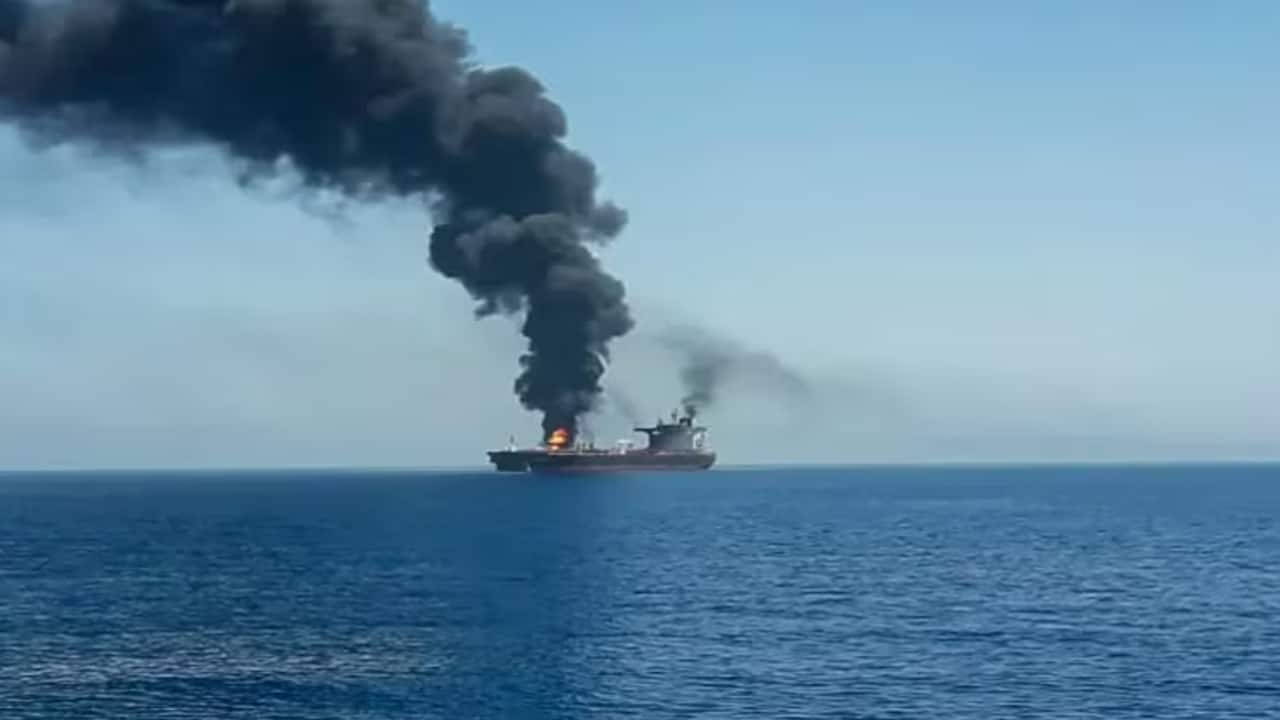
Oil Prices Fluctuate Amid Heightened Hormuz Tensions, Peace Talk Hopes
Global oil markets are experiencing significant volatility, not stability, as investors keenly monitor tanker traffic through the Strait of Hormuz amidst escalating US-Iran tensions. Recent reports indicate oil prices fell sharply due to renewed hopes for peace talks, contradicting claims of steady prices, while India actively seeks alternative energy routes for security.
Key Highlights
- Oil prices saw sharp drops, contradicting claims of stability.
- Strait of Hormuz traffic significantly declined due to heightened tensions.
- US and Iran remain locked in escalating military and economic threats.
- China-led initiatives spark new hopes for US-Iran peace talks.
- India actively reroutes oil imports, prioritizing energy security.
- Geopolitical risks in Middle East continue to drive market uncertainty.
The claim that 'Oil is steady as investors focus on Hormuz flows after peace talks' is inaccurate based on real-time information from late July 2026. Contrary to being steady, global oil prices have experienced considerable volatility, first climbing above $100 per barrel earlier in the week due to escalating tensions, and then falling sharply by over 4% in recent days, influenced by renewed diplomatic efforts for peace.
**Headline Accuracy Check:**
The headline's assertion of 'Oil steady' is directly contradicted by recent market movements. Brent crude, the international benchmark, settled at $96.78 a barrel on Friday, July 25, 2026, while U.S. West Texas Intermediate (WTI) futures finished at $89.31 a barrel, both experiencing drops of 3.88% and 3.12% respectively. This followed earlier rallies that saw prices exceed $100 per barrel. The downward movement was primarily attributed to reports of China initiating a push to resume stalled peace talks between the United States and Iran. Therefore, the term 'steady' is misleading for the period around July 26, 2026, as prices have been highly responsive to the fluid geopolitical situation.
Furthermore, the phrase 'after peace talks' suggests a resolution or a period following successful negotiations. While there was a U.S.-Iran Memorandum of Understanding (MOU) signed on June 18, 2026, aimed at ending conflict and reopening the Strait of Hormuz, which initially led to a decline in oil prices and an uptick in tanker traffic, this truce has since been severely strained by renewed hostilities. The market is now reacting to the *prospect* of renewed diplomatic efforts, rather than a firmly established peace.
**Verification of Major Claims and Facts:**
1. **Oil Price Movement:** Oil prices are far from 'steady'. They surged past $100 earlier in the week due to escalating U.S.-Iran conflict and threats to shipping lanes. However, prices then fell significantly (over 4%) on Friday, July 25, 2026, after reports surfaced of China's diplomatic efforts to mediate peace talks between Washington and Tehran. This demonstrates a highly volatile market, directly refuting the 'steady' claim.
2. **Focus on Hormuz Flows:** The focus on the Strait of Hormuz remains critically accurate. Maritime traffic through the strait has sharply declined in recent weeks due to escalating security tensions, with some reports indicating traffic at a 'near standstill' or at its 'lowest level in more than two months' as of mid-July. Non-Iranian linked ships have plummeted, and ship tracking systems (AIS) are frequently disabled, making monitoring difficult. Iran's Revolutionary Guards reportedly stopped three oil tankers on July 23, 2026, further highlighting the ongoing risks. The U.S. has conducted multiple nights of strikes against Iranian military infrastructure, citing efforts to protect commercial shipping.
3. **Peace Talks:** The reference to 'peace talks' is relevant, but its context is crucial. While a U.S.-Iran MOU was signed in mid-June, renewed hostilities, including a '13th consecutive night of operations against Iran' by the U.S. military, have severely tested any previous agreements. The recent fall in oil prices is directly linked to China's 'push to resume stalled peace talks', indicating that peace is an ongoing, fragile pursuit rather than a settled outcome. Iran has also indicated that diplomatic exchanges with the U.S. continue through mediators, despite the escalating conflict.
**Credible Sources and Misinformation:**
Reuters itself, alongside other reputable news organizations like CNBC, The New York Times, J.P. Morgan, IEA, EIA, Lloyd's List Intelligence, and The Washington Post, corroborate the intense focus on the Strait of Hormuz and the significant volatility of oil prices due to geopolitical developments. The primary misinformation or exaggeration lies in the headline's characterization of 'Oil steady' and the implication of a stable environment 'after peace talks' when the reality is a dynamic and tense situation with fluctuating prices driven by hopes and fears surrounding ongoing diplomatic efforts amid military actions.
**Relevance to India:**
The situation in the Strait of Hormuz is of critical importance to India. As the world's third-largest oil importer, India's energy security is highly exposed to disruptions in this vital maritime chokepoint, through which 45% of its crude oil imports, half of its LNG imports, and 90% of its LPG imports previously passed. The ongoing crisis has already caused India's crude basket to surge. In response, India is proactively rerouting crude oil and LNG imports through alternative ports and pipelines in the UAE and Oman, such as Fujairah and Sohar, to mitigate risks and safeguard its energy supplies. This strategic pivot underscores the severe impact of the Middle East tensions on India's economy and its proactive measures to ensure national energy security.
In conclusion, while the focus on the Strait of Hormuz and the presence of peace talks are factual, the description of oil prices as 'steady' is inaccurate for the period of verification. The market is highly reactive to the evolving geopolitical landscape and diplomatic overtures, resulting in significant price fluctuations.
Frequently Asked Questions
Why are oil prices not 'steady' as the headline claims?
Oil prices have been highly volatile in late July 2026. They initially surged above $100 per barrel due to escalating US-Iran hostilities and threats to shipping in the Strait of Hormuz. However, prices then fell sharply by over 4% as reports emerged of China's initiatives to broker peace talks between the two nations, creating hopes for de-escalation.
What is the current situation in the Strait of Hormuz?
The Strait of Hormuz is experiencing heightened security tensions, leading to a significant decline in maritime traffic, with some reports indicating a near standstill or the lowest traffic levels in over two months. Iran has reportedly taken actions against oil tankers, and the US has conducted military strikes to ensure freedom of navigation.
What 'peace talks' are being referred to?
While a US-Iran Memorandum of Understanding was signed in June 2026, renewed hostilities have strained it. The current market reaction stems from recent reports of China pushing for a resumption of stalled peace talks between the United States and Iran, aimed at de-escalating the conflict in the Middle East. Diplomatic exchanges are reportedly ongoing through mediators.
How do these developments affect India's energy security?
As the world's third-largest oil importer, India is highly vulnerable to disruptions in the Strait of Hormuz, which is a critical route for a large portion of its oil, LNG, and LPG imports. The crisis has caused India's crude basket prices to surge. In response, India is actively rerouting its energy imports through alternative ports and pipelines in the UAE and Oman to safeguard its energy supplies.
What role is China playing in the current scenario?
China, being Iran's largest trading partner and a major buyer of its crude oil, has initiated diplomatic efforts to encourage a resumption of stalled peace talks between the United States and Iran. These efforts are seen as a key factor contributing to the recent fluctuations in global oil prices.