Cockroach Janta Party Founder Alleges Indian Government Website Takedown
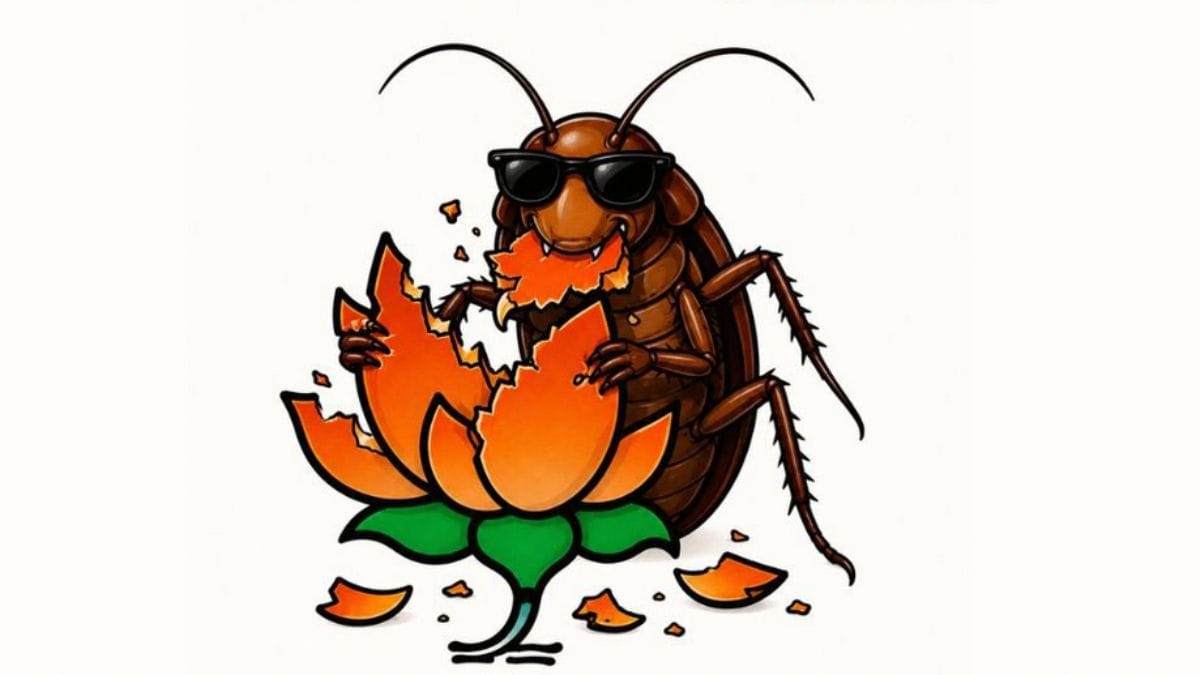
Abhijeet Dipke, founder of India's satirical Cockroach Janta Party (CJP), claims the Indian government took down their website and hacked social media accounts. This follows the CJP's rapid growth as a youth-led protest against unemployment and exam leaks, challenging the ruling party online.
Key Highlights
- CJP founder Abhijeet Dipke alleges government website takedown and account hacks.
- Movement emerged from CJI Surya Kant's 'cockroach' remark about youth.
- CJP gained massive online following, surpassing ruling BJP on Instagram.
- Website takedown followed CJP's petition for Education Minister's resignation.
- Incident highlights growing concerns over online censorship in India.
- Other media corroborated Dipke's claims of digital platform disruptions.
The Cockroach Janta Party (CJP), a satirical online political movement founded by Abhijeet Dipke, has reportedly faced a significant crackdown, with its founder alleging the Indian government took down its official website and hacked several social media accounts. The claims, made by Dipke on X (formerly Twitter) on Saturday, May 23, 2026, state that the 'iconic' website, cockroachjantaparty.org, went offline, and both the CJP's and his personal Instagram accounts were hacked.
The CJP emerged rapidly on May 16, 2026, as a response to controversial remarks made by India's Chief Justice Surya Kant. During a Supreme Court hearing on May 15, 2026, Justice Kant reportedly compared unemployed young people to "cockroaches" and "parasites of society." Although Justice Kant later clarified that his comments were directed at individuals obtaining fraudulent degrees and not the nation's youth at large, the initial remarks ignited widespread outrage and became the catalyst for the CJP's formation.
Within days of its launch, the CJP garnered immense popularity, particularly among India's Gen Z, attracting over 22 million followers on Instagram—surpassing the official handle of the ruling Bharatiya Janata Party (BJP). The movement also claimed over one million sign-ups on its website and gained significant traction on other social media platforms like X. The CJP's name itself is a satirical play on the BJP's acronym, and its content uses humor and memes to address critical issues facing Indian youth, including high graduate unemployment, flaws in competitive examination systems, and alleged government corruption.
Dipke specifically linked the alleged takedown of the website to the CJP's campaign demanding the resignation of Indian Education Minister Dharmendra Pradhan. This campaign was initiated in response to allegations of leaked exam papers, which led to the cancellation of the NEET-UG 2026 medical entrance test and sparked large protests across the country. Dipke stated on X that 600,000 people had signed the movement's petition for Pradhan's resignation through the website before it was taken down.
While the Indian government has not issued a public statement directly confirming its involvement in the website takedown, reports indicate actions against the CJP's digital presence. The CJP's official X account, for instance, was reportedly withheld in India on May 21, 2026, in response to a legal demand. An anonymous government official was quoted as saying that the Ministry of Electronics and Information Technology (MeitY) had been asked by the Intelligence Bureau (IB) to block the CJP's X account, citing "national security concerns" and a "threat to the sovereignty of India." Dipke described these actions as "dictatorial behavior" aimed at suppressing democratic dissent and criticized the government for targeting a movement advocating for a better future for the youth.
The incident has brought renewed attention to the broader issue of internet censorship and restrictions on online expression in India. Various reports from organizations like Human Rights Watch and Freedom House indicate an increasing trend of the Indian government blocking online content, particularly that which is critical of the administration. These actions are often carried out under provisions like Section 69A of the Information Technology Act, 2000, which grants the government broad powers to issue blocking orders without full transparency or robust appeal mechanisms. The rapid growth and alleged suppression of the CJP highlight the tensions between digital activism and government control in India's political landscape, especially concerning youth frustration over socio-economic issues.
Frequently Asked Questions
What is the Cockroach Janta Party (CJP)?
The Cockroach Janta Party (CJP) is an Indian satirical online political movement founded by Abhijeet Dipke. It emerged in response to controversial remarks by Chief Justice Surya Kant, who allegedly compared unemployed youth to 'cockroaches.' The CJP uses humor and satire to highlight issues like youth unemployment, exam leaks, and government accountability.
Why did the CJP's founder claim the government took down its website?
CJP founder Abhijeet Dipke alleged that the Indian government took down the party's website, cockroachjantaparty.org, and hacked its social media accounts. This came shortly after the CJP launched a petition through its website demanding the resignation of Education Minister Dharmendra Pradhan over alleged NEET-UG 2026 paper leaks.
What evidence supports the claim of government involvement in the takedown?
While there isn't a direct public statement from the government admitting to taking down the CJP's website, reports indicate that the CJP's X account was 'withheld in India in response to a legal demand.' An anonymous government official also stated that the Ministry of Electronics and Information Technology (MeitY) was asked by the Intelligence Bureau (IB) to block the X account, citing 'national security concerns' and a 'threat to the sovereignty of India.'
How popular is the Cockroach Janta Party?
The CJP gained immense popularity rapidly, particularly among India's Gen Z. Within days of its launch, it attracted over 22 million followers on Instagram, surpassing the ruling Bharatiya Janata Party (BJP), and claimed over one million sign-ups on its website.
What is the broader context of internet censorship in India?
The alleged actions against the CJP occur within a broader trend of increasing internet censorship in India. Reports from human rights organizations highlight that the Indian government frequently blocks online content critical of the administration, often using provisions like Section 69A of the Information Technology Act. This raises concerns about freedom of expression and online dissent.