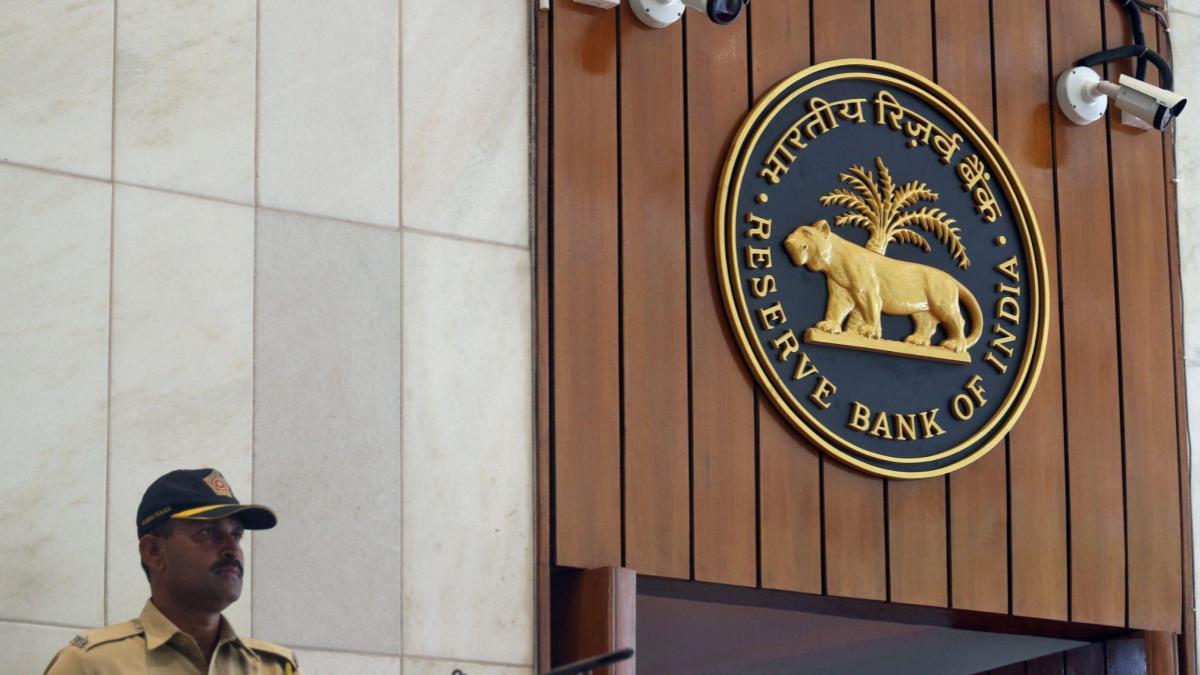
RBI Weighs Rate Hike, Other Measures to Stabilize Rupee Amid Slump
The Reserve Bank of India (RBI) is actively considering various strategies, including an interest rate hike, currency swaps, and attracting overseas dollar inflows, to stabilize the Indian rupee. This comes as the currency recently depreciated to a new record low nearing 97 against the US dollar, driven by rising oil prices and global bond yields.
Key Highlights
- RBI considering rate hike to counter rupee's slide.
- Rupee hit a record low near 97 against the US dollar this week.
- Other measures include currency swaps and NRI deposit schemes.
- Rising oil prices and global bond yields pressure the rupee.
- Discussions are led by top RBI officials, including the Governor.
The Reserve Bank of India (RBI) is actively weighing a range of policy measures, prominently including an interest rate hike, to counteract the significant depreciation of the Indian rupee. This strategic consideration comes in response to the rupee recently plummeting to a new record low, nearing 97 against the US dollar this week. The central bank's high-level internal meetings, involving top officials, are aimed at evaluating all available options to stabilize the domestic currency.
Beyond a potential interest rate increase, the RBI is also exploring other tools such as additional currency swaps and initiatives to attract dollar inflows from overseas investors. These could include a deposit scheme specifically designed for Non-Resident Indians (NRIs) and potentially the issuance of sovereign dollar bonds, though the latter would require a decision from the government. The urgency of these discussions stems from an increasing recognition among policymakers that the rupee's decline is accelerating faster than anticipated.
The depreciation of the rupee is primarily attributed to a confluence of global economic pressures. Foremost among these are the rising international oil prices and a notable spike in global bond yields. The currency has reportedly lost approximately 6% of its value since the onset of the Iran war, a conflict that significantly impacts India due to its substantial reliance on oil and gas imports from the Middle East. The anticipated rise in energy costs is expected to exacerbate domestic inflation, thereby providing the RBI with further impetus to consider an interest rate hike.
An interest rate hike is considered a conventional monetary policy tool to curb inflation and make holding the rupee more attractive to foreign investors, potentially drawing in capital. The widening of the interest rate differential between the US and India, which has narrowed to over a decade low, could spur foreign bond inflows. However, foreign funds have withdrawn a significant amount from Indian stocks this year, surpassing last year's record outflows of $19 billion. The RBI's Monetary Policy Committee (MPC) is scheduled to convene from June 3-5 for its next policy decision. While the benchmark rate has remained unchanged this year, many economists anticipate a hike in the coming months as inflationary pressures mount. Historically, the RBI has demonstrated a willingness to act outside scheduled meetings, as it did in May 2022, to address urgent economic situations.
Measures such as NRI deposit schemes and sovereign dollar bonds are strategies aimed at augmenting India's foreign exchange reserves, providing the central bank with more ammunition to intervene directly in foreign exchange markets and stabilize the currency. Similar strategies were successfully deployed during the 2013 'taper tantrum' period, when India utilized a deposit scheme for non-residents through local banks to attract foreign currency inflows. The RBI estimates that new deposit schemes could attract as much as $50 billion this time, compared to around $30 billion previously.
**Fact-Checking Note:** While many aggregated news reports (including some from Investing.com, MarketScreener, Mint, Economic Times, Business Standard, News9live, and GuruFocus) that cite the Bloomberg story mention 'Governor Sanjay Malhotra' leading the discussions, this appears to be a factual error in those aggregations or summaries. The current Governor of the Reserve Bank of India is **Shaktikanta Das**. This discrepancy highlights the importance of cross-referencing information even from seemingly credible sources, especially when AI-generated content might be involved in initial summaries. The core claims about the RBI's considerations for rupee stabilization remain verified. The context provided by related articles about the rupee potentially hitting 100/USD and balance of payments stress is relevant, reflecting the renewed pressure on the currency. During 2022-23, India did experience a significant current account deficit, reaching 3.3% of GDP in the first half of 2022-23 and 4.4% of GDP in Q2 2022-23, mainly due to a higher merchandise trade deficit and rising oil prices, which put pressure on the balance of payments. Inflation was also elevated, with retail inflation estimated at 6.8% in 2022-23, further justifying RBI's past and present considerations for rate hikes.
Overall, the news is accurate in its core message regarding the RBI's consideration of measures to stabilize the rupee amidst its slump, driven by global factors and concerns about inflation.
Frequently Asked Questions
Why is the Indian Rupee depreciating against the US dollar?
The Indian Rupee is currently depreciating due to a combination of global factors, including rising international crude oil prices and a spike in global bond yields. The currency has lost about 6% since the onset of the Iran war, given India's heavy reliance on oil imports. These factors put pressure on India's balance of payments and foreign exchange reserves.
What measures is the RBI considering to stabilize the rupee?
The Reserve Bank of India (RBI) is considering various measures. These include a potential interest rate hike, engaging in more currency swaps, and attracting dollar inflows from overseas investors, possibly through special deposit schemes for Non-Resident Indians (NRIs) and the issuance of sovereign dollar bonds.
How would an interest rate hike help stabilize the rupee?
An interest rate hike by the RBI would make holding Indian rupees more attractive for foreign investors by offering higher returns on rupee-denominated assets. This can encourage foreign capital inflows, which in turn increases the demand for the rupee and helps to strengthen its value against other currencies like the US dollar.
What is the current exchange rate of the Indian Rupee to the US Dollar?
As of May 21, 2026, the Indian Rupee has fallen to a record low, nearing 97 against the US dollar. The exact interbank exchange rate fluctuates continuously based on market conditions.
Has the RBI taken similar steps in the past to support the rupee?
Yes, the RBI has implemented similar measures in the past to stabilize the rupee during periods of significant depreciation. Notably, during the 2013 'taper tantrum', India introduced deposit schemes for non-resident Indians to attract foreign currency inflows. The current considerations mirror some of those past actions.