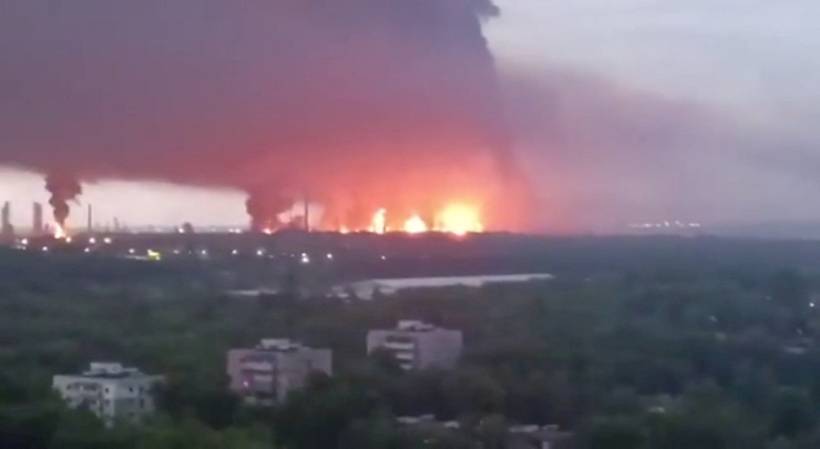
Putin Acknowledges Russian Fuel Shortage Amid Ukrainian Strikes
Russian President Vladimir Putin has admitted to a "certain shortage" of fuel in Russia, directly attributing it to intensified Ukrainian drone attacks on oil refineries. The strikes have severely impacted refining capacity, leading to rationing and export bans.
Key Highlights
- Putin acknowledged a "certain fuel shortage" due to Ukrainian strikes.
- Ukrainian drone attacks have significantly damaged Russian oil refineries.
- Russia's refining capacity has been reduced by an estimated 25-33%.
- Widespread fuel rationing, price hikes, and queues are reported across Russia.
- Russia has banned gasoline/jet fuel exports and considers a diesel ban.
- Crimea declared a state of emergency due to acute fuel shortages.
The ongoing conflict between Russia and Ukraine has escalated on the economic front, with Russian President Vladimir Putin publicly acknowledging a "certain shortage" of fuel within Russia. This admission, made in late June 2026, directly attributes the scarcity to intensified Ukrainian drone attacks on the country's oil refineries and energy infrastructure. This marks a significant shift from previous downplaying of the impact of such strikes, highlighting the increasing effectiveness of Ukraine's long-range drone campaign against Russia's vital energy sector.
Ukrainian drone attacks on Russian oil refineries have been a consistent and escalating feature of the war, particularly intensifying since August 2025 and seeing a significant escalation in mid-2026. These persistent strikes have caused widespread damage to Russia's crucial oil processing facilities, severely reducing the country's capacity to produce refined petroleum products. Analysts estimate that Ukrainian attacks have cut Russia's oil refining capacity by approximately a quarter to a third, leading to an estimated 15% supply shortfall in the domestic fuel market. Reports indicate that at least 21 out of Russia's 38 large refineries have been hit since January 2025, with a record number of facilities targeted in August and September of the same year.
The consequences of these attacks have been severe and far-reaching across Russia. Many regions have begun experiencing widespread fuel shortages, leading to rationing, substantial price increases, and frustratingly long queues at petrol stations. Social media platforms have been inundated with videos depicting disgruntled motorists grappling with empty pumps and surging prices, a phenomenon reportedly not witnessed since Putin assumed power in 2000 in a nation that is one of the world's largest energy producers. The situation is particularly acute in Russian-annexed Crimea, where local authorities declared a state of emergency in June 2026 and imposed bans on fuel sales due to disrupted logistics and oil infrastructure. Further reports indicate that two-thirds of Russia's regions are reporting fuel supply issues, impacting millions of citizens and threatening various businesses, including the tourism industry in Crimea. Farmers in Russia's vital grain belt are also reportedly struggling to harvest crops due to critical diesel supply disruptions.
In response to the deepening crisis, the Russian government has implemented several measures aimed at stabilizing the domestic fuel market. These include intermittent bans on gasoline exports, which culminated in a complete ban on petrol and jet fuel exports to prioritize domestic consumers. Furthermore, Russia is actively considering a "total ban" on diesel exports, a move that could send significant ripples across global energy markets, given Russia's position as a major diesel supplier. Russian Deputy Prime Minister Alexander Novak publicly stated this consideration on June 23, 2026.
President Putin emphasized the government's primary focus on enhancing Russia's air defense capabilities to better protect critical energy infrastructure from future Ukrainian drone strikes and to expedite the restoration of damaged facilities. He also mentioned the necessity to boost fuel imports to alleviate the shortages. Reports suggest that India's Nayara Energy, which primarily processes Russian crude, has emerged as a key supplier, selling gasoline to Russia through traders. Additionally, Belarus has reportedly increased gasoline supplies, and Kazakhstan has agreed to send supplementary fuel. However, Kazakhstan, facing its own regional supply pressures, is also planning to extend its ban on gasoline exports until May 2027.
Despite acknowledging the "difficult period" and the "obvious" problems caused by the strikes, Putin maintained that the shortages are "not critical" and expressed confidence that the issues would be resolved. He insisted that damaged facilities are being repaired quickly and that a sufficient fuel reserve exists, particularly for Crimea. This downplaying of the crisis by Putin has been noted by analysts, who highlight the irony of one of the world's leading energy producers facing such domestic shortages.
The intensified Ukrainian strikes are part of a broader strategy by Kyiv to weaken Russia's war machine and exert significant pressure on Moscow, effectively bringing the realities and consequences of the conflict closer to ordinary Russians. The success of these long-range attacks has compelled the Kremlin to divert resources towards protecting critical infrastructure, a development that may be impacting Russia's battlefield gains, which have reportedly slowed markedly. Ukrainian President Volodymyr Zelenskyy has confirmed these targeted strikes, including on refineries in Krasnodar Krai, Yaroslavl oblast, and the Ufa oil refinery, emphasizing their strategic role in weakening Russia's overall capabilities.
This ongoing fuel crisis in Russia, directly triggered by persistent Ukrainian attacks, represents a significant economic and logistical challenge for Moscow. Its potential to disrupt global energy supplies, particularly if a comprehensive diesel export ban is enacted, underscores the broader international implications of the Russia-Ukraine conflict. For an audience in India, the news is particularly relevant given India's existing energy ties with Russia and the reported role of Indian refiners in potentially supplying fuel to Russia amidst the crisis.
Frequently Asked Questions
What is causing Russia's current fuel shortage?
Russia's current fuel shortage is primarily caused by intensified Ukrainian drone attacks on Russian oil refineries and energy infrastructure, which have significantly damaged and reduced the country's refining capacity.
How severe are the fuel shortages in Russia?
The shortages are widespread across many Russian regions, leading to rationing, increased prices, and long queues at petrol stations. Crimea, in particular, has declared a state of emergency due to acute fuel scarcity.
What measures is the Russian government taking to address the fuel crisis?
Russia has imposed complete bans on gasoline and jet fuel exports, is considering a total ban on diesel exports, and plans to boost fuel imports and enhance air defense systems to protect its energy infrastructure.
How are Ukrainian drone attacks impacting Russia's war effort?
The drone attacks are weakening Russia's war machine by disrupting fuel supplies essential for military logistics and operations. They are also forcing the Kremlin to divert resources to protect critical infrastructure, potentially slowing battlefield gains.
Does this fuel crisis have global implications?
Yes, Russia is a major global supplier of refined petroleum products, particularly diesel. A potential total ban on its diesel exports could disrupt global energy markets, leading to higher international fuel prices and supply risks.