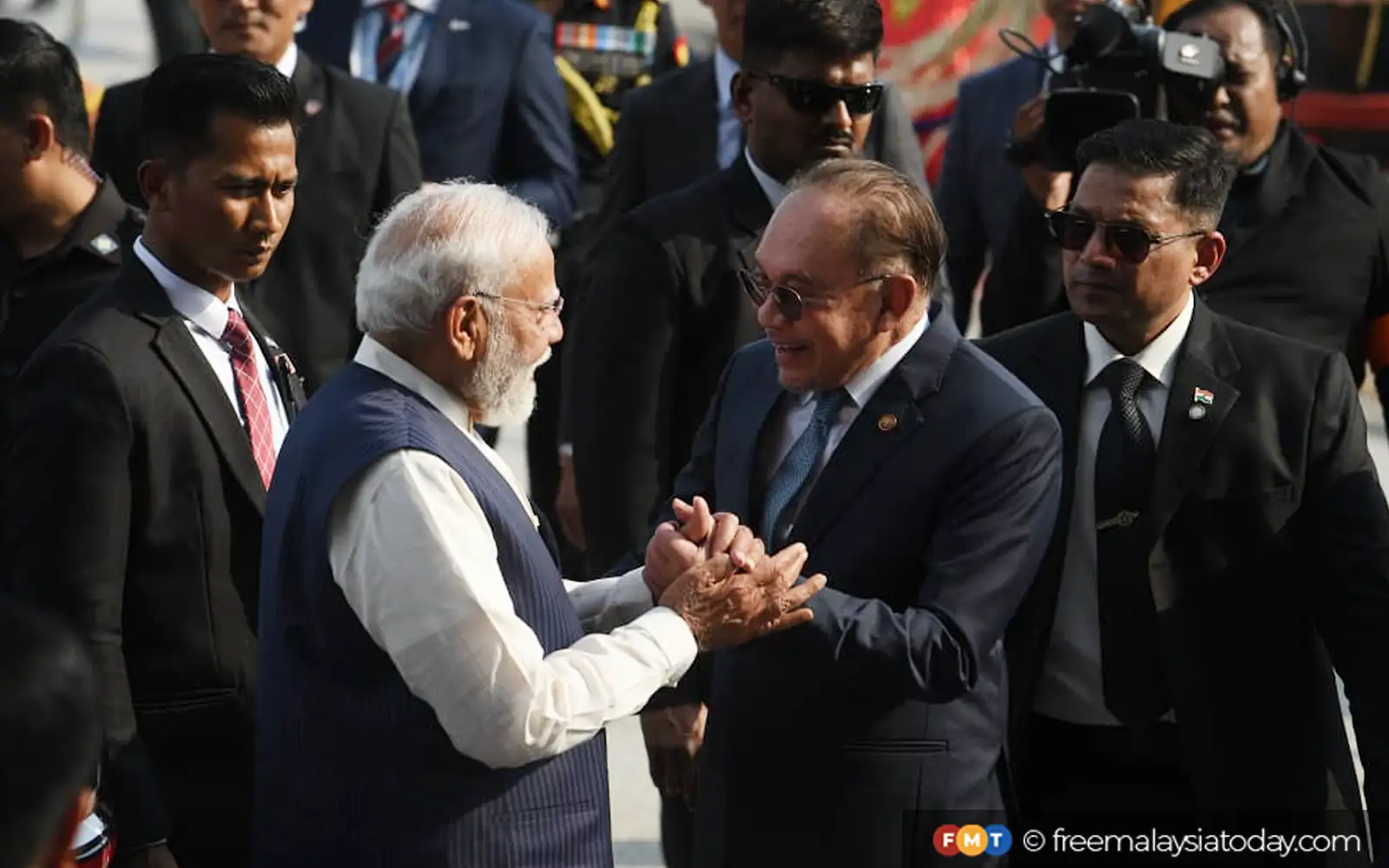
Malaysian PM Confirms Zakir Naik Extradition Talks with India at BRICS
Malaysian Prime Minister Anwar Ibrahim confirmed to NDTV that discussions regarding the extradition of fugitive Islamic preacher Zakir Naik took place during his recent visit to New Delhi for the BRICS Summit. Ibrahim emphasized keeping these sensitive bilateral engagements private to protect mutual interests and uphold the rule of law. India has sought Naik's extradition since 2016 over charges of money laundering and hate speech.
Key Highlights
- Malaysian PM Anwar Ibrahim confirmed Zakir Naik extradition talks to NDTV.
- Discussions occurred during Ibrahim's New Delhi visit for the BRICS Summit.
- India seeks Naik's extradition for money laundering and hate speech charges.
- PM Ibrahim stressed privacy of talks and adherence to rule of law.
- Naik holds permanent residency in Malaysia since 2016.
- Past extradition attempts faced Malaysian resistance and Interpol rejections.
Malaysian Prime Minister Anwar Ibrahim has confirmed that the extradition of controversial Indian Islamic preacher Zakir Naik was discussed during his recent visit to New Delhi for the BRICS Summit. Speaking exclusively to NDTV, Ibrahim stated that the issue came up during private discussions with Indian Prime Minister Narendra Modi. He underscored the importance of maintaining the privacy of such engagements to safeguard the interests of both nations and emphasized Malaysia's commitment to the rule of law in handling extradition requests.
Zakir Abdul Karim Naik, a Mumbai-born televangelist and founder of the Islamic Research Foundation (IRF) and Peace TV, has been a fugitive from Indian law since 2016. Indian authorities initiated investigations against him and his network, accusing him of promoting religious hatred and engaging in unlawful activities. The National Investigation Agency (NIA) filed an FIR against him under the Unlawful Activities Prevention Act in 2016, and the Enforcement Directorate (ED) subsequently filed charges of money laundering, identifying assets worth ₹193 crore and attaching properties valued at ₹50.46 crore. Naik's speeches, often delivered in English, have been broadcast on Peace TV, a channel banned in India, Bangladesh, Canada, Sri Lanka, and the United Kingdom due to hate speech concerns.
Naik relocated to Malaysia in 2016 and was granted permanent residency by the previous Malaysian government. Since then, India has repeatedly sought his extradition, submitting a formal request in January 2018. However, these efforts have faced challenges. Interpol previously declined to issue a Red Notice against Naik, citing insufficient evidence after denying India's requests thrice.
Under the leadership of former Malaysian Prime Minister Mahathir Mohamad, Malaysia initially resisted India's extradition requests. Mahathir had stated in 2018 that his government would not deport Naik as long as he was not creating problems, citing his permanent resident status. In 2019, Mahathir also claimed that Prime Minister Modi had not explicitly requested Naik's extradition during their bilateral meeting, a claim that India's External Affairs Minister S. Jaishankar promptly rebutted, asserting that the issue had indeed been raised. Mahathir also maintained Malaysia's right not to extradite Naik if he claimed he would not receive a fair trial in India.
Zakir Naik himself has been a source of controversy within Malaysia. In 2019, he faced significant public and political backlash for making racially sensitive remarks concerning ethnic Chinese and Indian minorities in Malaysia. He later issued an apology, and Malaysian authorities temporarily barred him from public speaking across several states. However, a ban on his public speeches, imposed five years prior, was reported to have been lifted by February 2025.
Malaysia's current stance, reiterated by its High Commissioner to India, Dato' Muzaffar Shah Mustafa in October 2025, emphasizes that Naik's extradition is a judicial matter and not solely a government decision, requiring adherence to legal proceedings and the provision of concrete evidence from India. Prime Minister Anwar Ibrahim's latest confirmation to NDTV during the BRICS Summit on September 12, 2026, reaffirms that diplomatic discussions are ongoing, albeit privately. He underlined that Malaysia would handle the request cautiously, respecting the rule of law and the importance of bilateral relations between the two countries.
This ongoing diplomatic dialogue highlights the complex nature of international extradition processes, especially when involving individuals with permanent residency status in another country and claims of unfair trials. India continues its relentless pursuit of Naik's extradition, making the recent confirmation by the Malaysian Prime Minister a significant, albeit carefully worded, development in the long-standing saga.
Frequently Asked Questions
Who is Zakir Naik and what are the charges against him?
Zakir Naik is an Indian Islamic preacher and televangelist who is the founder of the Islamic Research Foundation. He faces charges in India for alleged money laundering, hate speech, and promoting religious hatred and unlawful activities.
Why does India want to extradite Zakir Naik from Malaysia?
India seeks Zakir Naik's extradition to face trial on charges of money laundering and inciting extremism through his speeches, which Indian authorities claim promote religious hatred.
What is Zakir Naik's current status in Malaysia?
Zakir Naik has been residing in Malaysia since 2016 as a permanent resident. While Malaysia has previously resisted his extradition, the current Prime Minister Anwar Ibrahim confirmed that discussions on the matter are ongoing.
What did Malaysian PM Anwar Ibrahim say about Zakir Naik's extradition during his India visit?
Malaysian Prime Minister Anwar Ibrahim confirmed to NDTV that the issue of Zakir Naik's extradition was discussed during his private meetings in New Delhi, including with Prime Minister Narendra Modi, amidst the BRICS Summit. He stated that discussions would remain private to protect bilateral interests and emphasized adherence to the rule of law.
What are the main obstacles to Zakir Naik's extradition?
The main obstacles include Malaysia's emphasis on upholding its rule of law, the need for India to provide concrete and credible evidence, and Naik's claims that he would not receive a fair trial in India. Interpol also previously declined India's requests for a Red Notice due to insufficient evidence.