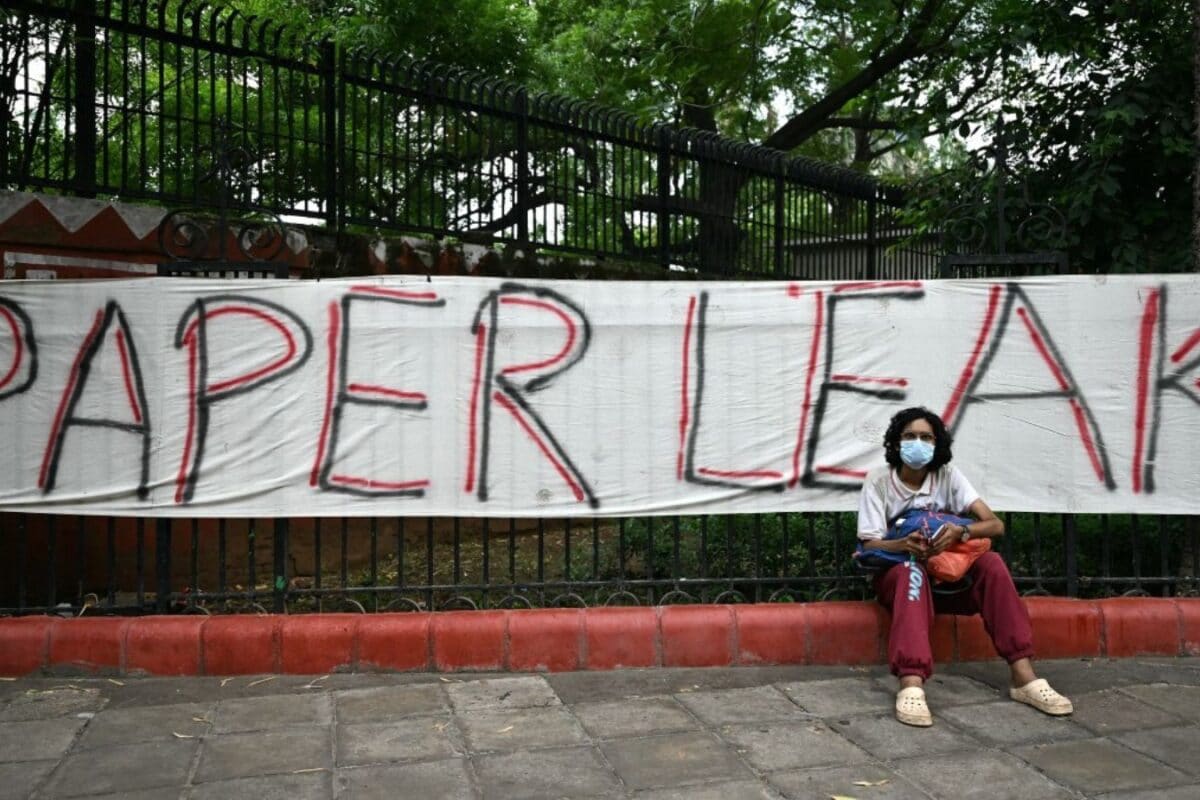
India's Amended Anti-Paper Leak Law: Stricter Penalties, Fast-Track Courts
India's Parliament has passed the Public Examinations (Prevention of Unfair Means) Amendment Bill, 2026, which introduces stringent measures against paper leaks and exam malpractices. The new law, now assented by the President, imposes harsher penalties, establishes fast-track courts, and sets strict timelines for investigation and trial to ensure the integrity of public examinations.
Key Highlights
- New law amends the 2024 Act, strengthening anti-cheating provisions.
- Introduced in Lok Sabha on July 27, 2026, passed by Parliament by July 30.
- President Droupadi Murmu assented to the Bill on August 1, 2026.
- Individuals face 5-10 years imprisonment, up to ₹50 lakh fine.
- Organized exam crimes entail 7-year minimum jail, up to ₹10 crore fine.
- Establishes special fast-track courts and task forces for speedy justice.
The Indian Parliament has successfully passed the Public Examinations (Prevention of Unfair Means) Amendment Bill, 2026, marking a significant step towards combating rampant paper leaks and malpractices in public examinations. This new legislation, which received presidential assent from Droupadi Murmu on August 1, 2026, amends the existing Public Examinations (Prevention of Unfair Means) Act, 2024, to introduce more stringent penalties and a more robust enforcement mechanism.
The Public Examinations (Prevention of Unfair Means) Act, 2024, was initially enacted to create a comprehensive legal framework against unfair means in public examinations conducted by central government agencies such as the UPSC, SSC, Railway Recruitment Boards, IBPS, and the National Testing Agency (NTA). It aimed to bring greater transparency, fairness, and credibility to the examination system.
However, repeated instances of paper leaks and examination controversies, notably the NEET-UG 2026 paper leak, fueled widespread student protests and prompted the Union Government to introduce the amendment. The Public Examinations (Prevention of Unfair Means) Amendment Bill, 2026, was introduced in the Lok Sabha on July 27, 2026, by the Union Minister of State for Personnel, Public Grievances and Pensions, Dr. Jitendra Singh. It was subsequently passed by the Lok Sabha on July 29, 2026, after a heated debate, and by the Rajya Sabha on July 30, 2026.
The primary objective of the 2026 amendment is to enhance the deterrent effect against individuals, organized groups, and institutions involved in unfair means that undermine the sanctity of public examinations. It seeks to protect the interests of deserving students and restore public trust in the examination system.
**Key Provisions of the Amended Law:**
1. **Enhanced Penalties for Individuals:** The new law significantly increases the punishment for individuals found resorting to unfair means. They now face imprisonment for a term ranging from five to ten years, along with a fine of up to ₹50 lakh. This is a considerable increase from the earlier provisions of the 2024 Act, which prescribed imprisonment between three and five years and a fine of up to ₹10 lakh.
2. **Stricter Punishments for Organized Crimes:** For organized examination malpractices, which involve criminal networks and syndicates, the amended law proposes a minimum imprisonment of seven years and a substantial fine of up to ₹10 crore. The 2024 Act had provisions for imprisonment between five and ten years and a minimum fine of ₹1 crore for organized crimes. The Bill also introduces personal liability for directors and senior management personnel of service providers found colluding in paper leak activities.
3. **Fast-Track Investigation and Trial:** To ensure speedy justice, the law mandates the establishment of Special Fast Track Courts in every state and Union Territory to exclusively try offenses under this Act. These courts are required to conduct trials on a day-to-day basis, aiming to complete them within three months from the date of filing the chargesheet. Additionally, investigations into offenses must be completed within two months from the date of registering the information at a police station.
4. **Special Task Forces:** The central government is empowered to constitute Special Task Forces (STFs) to investigate offenses under the Act, providing a dedicated and specialized approach to complex paper leak cases.
5. **Debarment of Service Providers:** The period for debarring a service provider involved in unfair means from being assigned any responsibility for conducting public examinations has been enhanced from four years to eight years.
6. **Appeals Mechanism:** Appeals against judgments, sentences, or orders of the Special Fast Track Courts will lie before a bench of two High Court judges, with a target of disposal within three months from admission.
The introduction of this amendment follows intense public demand for accountability and more effective measures to curb examination fraud, especially in light of recent high-profile incidents like the NEET-UG 2026 paper leak. The Delhi High Court has already designated Judge Anu Baliga as a special judge to head a fast-track court specifically for paper leak cases, reinforcing the government's commitment to swift action. While the intent is clear, challenges related to implementation, case backlogs, and ensuring continuous trials will be crucial for the law's effectiveness.
This amended law represents a stronger stance by the Indian government against a pervasive issue, aiming to safeguard the future of millions of students and uphold the integrity of the public examination system.
Frequently Asked Questions
What is the Public Examinations (Prevention of Unfair Means) Amendment Bill, 2026?
This is an Indian law, passed by Parliament and assented to by the President, that amends the existing 2024 Act to introduce stricter measures against paper leaks, cheating, and other unfair practices in public examinations conducted by central government agencies.
What are the main penalties under the new anti-paper leak law?
Individuals involved in unfair means face imprisonment from five to ten years and fines up to ₹50 lakh. Organized examination crimes carry a minimum of seven years imprisonment and fines up to ₹10 crore.
How will the new law ensure faster trials and investigations?
The law mandates the establishment of Special Fast Track Courts in every state and Union Territory for exclusive trial of these cases, with trials to be completed within three months. Investigations must also be concluded within two months. Special Task Forces can also be constituted for investigations.
Which examinations are covered under this anti-cheating law?
The law covers public examinations conducted by central government authorities, including the Union Public Service Commission (UPSC), Staff Selection Commission (SSC), Railway Recruitment Boards, Institute of Banking Personnel Selection (IBPS), and the National Testing Agency (NTA) for higher education admissions, among others.
Why was the 2024 law amended in 2026?
The amendment was introduced following widespread student protests and recurring instances of paper leaks, such as the NEET-UG 2026 case, which highlighted the need for more stringent penalties and a more expedited legal framework to effectively deter and address examination malpractices.