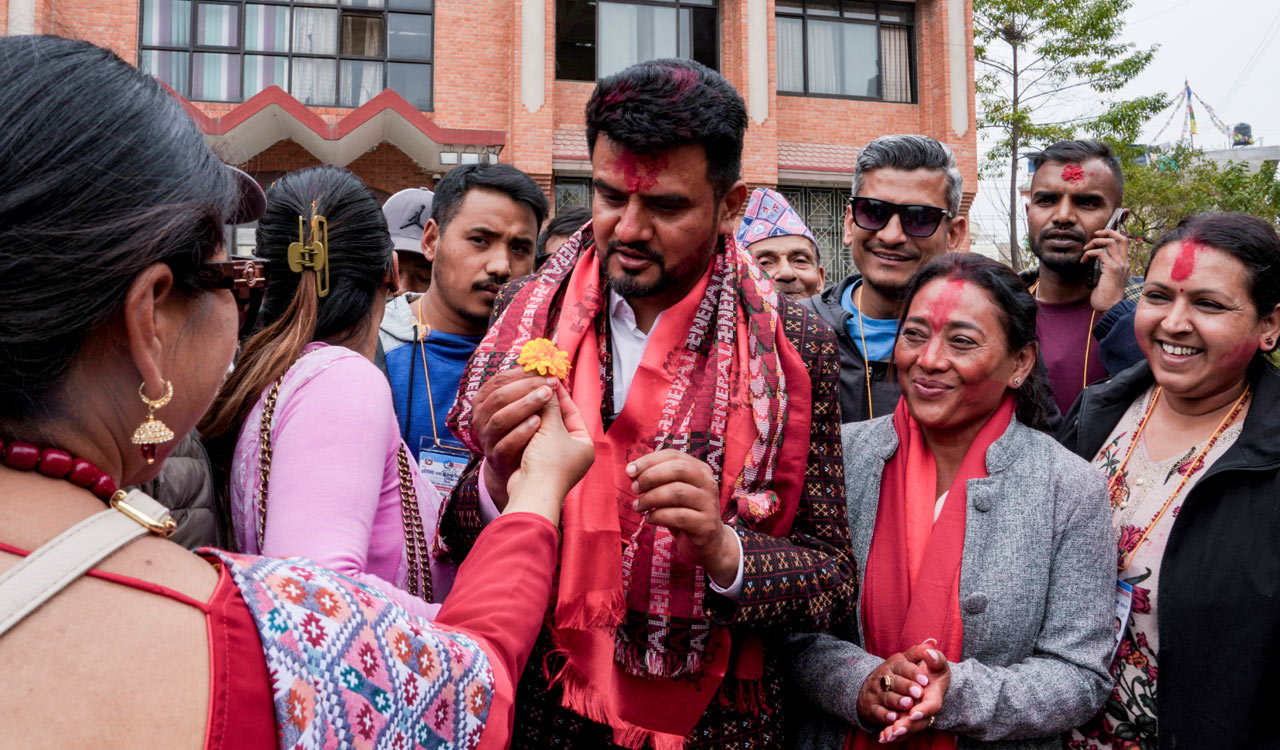
Rapper-turned-mayor Balendra Shah defeats ex-PM Oli in Nepal election
Rapper-turned-politician Balendra Shah has secured a significant victory against former Prime Minister K.P. Sharma Oli in Nepal's general election. Shah's Rastriya Swatantra Party (RSP) is poised for a landslide win, indicating a major shift in Nepal's political landscape and a rejection of traditional parties.
Key Highlights
- Balendra Shah, a former mayor and rapper, has defeated ex-PM K.P. Sharma Oli.
- RSP, Shah's party, is projected to win a majority, marking a generational political shift.
- The election results reflect widespread public frustration with established political parties.
- Shah's victory is seen as a triumph for youth-led movements and a demand for reform.
- Nepal faces potential for a stable government after years of coalition instability.
In a political development that signals a significant shift in Nepal's electoral landscape, rapper-turned-politician Balendra Shah has decisively defeated former Prime Minister K.P. Sharma Oli in the recent general election. Shah, who gained prominence as the mayor of Kathmandu, led his Rastriya Swatantra Party (RSP) to a projected landslide victory, indicating a strong public desire for change and a rejection of the traditional political establishment.
The election results, declared on March 8, 2026, saw Shah, popularly known as 'Balen', securing a commanding win over Oli in the Jhapa-5 constituency, a stronghold of the Communist Party of Nepal (Unified Marxist-Leninist) (CPN-UML). Shah garnered 68,348 votes, while Oli received 18,734 votes, marking a margin of nearly 50,000 votes. This defeat for Oli, a four-time former prime minister, is considered a symbolic blow to the established political order in Nepal.
The RSP's sweeping victory, with projections suggesting it could secure a simple majority or even a two-thirds majority in Parliament, is being interpreted as a public revolt against decades of political instability, corruption, and a lack of opportunities for the youth. The party, formed in 2022, has resonated with voters, particularly the younger generation, who played a crucial role in the recent youth-led protests that led to the ouster of the previous government.
Balendra Shah's journey from a popular rapper and then an independent mayor of Kathmandu to a prime ministerial candidate is a testament to his ability to connect with the masses, especially the youth. His mayoral tenure, though marked by some controversies, was characterized by efforts to improve waste management, traffic control, and urban infrastructure, alongside a strong anti-corruption stance. His platform often focused on issues like inequality, corruption, and providing better opportunities for the youth, aligning with the sentiments driving the recent 'Gen Z' movement.
The election outcome signifies a move away from the traditional coalition governments that have plagued Nepal's political scene for years. The RSP's strong performance suggests the possibility of a more stable government, which is crucial for the politically fragile Himalayan nation. India, a key neighbor, has expressed hope for a stable government in Nepal to further developmental partnerships.
Key figures in the outgoing political structure, such as Sher Bahadur Deuba, a five-time former prime minister, also faced challenges, with reports suggesting his exclusion from election tickets and a potential end to his long political career. The election has clearly demonstrated a public appetite for new faces and fresh ideologies, moving beyond the dominance of parties like the Nepali Congress and the CPN-UML that have held sway for decades.
Shah's potential premiership as the first Madhesi Prime Minister and one of the youngest to hold the office, further underscores the transformative nature of this election. The RSP's platform, emphasizing a liberal economic system with social justice, including free education and healthcare, has also appealed to a broad spectrum of voters seeking systemic change.
The political transition in Nepal, driven by a combination of youth activism and a desire for good governance, marks a new chapter for the country. The success of Balendra Shah and the RSP will be closely watched as they aim to deliver on their promises of reform and stability.
Frequently Asked Questions
Who is Balendra Shah?
Balendra Shah, popularly known as Balen, is a Nepali politician, structural engineer, and former rapper. He gained national attention as the mayor of Kathmandu and has now become a key figure in national politics after winning a parliamentary seat and leading his party to a significant electoral victory.
What is the significance of Balendra Shah's victory over K.P. Sharma Oli?
Shah's victory over Oli, a four-time former prime minister, is highly significant as it represents a major upset and a symbolic shift in Nepal's political power dynamics. It signifies the rejection of traditional political parties and leaders by the electorate, who are seeking new leadership and reforms.
What is the Rastriya Swatantra Party (RSP)?
The Rastriya Swatantra Party (RSP) is a relatively new political party in Nepal, founded in 2022. Led by Balendra Shah, it advocates for change and has resonated with young voters, promising good governance, economic development, and an end to corruption and nepotism.
What role did the 'Gen Z' movement play in the election?
The 'Gen Z' movement, characterized by youth-led protests against corruption and the previous government, played a crucial role in shaping the political climate leading up to the election. Balendra Shah and the RSP capitalized on the sentiment of change fueled by this movement.