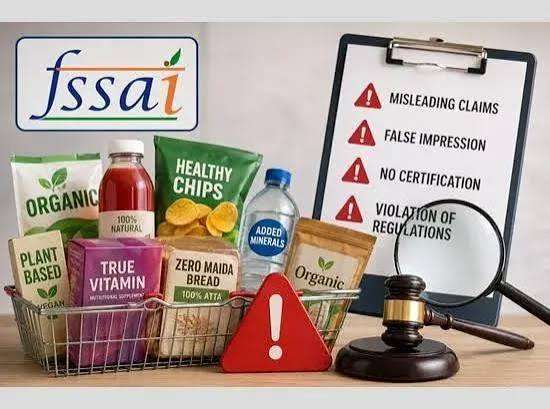
FSSAI Cracks Down on 15 Indian Food Brands Over Misleading Claims
India's food regulator, FSSAI, issued notices to 15 popular Indian food brands in June 2026 for making misleading claims and violating labeling norms. This action targets deceptive marketing practices like unverified 'healthy' or 'organic' tags, aiming to safeguard consumer interests and ensure transparent product information.
Key Highlights
- FSSAI issued notices to 15 Indian food brands in June 2026.
- Notices addressed misleading 'healthy', 'organic', 'zero maida' claims.
- Brands like Emami, Healthy Master, Neuherbs were flagged.
- Action aims to protect consumers from deceptive advertising.
- Part of FSSAI's broader crackdown on labeling violations.
- Companies mandated to rectify claims and comply with regulations.
The Food Safety and Standards Authority of India (FSSAI), the nation's apex food regulator, took stringent action in June 2026 by issuing notices to 15 popular Indian food brands for engaging in misleading advertising and violating established food labeling regulations. This significant move, widely reported by prominent news outlets including The Times of India, Business Standard, and India.com, underscores FSSAI's unwavering commitment to consumer protection and ensuring transparency within the burgeoning Indian food industry.
The notices, primarily issued around June 14-17, 2026, targeted a range of food business operators (FBOs) whose brand names, trade names, and product claims were deemed to be in contravention of the Food Safety and Standards Act, 2006, and its accompanying regulations. The violations spanned various product categories, from health supplements and packaged snacks to breads, juices, and organic food items, indicating a broad-based scrutiny by the regulator.
Among the prominent brands that received notices were 'Healthy Master', 'Neuherbs True Vitamin', 'PLAN B Plant Based Vegan', 'The Health Factory', 'Troovy', 'Healthy Choice', 'Emami Healthy & Tasty', 'Health Aid', 'Organic Wisdom', 'Shine Organic', 'Two Brothers Organic Farms', 'Storia', 'World of Organic', and 'Iota Water'. The nature of the misleading claims varied, but a common thread was the use of terms designed to imply superior health benefits or purity that were not substantiated by facts or recognized certifications.
For instance, brands using terms like 'Healthy Master' or 'Healthy Choice' in their trade names were flagged for potentially misleading consumers regarding the inherent healthfulness of their products. Similarly, 'Neuherbs True Vitamin' was cited because the term 'True Vitamin' is not defined or recognized under FSSAI regulations, creating a deceptive impression. 'PLAN B Plant Based Vegan' faced scrutiny for implying its products were vegan without having obtained the requisite prior FSSAI approval and endorsement for vegan food products.
Another significant area of concern was the misrepresentation of ingredients. 'The Health Factory Zero Maida Whole Wheat Bread' and 'Zero Maida Pizza Base' were called out because these products contained Chakki Fresh Atta and Wheat Gluten, which contradicted the 'Zero Maida' claim and were deemed misleading. 'Storia Juice Pomegranate' was also found to be deceptive, as its claim implied it was solely pomegranate juice, despite containing only 4% pomegranate juice concentrate. 'World of Organic' and 'Shine Organic' were among those flagged for using 'organic' in their branding without possessing the necessary NPOP/PGS certification, FSSAI Jaivik Bharat logo, or organic endorsement. 'Iota Water' was cited for misleading claims about 'added minerals' in packaged drinking water, which contradicted regulations that prevent such claims if nutrients are merely compensating for losses during processing.
FSSAI's objective behind these actions is to ensure that consumers are not deceived by unscientific, exaggerated, or unsupported claims, thereby empowering them to make informed and safe food choices. The regulator has consistently urged FBOs to strictly adhere to established labeling and display regulations, emphasizing that failure to comply could lead to severe penalties, product recalls, or even the suspension of licenses under the FSS Act.
These June 2026 notices are part of a broader, sustained crackdown by the FSSAI against misleading advertisements and claims in the food sector. In recent months, the FSSAI has intensified its enforcement efforts across various segments. For example, in August 2026, FSSAI took action against six food business operators, including Amway India, Emami, Bonn Biscuits, Apis India, Juza Foods, and Masterchow Foods, for using unsubstantiated '100%' claims on their product labels and advertisements. Another set of six companies, including Lotte India Corporation, Dabur India, and Ferns N Petals, also made corrective measures in mid-August 2026 following FSSAI notices for various labeling and product categorization violations. Furthermore, in July 2026, notices were issued to three brands over misleading claims on paneer, chocolate spread, and juice capsules, alongside six energy drink brands for misbranding and misleading claims related to their products.
The FSSAI has also extended its vigilance to the broader ecosystem of food promotion, issuing warnings to celebrities and social media influencers in August 2026. These warnings cautioned them to verify food claims before endorsing products, making them accountable for participating in misleading advertising and potentially facing consequences under the Food Safety and Standards Act. This holistic approach reflects the regulator's resolve to create a fair and safe food environment, free from deceptive marketing practices, benefiting consumers nationwide. The ongoing vigilance and corrective actions by FSSAI are critical for maintaining public trust in packaged food products and fostering a culture of regulatory compliance among food businesses in India.
Frequently Asked Questions
What is the FSSAI's primary role regarding food claims?
The FSSAI (Food Safety and Standards Authority of India) is responsible for regulating food manufacturing, storage, distribution, sale, and import to ensure safe and wholesome food for human consumption. Its role includes enforcing regulations on food labeling and advertising to prevent misleading claims that could deceive consumers.
Which types of claims did FSSAI particularly target in these notices?
FSSAI particularly targeted claims such as 'healthy,' 'organic' without proper certification, 'zero maida' in products containing wheat gluten, '100%' claims (especially for juices with low concentrate), and deceptive trade names implying unverified health benefits or purity.
What are the potential consequences for brands that fail to comply with FSSAI notices?
Brands that fail to comply with FSSAI notices may face severe consequences, including financial penalties, product recalls, revisions of packaging and marketing materials, and potentially the suspension or cancellation of their licenses under the Food Safety and Standards Act, 2006.
How does FSSAI's action protect Indian consumers?
FSSAI's actions protect Indian consumers by ensuring that the information provided on food labels and in advertisements is accurate, truthful, and not misleading. This empowers consumers to make informed choices about the products they purchase, safeguards them from potentially harmful or ineffective products, and promotes fair trade practices in the food industry.
Has FSSAI taken similar actions against other entities recently?
Yes, FSSAI has been conducting a broader crackdown on misleading claims. Besides these 15 brands, they have recently taken action against companies using '100%' claims (e.g., Amway, Emami), energy drink brands, and have also issued warnings to celebrities and social media influencers to verify food claims before endorsing them.