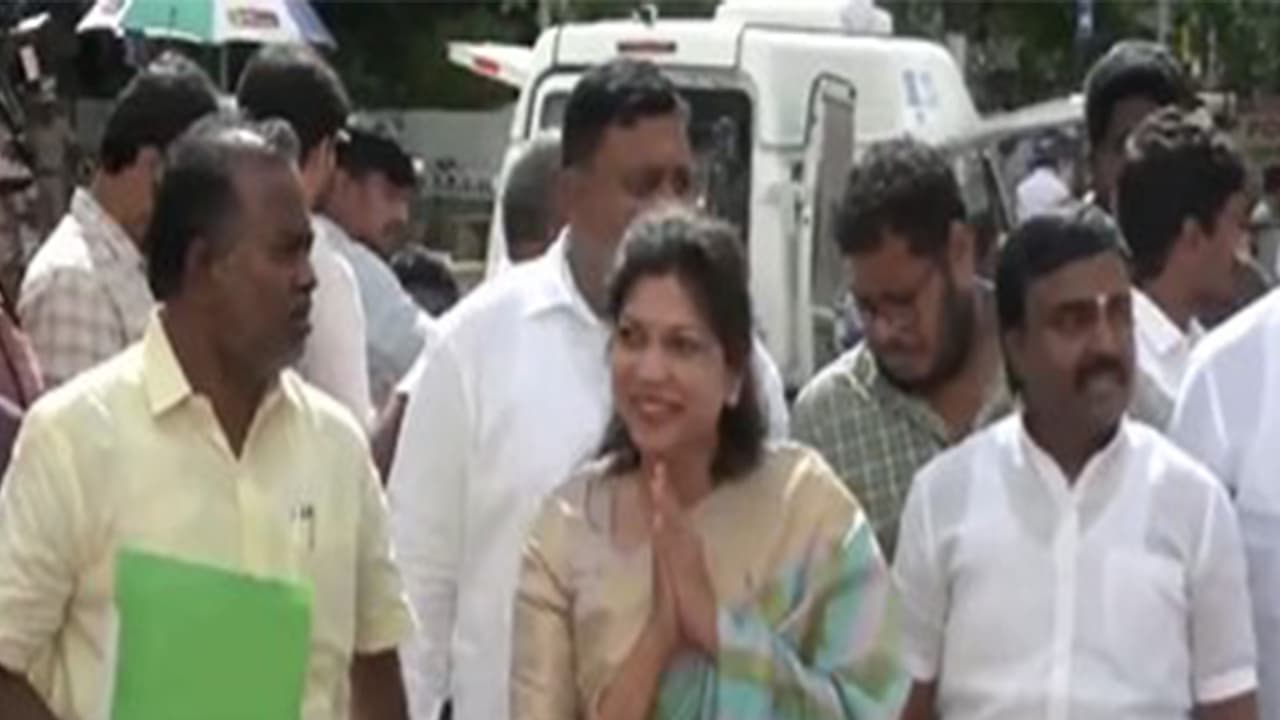
AIADMK in Turmoil: Leadership Split Rocks Tamil Nadu Assembly Post-Election
The AIADMK is experiencing a significant internal split in the Tamil Nadu Assembly on May 11, 2026, following its recent electoral defeat. Factions led by General Secretary E.K. Palaniswami and rebel leaders S.P. Velumani and C.Ve. Shanmugam are vying for control, raising questions about the party's future and the Leader of Legislature Party post.
Key Highlights
- AIADMK faces visible split in Tamil Nadu Assembly after 2026 election defeat.
- Rival camps led by EPS and S.P. Velumani submitted separate letters for Leader of Legislature Party.
- Dissident faction demands General Secretary E.K. Palaniswami's resignation over poll losses.
- This churning follows AIADMK's fourth consecutive electoral setback under EPS's leadership.
- Historical context includes prolonged EPS-OPS power struggle post-Jayalalithaa's demise.
- Legal challenges to EPS's leadership persisted, contributing to ongoing party instability.
On May 11, 2026, as the newly elected Tamil Nadu Assembly convened, the All India Anna Dravida Munnetra Kazhagam (AIADMK), a prominent Dravidian party, displayed overt signs of a deepening internal split, marking a tumultuous period for the party. This visible "churning" became particularly evident during the swearing-in ceremony of the newly elected Members of Legislative Assembly (MLAs) and revolved around the critical position of the Leader of the Legislature Party.
The day's events underscored the severe factionalism plaguing the AIADMK. While the party's General Secretary, Edappadi K. Palaniswami (EPS), arrived at the Assembly accompanied by a relatively small group of loyalists, a larger bloc of dissident MLAs was led by senior leaders such as S.P. Velumani and C.Ve. Shanmugam, who arrived separately. The division was further highlighted by the submission of two distinct letters to the Pro-tem Speaker M.V. Karuppaiah. One letter, purportedly from a group of AIADMK legislators, asserted that Mr. Palaniswami had been elected the Leader of the Legislature Party. However, later in the day, Mr. Shanmugam presented another letter, claiming support for the leadership of Mr. Velumani, directly challenging EPS's authority within the legislative body.
This immediate crisis erupted in the wake of the AIADMK's significant defeat in the 2026 Tamil Nadu Assembly elections, where actor Vijay's Tamilaga Vettri Kazhagam (TVK) emerged as the single largest party, securing 108 seats. This electoral setback was not an isolated incident but rather the fourth consecutive major loss for the AIADMK under Edappadi K. Palaniswami's leadership, following the 2019 Lok Sabha elections, the 2021 Assembly elections, and the 2024 parliamentary elections. These repeated defeats significantly eroded party morale and intensified calls for accountability within its ranks.
The dissident faction, spearheaded by S.P. Velumani and C.Ve. Shanmugam, openly demanded EPS's resignation from the post of General Secretary. They held him responsible for the party's declining electoral fortunes and expressed dissatisfaction with his leadership. Reports from the day indicated that the rebel camp reportedly commanded the support of more MLAs than the faction backing Palaniswami, further intensifying the pressure on him. Despite these growing demands, EPS remained steadfast, publicly stating his refusal to step down.
The current internal turmoil within the AIADMK is not unprecedented. The party has a long and well-documented history of power struggles, particularly since the demise of its charismatic leader J. Jayalalithaa in December 2016. Immediately after her death, a bitter succession battle ensued between O. Panneerselvam (OPS) and Edappadi K. Palaniswami (EPS). This led to a period of dual leadership, with OPS serving as Coordinator and EPS as Joint Coordinator from August 2017. However, this arrangement was short-lived, with EPS gradually consolidating his power. The internal conflict escalated, culminating in OPS's expulsion from the party in 2022, after a protracted leadership tussle that involved court battles and changes to party bylaws. By February 2026, O. Panneerselvam had further distanced himself from the AIADMK by joining the rival Dravida Munnetra Kazhagam (DMK), highlighting the irreconcilable differences within the once-united party.
Adding to EPS's challenges, his ascension to the General Secretary post itself has been a subject of continuous legal scrutiny. Even in late 2025, an expelled AIADMK member, S. Suriyamoorthy, had filed a fresh appeal in the Supreme Court, challenging EPS's 2022 election as General Secretary. This plea argued that the election by the General Council violated party bylaws, which mandated a grassroots poll among primary members. While the Madras High Court had, in September 2025, granted EPS temporary relief by setting aside a civil court order against him, the Supreme Court appeal revived the spectre of renewed instability within the party's top leadership.
The implications of this deepening split are profound for both the AIADMK and the political landscape of Tamil Nadu. The party, once a formidable political force, now faces the daunting task of presenting a cohesive opposition front against the newly formed TVK government under Chief Minister C. Joseph Vijay. The division prevents the AIADMK from effectively performing its role as the principal opposition, potentially benefiting the ruling dispensation. Historically, this marks a significant juncture where the AIADMK finds itself neither in power nor unequivocally holding the position of principal opposition. The possibility of the rebel faction extending support to the new government during a confidence vote further underscores the party's precarious unity and uncertain future.
As of May 11, 2026, the AIADMK is grappling with existential challenges. Its leadership legitimacy is being questioned both internally by dissident factions and externally through ongoing legal battles. The party's struggle to redefine itself after multiple electoral defeats and the emergence of new political actors like the TVK signifies a critical period in its history and for Tamil Nadu politics at large. The "churning" within AIADMK reflects a systemic crisis that goes beyond a mere dispute over a single post, pointing to a fundamental struggle for control and direction following a series of political setbacks.
Frequently Asked Questions
What caused the recent split within the AIADMK?
The recent split within the AIADMK, evident on May 11, 2026, was primarily triggered by the party's significant defeat in the 2026 Tamil Nadu Assembly elections. This marked the fourth consecutive electoral loss under E.K. Palaniswami's leadership, leading to a strong demand from a dissident faction, led by S.P. Velumani and C.Ve. Shanmugam, for Palaniswami to resign as General Secretary.
Who are the key figures involved in this AIADMK leadership dispute?
The main figures in the current AIADMK leadership dispute are the party's General Secretary, Edappadi K. Palaniswami (EPS), who is facing challenges to his leadership, and rebel leaders S.P. Velumani and C.Ve. Shanmugam, who are leading a dissident faction demanding EPS's resignation and reportedly garnered more MLA support during the Assembly's convening.
What is the significance of the 'Leader of Legislature Party' post in this context?
The 'Leader of Legislature Party' post is crucial as it determines the official leader of the party within the Tamil Nadu Assembly, typically leading the opposition. The dispute over this position reflects the broader power struggle within the AIADMK, with rival factions submitting separate letters to the Pro-tem Speaker, each proposing their preferred leader, indicating a deep division over parliamentary leadership following their electoral loss.
How does O. Panneerselvam (OPS) relate to this current AIADMK split?
O. Panneerselvam (OPS) was a central figure in past AIADMK power struggles with E.K. Palaniswami following Jayalalithaa's death. However, by February 2026, OPS had been expelled from the AIADMK and subsequently joined the rival Dravida Munnetra Kazhagam (DMK). While not directly involved in this specific May 2026 split between EPS and the Velumani-Shanmugam faction, his earlier expulsion contributed to the party's ongoing instability and leadership vacuum.
What are the broader implications of this split for Tamil Nadu politics?
The AIADMK's deepening split has significant implications for Tamil Nadu politics. It weakens the party's ability to function as a strong and united opposition against the newly formed TVK government. This internal turmoil, combined with repeated electoral defeats, leaves the AIADMK in a precarious position, potentially ceding political ground to other parties and struggling to redefine its role in the state's political landscape.