West Bengal: Ex-SC Justice Desai to head UCC drafting panel
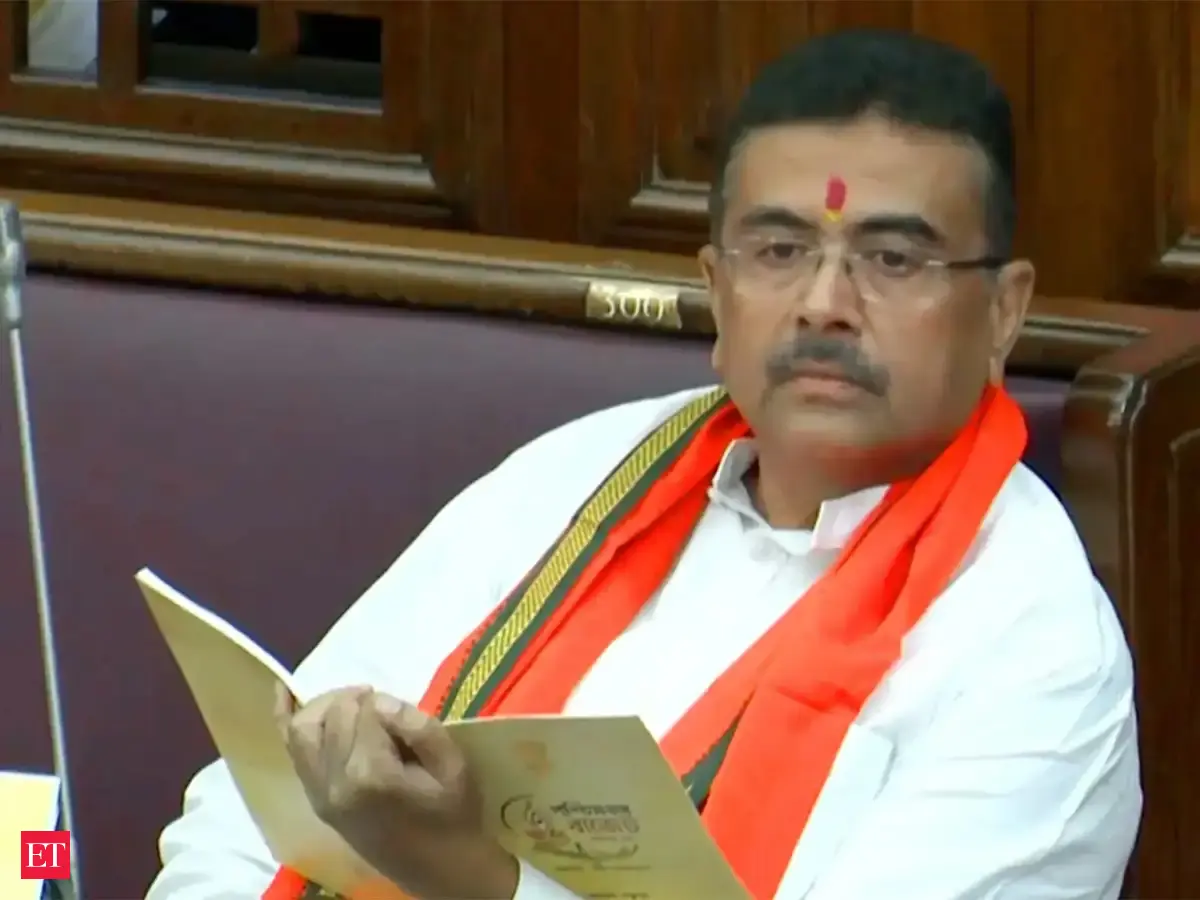
West Bengal Chief Minister Suvendu Adhikari has announced the formation of a five-member committee, led by retired Supreme Court Justice Ranjana Prakash Desai, to draft a Uniform Civil Code (UCC) Bill for the state. The committee is tasked with submitting its report within four weeks, with the Bill expected to be tabled in the Assembly by August. Tribal communities will be exempted from the proposed law.
Key Highlights
- Justice Ranjana Prakash Desai to chair UCC drafting panel.
- West Bengal CM Suvendu Adhikari announced committee formation.
- Panel to submit report within four weeks.
- UCC Bill expected in Assembly by August.
- Tribal communities to be exempted from the law.
- Committee to study family laws, adoption, live-in relationships.
The West Bengal government is moving forward with the implementation of a Uniform Civil Code (UCC) in the state, with Chief Minister Suvendu Adhikari announcing the constitution of a high-level committee to draft the legislation. This committee will be headed by retired Supreme Court Justice Ranjana Prakash Desai, a figure prominent for her work on similar UCC initiatives in other Indian states.
Speaking in the West Bengal Assembly on Monday, June 29, 2026, CM Adhikari stated that the draft UCC Bill would be presented to the state Cabinet for in-principle approval on July 2, 2026. The committee, which is expected to submit its recommendations within a stringent four-week timeline, will then pave the way for the Bill's introduction during the extended Budget Session of the Assembly in August.
Justice (retd) Desai's expertise in this field is well-established, having previously led the panels responsible for drafting the UCCs adopted by Uttarakhand (2024) and Gujarat (2026). She is also reportedly heading committees for similar legislation in Madhya Pradesh, Rajasthan, and Chhattisgarh. The West Bengal UCC Bill is intended to be modelled on these existing frameworks, particularly those of Uttarakhand, Gujarat, and Assam.
The five-member committee tasked with this significant responsibility will include not only Justice Desai but also a retired IAS officer, a legal expert, a prominent academician, a social worker, and an additional secretary from the state administration who will serve as the member-secretary.
One crucial aspect clarified by Chief Minister Adhikari is that the proposed UCC will exempt specific communities. Tribal populations, indigenous groups (moolvasis), and the Kurmi community will remain outside the purview of the new law. This exemption aims to safeguard the unique cultural heritage of these communities, a move that aligns with the UCC models implemented in Uttarakhand and Gujarat.
The committee's terms of reference include a comprehensive study of various personal and family laws currently in force in West Bengal. It will review existing statutes in key areas such as marriage, divorce, maintenance, succession, inheritance, adoption, and live-in relationships. The objective is to establish a common civil framework that governs these matters for all citizens, irrespective of religion, thus replacing diverse religion-specific personal laws.
The move to implement the UCC in West Bengal fulfills a significant commitment made by the Bharatiya Janata Party (BJP) in its recent election manifesto for the state. Chief Minister Adhikari reiterated the government's determination to uphold this pledge, citing the BJP's foundational ideology of 'One Nation, One Law' (Ek Desh, Ek Bidhan, Ek Nishan).
The announcement has generated considerable political discussion, with the opposition Trinamool Congress (TMC) expressing concerns about the BJP's agenda and advocating for greater consultation with stakeholders, including vulnerable groups and Adivasi communities. However, the West Bengal government, under CM Adhikari, appears steadfast in its resolve to enact the UCC, drawing inspiration from other states that have already adopted similar legislation.
Frequently Asked Questions
What is the Uniform Civil Code (UCC)?
The Uniform Civil Code (UCC) is a proposed legislation in India that aims to replace personal laws based on the scriptures and customs of various religious communities with a common set of laws governing matters such as marriage, divorce, inheritance, adoption, and maintenance for all citizens, irrespective of their religion.
Who is Justice Ranjana Prakash Desai and what is her role in the West Bengal UCC initiative?
Justice Ranjana Prakash Desai is a retired Supreme Court judge who has been appointed to lead the five-member committee responsible for drafting the Uniform Civil Code Bill for West Bengal. She previously headed the committees that drafted UCCs for Uttarakhand and Gujarat, making her a key figure in such legislative efforts.
What is the timeline for the UCC Bill in West Bengal?
West Bengal Chief Minister Suvendu Adhikari announced that the drafting committee, led by Justice Ranjana Prakash Desai, will submit its report within four weeks. Following this, the draft Bill is expected to be tabled in the West Bengal Assembly during its extended Budget Session in August 2026. The state Cabinet will consider the draft Bill for in-principle approval on July 2, 2026.
Which communities will be exempted from the proposed UCC in West Bengal?
Chief Minister Suvendu Adhikari has clarified that the proposed Uniform Civil Code in West Bengal will exempt tribal populations, indigenous groups (moolvasis), and the Kurmi community. This aligns with the exemption policies seen in the UCCs adopted by states like Uttarakhand and Gujarat, aiming to protect the unique cultural heritage of these groups.
Why is the implementation of UCC significant in Indian politics and for West Bengal?
The implementation of the UCC is a major political and legal development in India, as it seeks to unify diverse personal laws under a common framework, impacting a wide range of social and religious communities. For West Bengal, it represents a significant policy shift by the newly formed BJP government, fulfilling a key promise from its election manifesto and signaling a potential restructuring of family laws in the state.