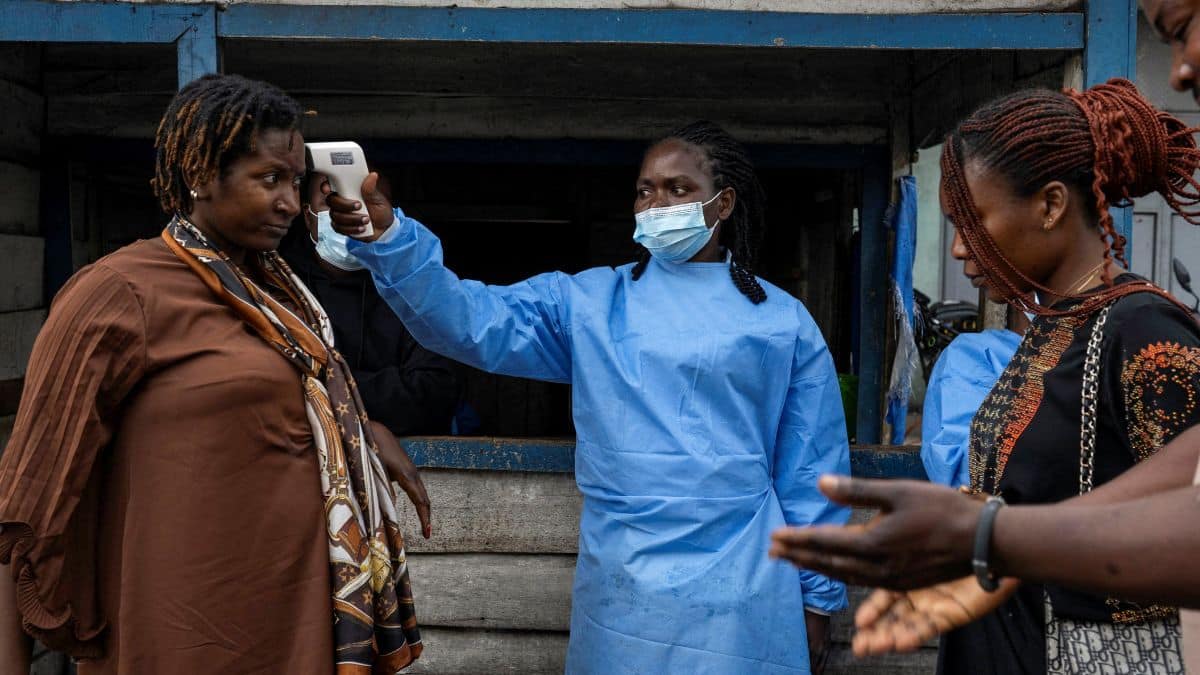
Ebola Bundibugyo Outbreak in DRC, Uganda Declared Global Health Emergency
The World Health Organization (WHO) has declared an Ebola Bundibugyo virus outbreak in the Democratic Republic of the Congo and Uganda a Public Health Emergency of International Concern (PHEIC). This marks the first IHR Emergency Committee meeting on this specific epidemic, which lacks a licensed vaccine or treatment, posing significant regional and global health challenges.
Key Highlights
- WHO declares Ebola Bundibugyo outbreak a Public Health Emergency of International Concern.
- First IHR Emergency Committee meeting convened on May 19, 2026, for the epidemic.
- Outbreak confirmed in DRC's Ituri Province and Uganda's Kampala in May 2026.
- No licensed vaccines or treatments exist for the Bundibugyo strain of Ebola.
- Challenges include insecurity, population displacement, and community distrust hindering response.
- Global response scaled up with surveillance, contact tracing, and community engagement.
The World Health Organization (WHO) officially declared an ongoing outbreak of Ebola disease caused by the Bundibugyo virus in the Democratic Republic of the Congo (DRC) and Uganda a Public Health Emergency of International Concern (PHEIC) on May 17, 2026. This critical designation, made by WHO Director-General Dr. Tedros Adhanom Ghebreyesus, underscored the severity and potential for international spread of the epidemic.
The declaration was followed by the first meeting of the International Health Regulations (IHR) Emergency Committee regarding this specific Ebola Bundibugyo virus epidemic, which was convened on May 19, 2026. This committee provides crucial advice on temporary recommendations for States Parties to respond to the event, with the Director-General subsequently issuing these recommendations on May 22, 2026.
The outbreak was initially confirmed on May 15, 2026, by the Ministry of Public Health, Hygiene and Social Welfare of the DRC, following laboratory confirmation of the Bundibugyo virus in samples from Ituri Province. Concurrently, Uganda's Ministry of Health confirmed an outbreak after identifying an imported case from the DRC in its capital, Kampala.
As of May 21, 2026, the situation has rapidly escalated. The DRC reported 746 suspected cases and 176 deaths among suspected cases. Across both countries, there were 85 confirmed cases, including two in Uganda, and ten deaths among confirmed cases. The confirmed cases in the DRC are concentrated in Ituri, North Kivu, and South Kivu provinces. Uganda has so far reported two imported cases in Kampala, with no documented onward local transmission as of May 22, 2026, though one of these cases resulted in a death. An American national who tested positive was transferred to Germany for care.
One of the most concerning aspects of this outbreak is that it is caused by the Bundibugyo species of Ebola virus, for which there are currently no licensed vaccines or specific therapeutics. Early supportive care is considered lifesaving, and scientists are urgently assessing whether existing Ebola vaccines (which target a different species) could play any role. The Bundibugyo virus was first identified in 2007 and has historically been associated with case fatality rates ranging from 30% to 50% in previous outbreaks.
The response to this epidemic is further complicated by the challenging operational environment in the affected regions. Factors such as insecurity, significant population displacement (particularly in mining areas), and high population mobility increase the risk of wider transmission. Community distrust of outside authorities and attacks on medical facilities, like the burning of an Ebola treatment center in Rwampara, Ituri province, have significantly jeopardized response efforts. The Director-General noted that building trust within affected communities is paramount for a successful response.
In response, the WHO, in collaboration with national authorities and partners, is scaling up support. This includes deploying rapid response teams, delivering essential medical supplies, strengthening surveillance and contact tracing, enhancing laboratory confirmation capabilities, improving infection prevention and control measures, establishing safe treatment centers, and engaging with communities. Cross-border preparedness is also a key focus due to the proximity of affected areas to international borders.
The risk assessment indicates a "very high" risk for the DRC nationally and a "high" risk for Uganda, while the global risk remains "low" at this time. Despite the PHEIC declaration, the WHO does not recommend imposing international travel or trade restrictions, instead emphasizing enhanced surveillance, preparedness, and accurate public information dissemination. The Centers for Disease Control and Prevention (CDC) has issued travel health notices, and Africa CDC declared a Public Health Emergency of Continental Security on May 18, 2026, highlighting the regional and continental concern. This marks the 17th recorded Ebola outbreak in the DRC since the virus was first identified in 1976.
Frequently Asked Questions
What is the Ebola Bundibugyo virus and why is this outbreak concerning?
The Ebola Bundibugyo virus is one of the species of Ebola that causes severe disease in humans. This particular outbreak is highly concerning because there are currently no licensed vaccines or specific treatments available for this strain, making containment and patient care more challenging.
What does 'Public Health Emergency of International Concern (PHEIC)' mean?
A PHEIC is a formal declaration by the World Health Organization (WHO) under the International Health Regulations (IHR). It signifies an extraordinary event that constitutes a public health risk to other countries through international spread and potentially requires a coordinated international response.
Which countries are most affected by this Ebola outbreak?
The primary country affected is the Democratic Republic of the Congo (DRC), particularly Ituri, North Kivu, and South Kivu provinces. Neighboring Uganda has also reported imported cases, mainly in its capital Kampala, linked to travel from the DRC.
What are the main challenges in controlling this Ebola Bundibugyo outbreak?
Controlling the outbreak is challenging due to several factors including widespread insecurity and conflict in affected areas, significant population movement, humanitarian crises, and deep community distrust of health responders. Attacks on health facilities have also hampered response efforts.
What measures are being taken to combat the spread of the virus?
The WHO and partner organizations are implementing a comprehensive response, including deploying rapid response teams, enhancing surveillance and contact tracing, strengthening laboratory capabilities, improving infection prevention and control, setting up treatment centers, and engaging extensively with local communities. Cross-border preparedness is also a priority.