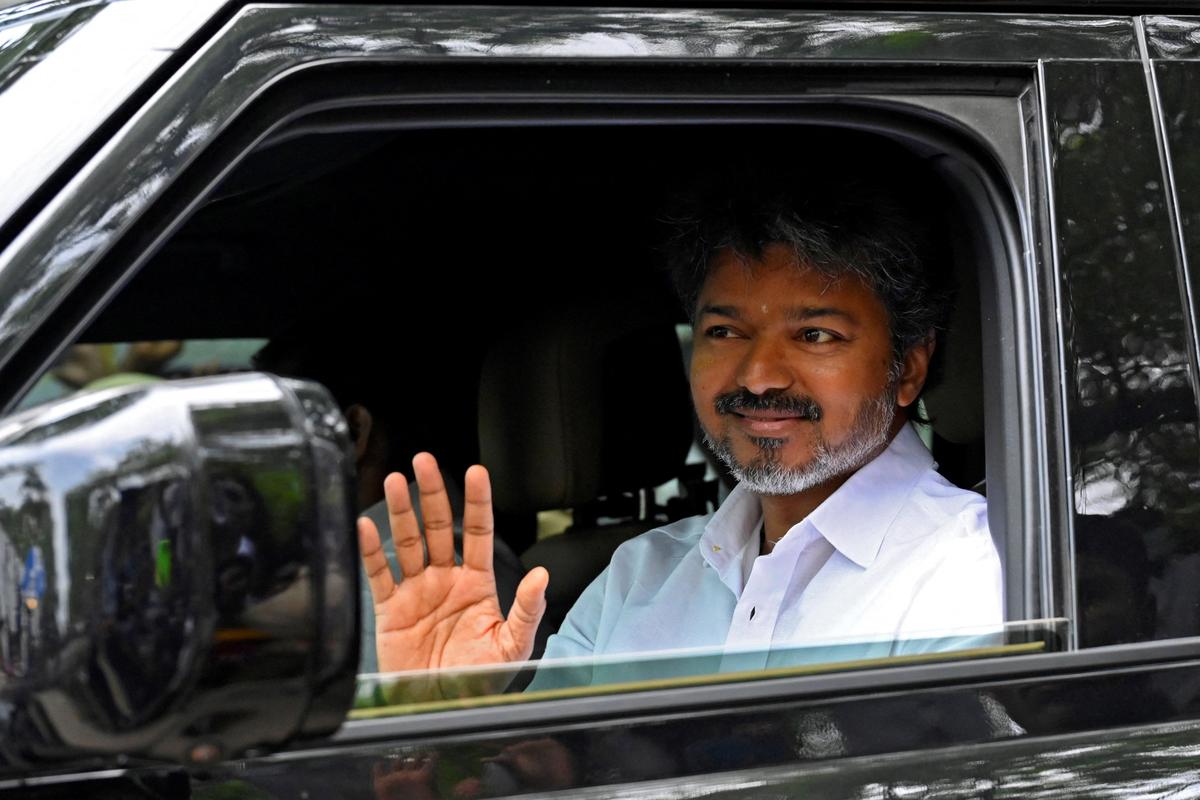
Tamil Nadu Hung Assembly: DMK Considers AIADMK Support Amid TVK Shortfall
Following the 2026 Tamil Nadu elections, a hung assembly has prompted the DMK to reportedly consider outside support for arch-rival AIADMK, if TVK falls short of a majority. While official DMK statements deny an alliance, internal sources indicate a focus on stable government amid political flux after actor Vijay's TVK emerged as the single largest party.
Key Highlights
- Tamil Nadu elections result in hung assembly with no clear majority.
- Actor Vijay's TVK emerges as single largest party with 108 seats.
- TVK falls short of the 118-seat 'magic number' required for majority.
- DMK sources suggest openness to supporting AIADMK for stable government.
- DMK chief M.K. Stalin officially rules out alliance with AIADMK.
- DMK resolution empowers Stalin to make 'any decision' for state stability.
The 2026 Tamil Nadu Legislative Assembly elections, held on April 23, 2026, with results declared on May 4, 2026, have plunged the state into an unprecedented political scenario: a hung assembly. This outcome marks a significant departure from decades of clear mandates for either of the two dominant Dravidian parties. Actor Vijay's newly formed Tamilaga Vettri Kazhagam (TVK) made a remarkable debut, emerging as the single largest party by securing 108 out of the 234 assembly seats. However, TVK's impressive performance fell short of the crucial 'magic number' of 118 seats needed to form a government independently.
In the wake of this fractured mandate, intense political negotiations and realignments have dominated discussions in Tamil Nadu. The Dravida Munnetra Kazhagam (DMK), the incumbent, secured 59 seats, while its traditional rival, the All India Anna Dravida Munnetra Kazhagam (AIADMK), won 47 seats. Adding to the complexity, the Indian National Congress, a former ally of the DMK, broke ranks to extend its support to the TVK, contributing its five MLAs and bringing TVK's total to 113 seats. This move by the Congress drew sharp criticism from the DMK, which accused it of 'betrayal' and publicly declared the 'INDIA bloc is gone' in Tamil Nadu.
Amidst this fluid political environment, a report by The New Indian Express, published on May 8, 2026, introduced a surprising possibility: that the DMK was 'open' to propping up its long-standing arch-rival, the AIADMK, from the outside, should the TVK ultimately fail to secure the necessary majority. The article quoted 'highly-placed sources' within the DMK, who stated that the party's primary objective was to ensure a 'stable government' in Tamil Nadu and prevent the state from facing another election within six months. These sources reportedly indicated that the DMK would not stake a claim itself but might offer outside support to the AIADMK to achieve stability and prevent 'communal forces' from gaining influence. Such a development, if materialized, would represent an unprecedented shift in Tamil Nadu's political landscape, given the historical animosity between the two Dravidian majors.
However, the claims of DMK's 'openness' to an alliance with AIADMK have been met with conflicting information and official denials. On May 7, 2026, M.K. Stalin, the outgoing Chief Minister and DMK President, explicitly ruled out any possibility of a DMK-AIADMK alliance, affirming that the DMK would not disrupt the TVK's efforts to form the government and would instead function as the opposition. While DMK spokesperson TKS Elangovan also denied an immediate tie-up, he did acknowledge that the final decision rests with party chief Stalin and reiterated the party's commitment to forming a stable government. Reports also suggest internal discord within the DMK regarding such discussions, with Deputy General Secretary Kanimozhi Karunanidhi reportedly expressing unease and skipping a party meeting where these possibilities were being discussed.
Despite official denials, the notion of a potential DMK-AIADMK alliance has been widely discussed in political circles as a 'fallback plan' or 'rumour,' reflecting the extraordinary nature of the post-election scenario. The Hindu reported that Stalin, despite initial resistance, 'reportedly yielded to pressure from second-line party leaders' and engaged in discussions with allied parties (CPI(M), CPI, and VCK) about potentially supporting an AIADMK-led administration from outside. Furthermore, the DMK passed a resolution empowering M.K. Stalin to make 'any emergency decision' in light of the prevailing political situation, emphasizing the need for a stable government and the imperative to prevent 'communal forces' from establishing a foothold in the state.
Political analysts have expressed skepticism about the long-term viability and internal acceptance of such an unlikely alliance, given the deep-seated rivalry between the DMK and AIADMK. Concerns have been raised regarding leadership roles and ministerial allocations should such a pact come to fruition. Congress MP Manickam Tagore criticized the speculative alliance, suggesting it might be an attempt by the traditional Dravidian parties to collectively prevent actor Vijay from becoming Chief Minister.
Meanwhile, TVK chief Vijay has met with Governor Rajendra Vishwanath Arlekar to stake a claim to form the government. However, the Governor has reportedly remained unconvinced about TVK's established majority and has requested documentary proof of support from 117 MLAs. This gubernatorial stance has created a 'numbers vacuum,' compelling the older Dravidian parties to actively explore all available options. The delay in TVK's swearing-in ceremony has further intensified the political maneuvering and speculation. DMK's former allies, including the VCK and Left parties, are also deliberating their positions, with indications that some might offer outside support to TVK without formally joining an alliance.
The political landscape in Tamil Nadu remains highly dynamic and uncertain. While the DMK's top leadership has publicly disavowed an alliance with the AIADMK, the reported internal discussions and the resolution empowering Stalin to make critical decisions underscore the party's pragmatic approach to navigating the hung assembly situation. The overarching goal of ensuring a stable government, coupled with strategic considerations regarding 'communal forces,' continues to drive the complex negotiations as all parties strive to shape the future of Tamil Nadu's governance.
Frequently Asked Questions
What was the outcome of the 2026 Tamil Nadu Assembly elections?
The 2026 Tamil Nadu Assembly elections resulted in a hung assembly, meaning no single party or pre-poll alliance secured the 118 seats required for a clear majority in the 234-member house.
Which party emerged as the single largest in the Tamil Nadu elections?
Actor Vijay's newly formed Tamilaga Vettri Kazhagam (TVK) emerged as the single largest party, winning 108 seats in its debut election, thereby disrupting the traditional dominance of the DMK and AIADMK.
What is the 'magic number' to form a government in Tamil Nadu?
The 'magic number' or majority mark required to form a government in the 234-member Tamil Nadu Legislative Assembly is 118 seats.
What is DMK's official stance on an alliance with AIADMK?
DMK President M.K. Stalin has officially ruled out any possibility of an alliance with the AIADMK, stating that the DMK will not disrupt TVK's efforts to form the government and intends to function as the opposition. However, the party also passed a resolution empowering Stalin to make 'any emergency decision' for a stable government.
Why are DMK and AIADMK considering supporting each other, despite being rivals?
Reports suggest that the DMK's consideration of supporting the AIADMK (from outside) stems from a desire to ensure a stable government in Tamil Nadu, prevent another election, and keep 'communal forces' from gaining influence, especially after the TVK fell short of a majority and the Congress defected to support TVK.