Owaisi's 'Hijab-Clad PM' Dream Sparks BJP Challenge | Quick Digest
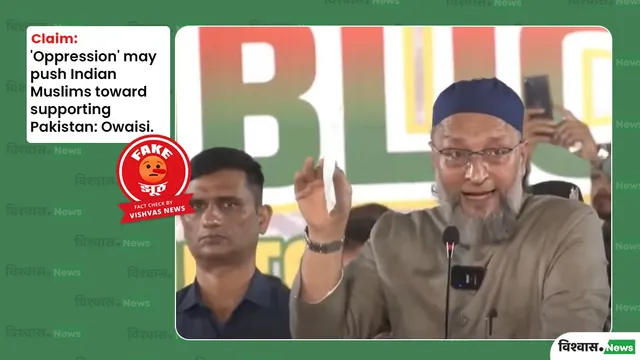
AIMIM President Asaduddin Owaisi expressed his dream of a hijab-clad woman becoming India's Prime Minister, emphasizing the Indian Constitution's inclusivity. This statement, made at a Maharashtra rally, drew sharp criticism and a challenge from the BJP.
Asaduddin Owaisi envisioned a hijab-clad woman as India's future PM.
Owaisi cited the inclusive nature of India's Constitution.
BJP challenged Owaisi to appoint a hijab-clad woman as AIMIM president first.
The remarks were made during civic poll campaigning in Maharashtra.
Other BJP leaders also criticized Owaisi's statement as 'irresponsible'.
Assam CM stated India's PM will always be a Hindu.
All India Majlis-e-Ittehadul Muslimeen (AIMIM) President Asaduddin Owaisi recently ignited a political debate by expressing his dream of witnessing a 'hijab-clad daughter' become the Prime Minister of India. Speaking at an election rally in Solapur, Maharashtra, ahead of the upcoming civic polls, Owaisi underscored the inclusive spirit of the Indian Constitution, highlighting that any citizen, irrespective of religion, can aspire to top political offices. He contrasted this with Pakistan's constitution, which he noted restricts the Prime Minister's position to individuals of a specific religion.
Owaisi's statement drew immediate and strong reactions from the Bharatiya Janata Party (BJP). BJP National Spokesperson Shehzad Poonawalla challenged Owaisi to first demonstrate this inclusivity within his own party by appointing a 'Pasmanda' Muslim or a hijab-clad woman as the president of AIMIM. Other BJP leaders also weighed in, with MP Anil Bonde terming Owaisi's remarks 'irresponsible' and suggesting that Muslim women generally do not wish to wear the hijab, referencing protests in Iran. Assam Chief Minister Himanta Biswa Sarma also countered Owaisi's vision, asserting that India, being a Hindu nation with a Hindu civilization, will always have a Hindu Prime Minister. The incident has fueled ongoing discussions in India surrounding secularism, religious identity, and political representation.
Read the full story on Quick Digest