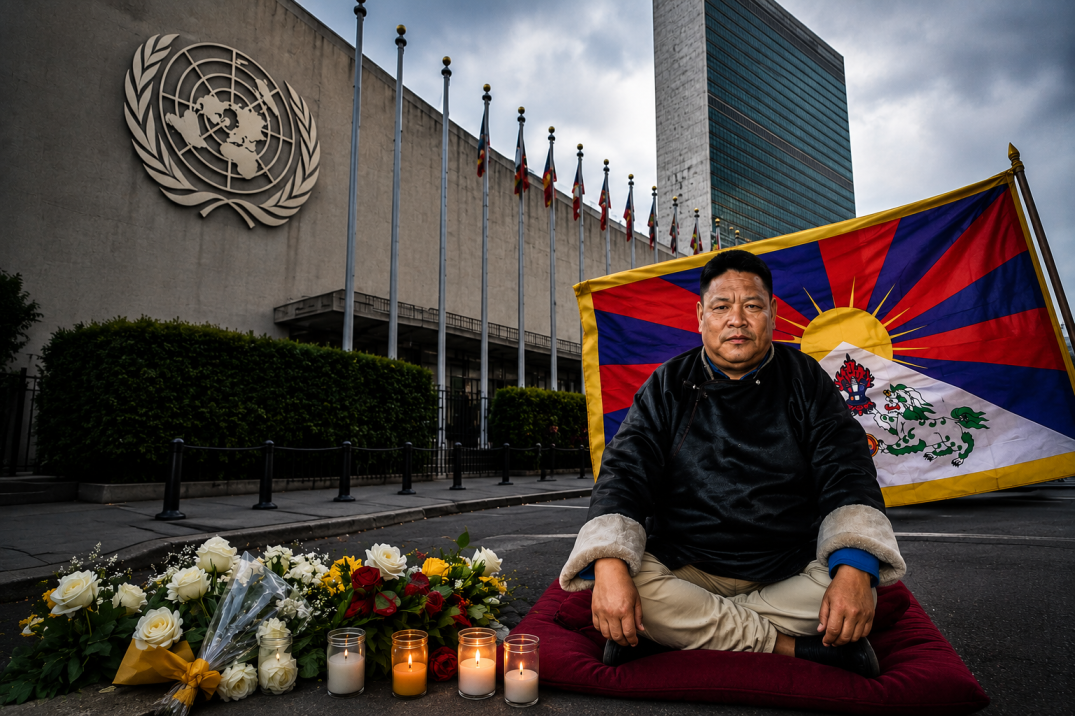
Tibetan Activist Self-Immolates Outside UN in New York
A 52-year-old Tibetan activist, Lobga Rangzen, died after self-immolating outside the United Nations Headquarters in New York on July 2, 2026. The tragic act, witnessed by many, was a protest against China's repressive rule in Tibet and its policies aimed at eroding Tibetan identity. Rangzen made a live appeal for independence before his death.
Key Highlights
- Tibetan activist Lobga Rangzen died after self-immolation in New York.
- Incident occurred outside UN Headquarters on July 2, 2026.
- Protest against China's repressive rule and assimilation policies in Tibet.
- Rangzen broadcast a final appeal for Tibetan independence.
- First documented Tibetan self-immolation in the United States.
- Highlighting the ongoing human rights crisis in Tibet.
On the evening of Thursday, July 2, 2026, a profound and tragic act of protest unfolded outside the United Nations Headquarters in Manhattan, New York City. Lobga Rangzen, a 52-year-old Tibetan activist also known as Lobsang Palden, set himself on fire in a desperate appeal for Tibetan independence and an end to China's repressive policies in his homeland. He was rushed to Bellevue Hospital but later succumbed to his severe burns and was pronounced dead.
The incident occurred around 6:30 p.m. local time near East 43rd Street and First Avenue. Eyewitnesses and surveillance footage reportedly showed Rangzen, dressed in traditional monastic robes, placing a Tibetan flag on the sidewalk before igniting himself. He was also seen scattering leaflets, one of which bore the powerful slogan "China out of Tibet." Prior to his self-immolation, Rangzen reportedly live-streamed his final moments on Facebook, delivering an appeal for Tibetan independence and unity, and vocally criticizing the Chinese government for its policies that he described as aiming to destroy Tibetan identity, culture, and language.
This extreme act of protest by Lobga Rangzen is the first documented Tibetan self-immolation to take place in the United States and the first ever recorded outside of Asia. His protest gained particular poignancy as it occurred just one day after China's new "Law on Promoting Ethnic Unity and Progress" came into effect on July 1, 2026. Critics and human rights groups, including Amnesty International, have condemned this law, warning that it further tightens control over ethnic minority regions and brazenly pushes non-Han ethnic groups, such as Tibetans and Uyghurs, towards a state-defined national identity at the expense of their distinct cultures and languages.
Police responded to a 911 call and found Rangzen with severe burns. The New York City Police Department has stated that an investigation into the death is ongoing and has not publicly confirmed the man's identity or motive. However, Tibetan exile groups, including Voice of Tibet, and various international media outlets quickly identified him and confirmed the protest's political nature. The head of Tibet's government-in-exile, Penpa Tsering, expressed deep sadness over the self-immolation, while urging other Tibetans to cherish their lives in the long-term struggle for Tibet.
Self-immolation has a grim history as a form of protest within the Tibetan community against Chinese rule. Since 2009, more than 150 Tibetans, including monks, nuns, and laypeople, have self-immolated, predominantly inside Tibet and surrounding Chinese provinces. These acts are largely driven by profound grievances over religious repression, cultural assimilation efforts, and severe restrictions on fundamental freedoms under Chinese governance. Advocacy groups like Free Tibet and the International Campaign for Tibet have consistently documented these acts, highlighting the desperation felt by Tibetans who feel they have no other effective way to draw international attention to their suffering.
For an Indian audience, this news holds particular relevance due to India's historical and cultural ties with Tibet, its shared border with China, and the fact that India hosts the Dalai Lama and the Central Tibetan Administration (Tibetan government-in-exile) in Dharamshala. The ongoing struggle of the Tibetan people against Chinese occupation is a significant foreign policy and human rights concern for India. The incident outside the UN Headquarters amplifies the call for international scrutiny of China's human rights record in Tibet, a call that resonates strongly within India given its proximity to the issue and its own democratic values. The global Tibetan diaspora, including a significant community in India, continues to mourn Rangzen's death and demand international justice.
The act underscores the persistent human rights crisis in Tibet and the perceived lack of avenues for peaceful protest, leading individuals to extreme measures to make their voices heard on the global stage. The international community is now urged to renew its focus on the situation in Tibet and press Chinese authorities to end their repressive policies and allow independent observers access to the region.
Frequently Asked Questions
Who was Lobga Rangzen and what was his protest about?
Lobga Rangzen, also known as Lobsang Palden, was a 52-year-old Tibetan activist who self-immolated outside the UN Headquarters in New York. His act was a desperate protest against China's repressive rule in Tibet, its policies aimed at cultural assimilation, and the erosion of Tibetan identity and language. He made a live appeal for Tibetan independence before his death.
When and where did this incident occur?
The incident occurred on the evening of Thursday, July 2, 2026, outside the United Nations Headquarters in Manhattan, New York City, near East 43rd Street and First Avenue.
What is the significance of self-immolation as a form of protest for Tibetans?
Self-immolation is an extreme and tragic form of protest used by Tibetans to draw international attention to their grievances against Chinese rule. Since 2009, over 150 Tibetans have resorted to this act due to perceived religious repression, cultural assimilation, and restrictions on freedoms, often feeling it's their only way to make their suffering known.
How does China's 'Ethnic Unity Law' relate to this protest?
Lobga Rangzen's self-immolation occurred just a day after China's new 'Law on Promoting Ethnic Unity and Progress' took effect. Critics argue this law further entrenches Beijing's control over minority regions, pushing non-Han ethnic groups like Tibetans towards a singular state-defined national identity, which is seen as a direct threat to their distinct cultures and languages.
Why is this news particularly relevant for an Indian audience?
This news is highly relevant to India due to its deep historical and cultural ties with Tibet, its shared border with China, and the presence of the Dalai Lama and the Tibetan government-in-exile in Dharamshala, India. The human rights situation in Tibet and China's policies are significant concerns for India, and such events underscore the ongoing struggle of a community that India has long supported.